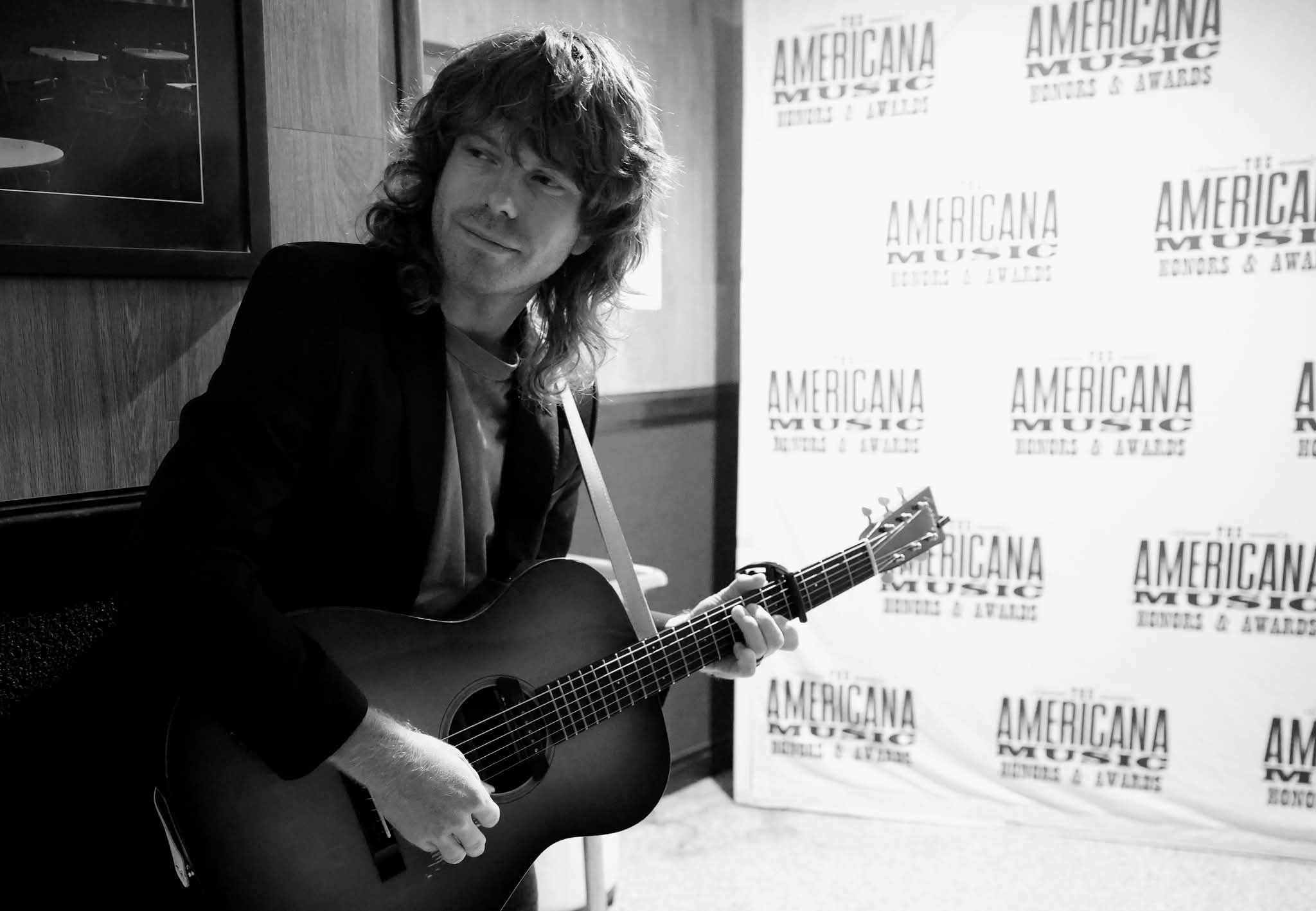
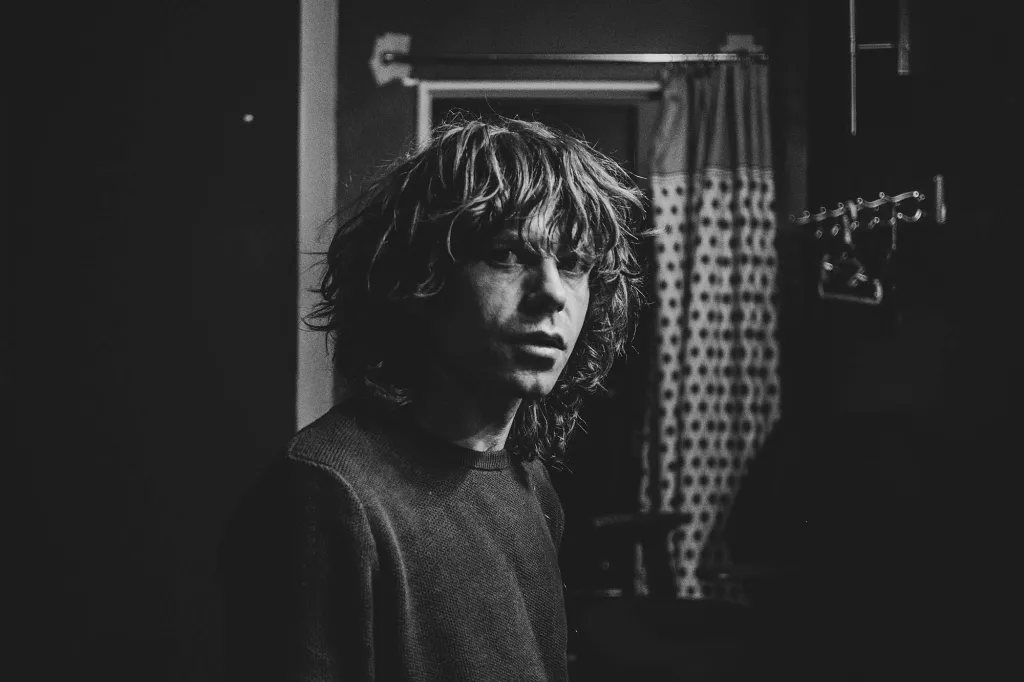
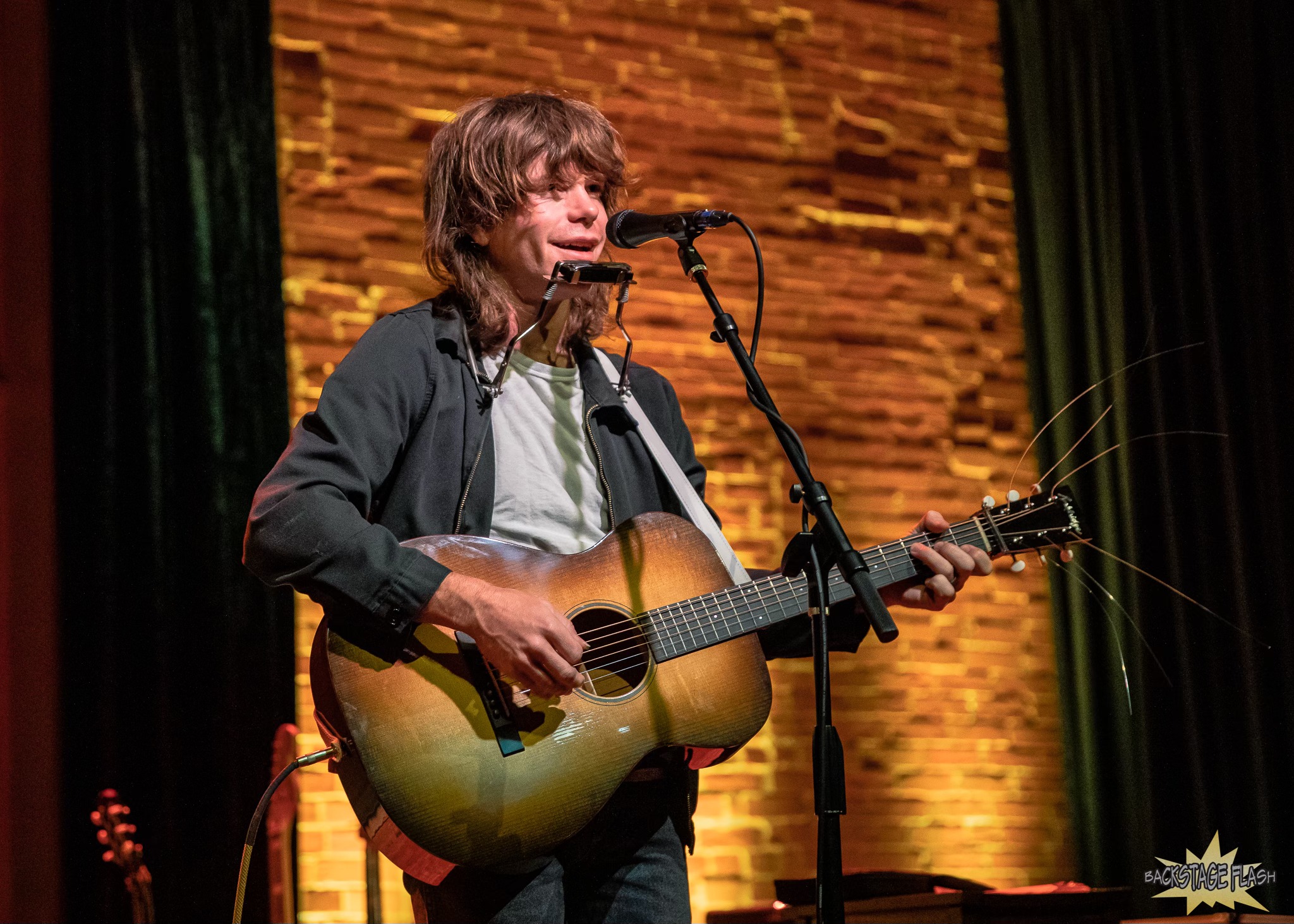
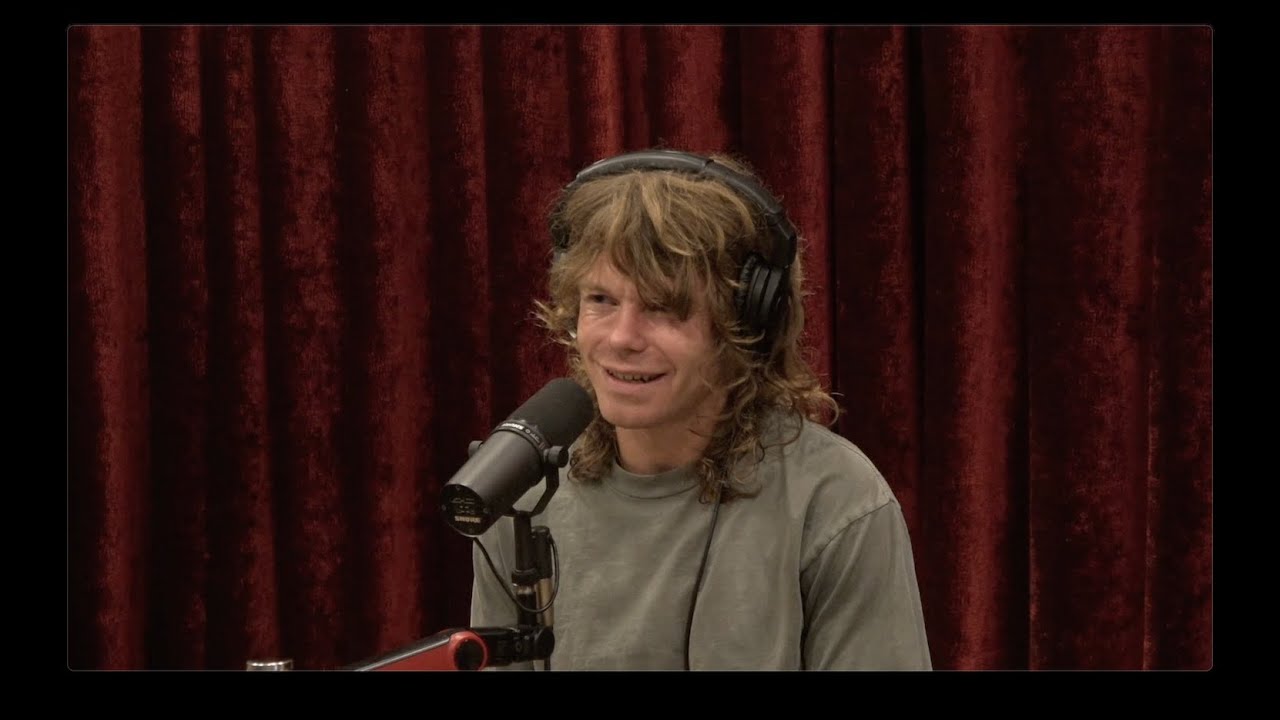
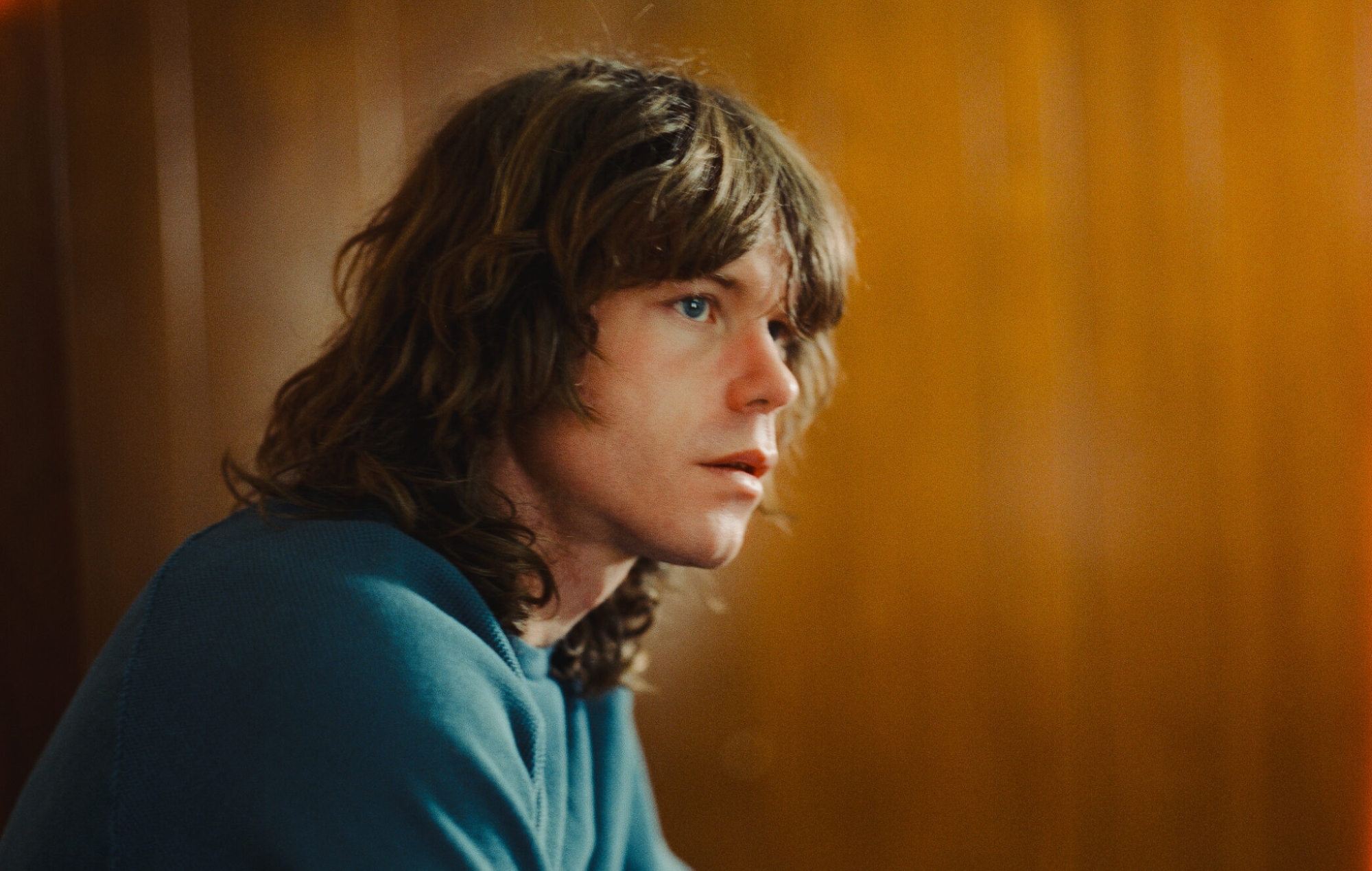
Jesse Welles appears on Episode 2367 of the Joe Rogan Experience podcast. Their discussion is a wide-ranging conversation between Jesse and Joe Rogan that touches on music, social commentary, the role of art and creativity, and the business-side of the entertainment industry along with many conspiracy theory rants of Rogan.
Jesse reflects on growing up in a family where art was present (mom painting murals, dad welding) though not music-centric. The discussion opens with how music entered Jesse’s life early. There’s a focus on how Jesse writes fast, topical songs (for example about healthcare and corporations) and wraps serious issues into punchlines and melody. Jesse mentions writing a song about a large healthcare company and how they approached the work like research + songwriting.
Jesse discusses the freedom (and burdens) of being an indie artist—being able to release songs quickly, but also dealing with predatory label offers, maintaining authenticity, and resisting encouragement to “sell out.”
They also talk about AI and how it can mimic songwriting, prompting questions about what “authentic” artistry becomes when algorithms can generate music in seconds. The conversation veers into deeper territory—Jesse and Joe talk about war, human nature, entertainment vs. news media, corporations profiting off health and lives, and how culture narrates all of this.
Partial Transcript:
Joe Rogan: First of all, how long have you been doing music?
Jesse Welles: I think most of my life, you know?
JR: Did you grow up in a musical family or is it just something you picked up on your own?
JW: No, everyone worked and made art when they weren’t working. But no music, really. But I liked it. I like music.
JR: Like what kind of art did your family do?
JW: Like my mom would always paint. She put like murals on the walls of the house and stuff. And my old man’s a mechanic. And he would be tinkering around Making all sorts of fun stuff usually with his welder and whatnot. So I there’s I felt like they were artistic folks You know, but they didn’t they didn’t necessarily do music, you know, they’re smarter than that.
JR: I only know of you from the videos that you put up on Instagram Yeah, specifically I think it was the United Healthcare guy was the first one. Yeah, right Which was really good dude. It’s the lyrics you in the timing of it all you captured the moment and That song to me was like yeah, that’s what the fuck is going on, right? That’s what’s really going on they don’t give a shit about you and they’re just trying to make money and That’s why when this guy got shot there was this reaction from people Yeah, which is very rare when someone gets assassinated when people celebrate right when someone’s not like a mass murder or something it was bizarre it was business it’s it’s i mean it must mean something is if people are celebrating yes somebody’s death yes something is wrong and all kind across both sides of the aisle it’s not a political thing it is a human thing they’re like these people they take your fucking money you pay them and then when something comes up you don’t get covered. And there doesn’t seem to be any repercussions and to fight it you have to go to court…
JW: The system would have to be revolutionized. I mean, you can’t have health for profit at that point. You’d have to socialize the medicine at that point.
JR: Yeah, which I agree with. Up until a point…
JW: All I mean is that you just don’t want to have to go to an urgent care and it costs $500 to get a pack of antibiotics.
JR: 100%. Well, that’s a giant scam.
JW: So, and, but that’s, that’s a scam that so many folks are stuck in, you know.
JR: That’s only part of the scam. You know, the healthcare scam, it goes so deep. There’s so many different layers to this fucking horrible den of vampires. Right. You know, cause it’s… Whenever you can make profit off of people and you’re involved in a corporation and then the corporation has an interest for its stockholders want more money every year. They want more money every quarter. So that’s what they try to do. That’s their focus. And when you’re doing that with people’s lives and people’s health like that, that should be illegal. That’s where it gets fucked.
JW: I suppose that’s why folks were, you know, it was upsetting to see. You know, I felt like I actually had kind of an unpopular opinion about it. And that, you know, why are we celebrating somebody’s death? Like, that seems far out. To celebrate the murder of somebody with a gun?
JR: Not only that, I believe unrelated to him and his case.
JW: Like, I mean, how far out is that? And so I didn’t want, you know, I’d… I make these tunes, but that one in particular, I was like, how do I even, how do I address this? What do you even say?
JR: So how do you approach something like that? Do you sit down with a pad and pen or do you start writing? Like, how do you start singing?
JW: Step one is avoid the work. So I went for, you know, some long jogs. I wrote a song about… Amazon instead and put up like Amazon is Santa Claus and I kept sitting there and it kept getting you know the situation was snowballing with the United Healthcare thing and I was like okay you gotta write and at that point it’s it’s a research project you know let’s write let’s write 2,000 words so that we can have 300 to sing and boil down the essence of the issue and make it rhyme and and put a jolly tune behind it that’s really that’s that’s kind of how that that goes about that sounds like super similar stand-up comedy yeah you boil it down yeah yeah yeah get every and i and you don’t it’s just punch lines so find the punch line of everything find the punch line of everything i never had the attention span to tell too much of a story or anything like that so i like i i like just keeping it in punchlines so i always like you know Mitch Hedberg and and Stephen Wright we’re so good at we’re so good at that just come out and lay out a bunch of punchlines yeah if.
JR: I don’t know of anyone else I’m sure there probably is a few people out there that I missed but I don’t know of anybody else who takes Things that are in the zeitgeist these big stories that come up Yeah And turns them into a catchy tune and does it in a way where you’re you laid out? You know really the problem and the whole thing like you said in punchlines.
JW: Yeah, I you know There’s a lot. There’s a lot of folks doing it right now and and more every day but there was i mean there’s a precedent for that kind of work especially as far as like Woody Woody Guthrie was really the i was reading i was reading a Woody Guthrie biography And, my old man was in the hospital. He had just had a heart attack, and we didn’t know, like, what way it was gonna go or whatever. Anyway, I don’t know, just seeing him all hooked up to that stuff and thinking, if he were, if he died, I’ve hardly had any time to even know him. He’s hardly had any time to know anything. We don’t get very long down here, and I’m reading this… This Woody Guthrie biography, and I was just like, oh, I’m gonna, I’m gonna, I’m gonna do, I’m gonna do this, I’m, you know, I’m gonna sing the, sing the news, because that’s really what, what Woody was kind of, was kind of doing in his day, because there was, there’s folk music around him, and he’d team up with Pete Seeger, and he was on radio programs, and he could have played, he had the, he had the choice, he could have played standards, he could have played country western music and stuff like that but he liked Making folks laugh and he liked telling it how it was…
JW: I mean, maybe he was riding on trains and boxcars and stuff. There’s no telling what they were hauling around and that sort of thing. But he, you know, he played the political tunes. He, he, I don’t, and maybe he’s a continuation of, of a longstanding human tradition of like bards going from town to town and singing the news. I don’t know. Maybe there’s some medieval dude going around singing about the king, you know, and I don’t know, but maybe, maybe. Maybe they’re white or just because I don’t like I don’t know if it’s a uniquely American tradition. But when I do it, I like to I get romantic about it and kind of think of it as uniquely American tradition because you got the freedom to do it. Right. And no one’s gunning me down in the field there or anything for anything I say, you know. So I get to, you know.
JW: Religions get weirder and weirder. I don’t, like, in America, they get weirder and weirder kind of the more West we went, the more we manifest destiny out. Because, like, you have, like, Puritan pilgrims land in, you know, in New England, and the weirdest of them move a little bit more West, or they just go to, the Quakers just go to, like, Nantucket, you know. To be on an island and be isolated. But, you know, eventually, in about 100 years, you’ve got Mormons. Yep. You know? And then give it another 100-something years, then you’ve got Scientology out in California. Right?
JR: Have you seen American Primeval? The Netflix series? No. It’s really good. Really good. And it’s about, you know, the settling of the West, but a big part of it is the Mormons. Right. And how fucking Gangster the more we think of Mormons as being like it’s really sweet people like uh-uh no not back then no no no no.
JW: No nothing nothing was in the West man yeah it was it was death and car like i don’t know i i imagine it like blood meridian like like McCarthy’s book where basically you know like follows a story like this kid who goes on a scalping mission you know where their their job is to go down into Guadalajara and then come up in through the States and they just they scalp pretty much everyone they meet indiscriminately and then take those scalps back for dough it’s you know for a bounty which is crazy… Like in McCarthy’s book, at least, which follows the Glanton gang, I’m pretty sure at times they kill some of their own gang, just because they were dark-haired… Which is essentially what the wild West was yeah and then you you offer up eight thousand dollars every time you kill a person yeah oh you can get rid of people people quick and you’re gonna have the wildest of the wild are gonna go out there and tame that land man the craziest of the crazy yeah and that’s essentially calls them calls them out… I wonder if things are you know, probably seem a lot cleaner as far as chaos and bloodshed Now in the continental US and the Union and stuff but who is sending Folks to go do that abroad, you know to protect the homeland, you know under the under the auspices of Protecting the homeland doing the exact same thing. I really think we we we stay this as much as has changed and and we can measure that We could totally camp. I think also we stay the same, you know.
JR: Well until we’re forced to change and that until something or until we recognize the need to change collectively Yeah, but there has to be a discussion of it. It’s not something that just organically happens You know.
JW: I think of like Do you ever see, This is Hollywood, but Apocalypse Now? There’s Francis Ford Coppola. It’s got like Martin Sheen, Marlon Brando and Dennis Hopper and Robert Duvall and all those cool cats and dope movie But it’s written on this premise of a of a book that was written in like 1899 by Joseph Conrad like heart of darkness. Heart of darkness was talking about a conquest of i believe the Dutch i’m not sure into the congo and some atrocities and stuff that were happening there treating people as subhuman and i don’t know if there was i don’t know if there was scalping or anything but i think that there was slavery and that sort of thing but coppola was able to adapt that and then put the Vietnam War as the new premise Going into, I think they, I think Sheen’s mission in the movie at least was to go upriver into Cambodia or Laos, I’m not sure which, and take out a rogue U.S. General who had basically enslaved a population of indigenous there. All that to say, I wonder if, like in Vietnam, if the folks fighting out there felt like in that moment, in that moment where you’re killing somebody, if you realize at that point that nothing has ever changed and that there’s something primeval in man. With this violence that this violence is innate or you know is this violence innate is it is this how? Folks are and there’s no helping it and there’s nothing that’s ever gonna change it because you can get kind of cynical that way or And I and I kind of tend on this more idealistic and at times it seems naive or stupid to have an ideal that folks can Could live in harmony and peace without taking one another’s lives, you know?
JR: The problem is they’ve never done it before.
JW: That’s mind-boggling. Because it is in all, I think it’s in a lot of us, deep down.
JR: Well, it has to be. Because that’s the only way we survived. That’s the only way we got to where we are today. Right. Because we existed before language. We existed before. Empathy before we understood each other before we communicate Yeah Any being that you didn’t know from somewhere else wanted what you had and they would try to take it by force So the bigger stronger one survived and that’s why the best genetics kept going and going and going I mean it was survival of the fittest that exists in nature and exists with humans and that’s the basis of our DNA Unfortunately, like that’s how we started right and so that the way it manifests itself today is fucking drone warfare, right? …
JR: And most war today is about resources. Most war today is about controlling parts of the world where there’s an infinite amount of money in the ground, whether it’s oil or now it’s rare earth minerals and stuff they need for batteries. And that’s what a lot of it is. I mean, that’s what a lot of conflict is in this world. And that’s gross. It’s scary. It’s scary. But. If you ask the average person, like, what are the odds that there will be no more war in your lifetime? And they’ll say 0%.
JW: It’s so far out. It’s just, like, I think, you know, the folks that go to war, like, if you signed up and went to Iraq and, you know, and like, oh, oh, three, oh, six, you know, and you’re securing. Or maybe not Iraq, but you’re going to
Afghanistan and you’re securing opium fields and stuff. And you’re out there, you’re risking your life. You got the gun on. You are prepared to take somebody’s life. But for what? And like… What are you asking? We’ll fight. It seems like for the sake of, just for the sake of the hunt or something like that.
JR: Well, if you ask the soldiers when they’re signing up, hey, do you want to go to
Afghanistan and guard Poppyfield? They’ll be like, what? No, I want to fight terrorism, motherfucker. I want to stop the people that did 9-11 from doing it again. That’s why a lot of people signed up. But then the reality kicks in once you’re standing around Poppyfields with a machine gun. And you’re like, oh. Yeah. Oh, this is a scam. You’re right. You know, I don’t know how much Internet access they had while they were over there, but if they did and they ever Googled what percentage of all heroin comes from Afghanistan, the answer they would have got is 94%. Yeah. They would have been like, wait. What is this?
JW: But then it takes a larger, it takes essentially a PSYOP in order to get men to fight for the interests of the people who are performing the PSYOP.
JR: Yes. You have to create a PSYOP. That puts a narrative out there that makes it noble for us to be doing what we’re doing.
JW: Noble. We’re such suckers. Yeah. It’s a noble cause. What’s more noble than letting somebody live?
JR: You know, everybody has their own little thing, their little realm they’re trying to conquer.
JW: Right. And it feels great.
JR: No, I don’t think it does.
JW: You don’t think it feels great to kick ass at something? Well. I mean, you want, like, I think. The pursuit of excellence. Yeah. Like, the most joy-rendering thing that there is.
JR: That aspect of it. You know? The aspect of crushing your enemies. I wonder how much.
JW: Well, you don’t have to, Like, I don’t. This thing is like. Playing guitar or something, I don’t have an enemy.
JR: But you’re an artist. You’re not a corporation. Are you an LLC yet? Did you sign up for the devil’s deal? What is, oh. Limited liability corporation. A lot of people do, so.
JW: I don’t have a record deal, if that’s what you’re saying.
JR: No, no, no, no. When you start making money, they tell you to form an LLC.
JW: What is it going to do?
JR: You become like a little corporation. And that way you pay yourself from the corporation. You can lease a car from the corporation.
JW: That’d be kind of cool.
JR: You’ll probably have to do that someday, eventually.
JW: I’ll be in a corporation.
JR: Maybe after this podcast, you’ll have to do that. I’ll be. Call it bottomless wells.
JW: I, I, that’s the most fun, and it does seem like it is what, anytime you’re in a hard place or anything like that mentally, yeah, like, the best way out is, like, find something to try to get good at, or try some, you know, and then try your best at it. Yeah. And it just seems innate.
JR: I think so.
JW: Like, no matter what it is.
JR: Right, but. The problem is if that thing is making money, then it gets weird, right? Like if your whole thing you’re good at and you try to get better at is just making money, that’s when things get really early. Because the same thing that makes you really good at writing songs could make another person look really good at being a psychopath. Because the best way to make money is to be completely feelingless and not give a shit about who this is going to impact. Ship all those jobs Overseas. Look how much money we’re going to make. Do this to that. Fuck all the And if we don’t. Take care of this in environmental pollutant and we just like let it leak out. We save X amount of money Right do that right then that’s that’s where things get weird You figure out the best way to make money like you’re really good at making money and that becomes your creativity You get really creative about moving around the law in order to make money you get really creative about how you Establish relationships with people how you can you know, make sure that laws are passed that favor what you’re doing And that’s a strange art very weird art
JW: That’s a dark art…
[Philantropic]
JR: You nailed it. That’s, that’s philanthropic capitalism right there. Dude. In a song.
JW: It’s far out.
JR: That’s a great song.
JW: It shouldn’t be allowed.
JR: It shouldn’t be allowed. Well, it shouldn’t be that easy to trick people.
JW: Who believes it? That’s why I’m just… I’m like, who in the hell would… think that this is… Good things happen because of it, but more bad things happen than good a lot of the time. And you’re holding an entire nation hostage or an entire group of people hostage by lending them money. Well, that’s not freedom.
JR: No, no.
JW: You gotta be free.
JR: Yeah, it’s real weird. Because there’s certain people that are like genuine philanthropists, but even them, when you’re donating money to specific organizations and you find out that most of their money goes to overhead, most of their money goes to employee salaries, which are ridiculously high, and you go, oh, this is a scam.
___
JW: Do you know Tom Hanks?
JR: Tom Hanks, the actor? Yeah. Yeah. I don’t know him personally.
JW: Oh, okay. I just wonder if every once in a while, when the government needs to explain something… To the public in a way that puts us in the best light if they commission a movie through Hollywood and stick Tom Hanks in it man he’s just explained so much to us over the years with Charlie Wilson’s war it’s like here’s how the saving private house how this this goes you know forrest gump is kind of a nostalgia fest about the you know Vietnam War. It kind of makes light of it.
JR: Well, my friend Sam was telling me, my friend Sam Tripoli was telling me that, and I had heard this, that during World War I, they had a problem that soldiers were not shooting at the enemy. They didn’t want to kill them. They didn’t want to be there. And so they were firing their guns but not even aiming them at the enemy. Right. So to combat this, they started making movies. And then in the movies, these war movies, the soldiers would shoot the enemy and they were like really heroes. And so then in World War II, people were much more willing to shoot the enemy. isn’t that crazy? Yeah, like so the intelligence communities have been deeply involved in moviemaking from the very beginning Because back then movies were the most powerful narrative in all of society Right and there was no counter narrative not not to speak of nothing that went glow and nothing with global or even that was like Publicly mass distributed there was nothing you might have people in coffee shops Saying hey man, I read this and this and that right there were small groups of people Most people were in the dark
JW: Even if you had a counter-narrative You’d be like Pete Seeger and get like blacklisted in the 50, you know musician you be
JR: or Smedley Butler, you’re right, who was in a the end of his career?
JW: Yeah It’s a wonder he survived his own his own tell-all there with war is a racket. Yeah, so It is. It didn’t seem to do a whole lot. Whatever.
___
JW: What, the politicians really controlled by like three main things, like special interests, donor class, and multinational corporations. So anybody who looks like they’re disentangled from any of those things is looking pretty appealing… Polls are just made so that news people have something to talk about. Well. I wouldn’t be surprised if they’re the ones. Well, they probably are. They probably go to the poll center and they say, run this poll because I got to have something to talk about on Wednesday… I think the news is an incredibly lucrative business. It’s an entertainment business. There’s not news every day. There’s nothing. And they got to run 24 hours… They’re making up news. They should call it the old. Because it’s always the same shit happening, man. Like, it’s not even… I feel like the public has to understand that at the end of the day, these guys are, whether they believe it or not, this is entertainment. These guys are entertainers. Yeah. Like, this isn’t the new, they’re telling you stuff, they’re feeding it to you, and you gotta take things with a big-ass grain of salt because this stuff is, these are entertainers.
___
JR: This one that you did on philanthropy that affects the narrative is there’s everyone’s like throwing their coins into this big pile and trying to figure this out and it more so now than i think has ever happened at any time in human history there’s more discussion it’s just yeah we’re so upset that it’s not fixed and It it’s on its way in the right direction.
JW: I think it’s just not Satisfying the pace that would in which progress is happening Everybody can get on now, too I mean like that’s it’s just like I’d prop up my iPhone and like play a tune Everyone can just like get and yep phone in front of their face and like get it out there, you know Yeah.
JR: Yeah, anyone can now Which is great. I mean, this allows guys like you to just all of a sudden have a following. You know, all you have to do is have some talent, some talent, some creativity, some hard work. Bam. There you go. It’s kind of cool. I mean, that’s the beautiful side of social media.
JW: That’s good. There’s no rules as far as, especially in the music industry and stuff, there’s no rules anymore. Anyone who tells you that they know what to do or that they know what they’re doing, they’re so full of shit, dog. Nobody knows what they’re doing.
JR: Yeah.
JW: And like we want people to know because we want to ask like what could I do to, you know, to be successful or whatever. Then nobody knows. No. Nobody knows and there’s no gatekeepers or anything like that. All you have to do is want to play music.
JR: Yeah.
JW: And then go and do it on your phone and see if anyone likes you. And if they like you, you know, that’s good. Yeah. Then everybody will come to you and say, I know how to make this bigger. And they don’t know what they’re talking about either.
JR: No, generally they’re vampires, and they’re trying to take a piece. Yeah. They’re trying to clamp on to you.
JW: Oh, they come out of the woodwork.
JR: Have you had people offer you a bunch of money?
JW: Not a bunch, but they’ll offer you a little for a lot.
JR: Yeah, a little for a lot. They want your future, right?
JW: Yeah. They’ll go, you know, there are all sorts of folks in the early days. Coming through labels and stuff going, here’s, we’ll give you 10 grand for like 30 songs or something like that. And it’s like, this is insulting. Yeah. I don’t want any of this. I don’t want any, I don’t need any of this.
JR: Oliver Anthony was going through that right after Rich Men from Richmond. Right. Richmond, North of Richmond, a song came out. Like they just came after him with all this money.
JW: Oh, they will.
JR: All this fucking promises.
JW: They will. It’s me. They give you so much up front and you don’t even like if you don’t know it’s just a big-ass loan that you’re never gonna Recoup and then you’re not even you’re not living off your own dough at that point You know living off of borrowed money like everybody else in the States and you’re attached to them forever Yeah, you’re attached to them for I just they own your masters. You’ll never see it back I mean, I assigned to a label when I was like 22. I’ve been through that all that
JR: How old are you now?
JW: I’m 47
JR: Are you really?
JW: No, I’m going to be 33 this year.
JR: I believed you. I was like, man, kid’s living good. No.
JW: No, I’m just joshing you.
JR: But, you know, this is a new time where you really can become hugely successful and get a gigantic following with no one attached to you.
JW: Yeah.
JR: You don’t have to have all those people. They’re not going to help you.
JW: No, they don’t. Too many cooks in the kitchen. Way too many people wanting to find out.
JR: And too many people eating at the dinner plate.
JW: And, dude, whenever anybody gives you money, like if the label comes in, let’s say Chris took, let’s say he took the deal, you know, or whatever. If Oliver Anthony took the big deal. Then he’s got all these people up there in the office with tax write-off MacBooks telling him what to do with his music because they opened their wallet. Yeah. And they’re going to have to give you notes. Yeah. They’re entitled. Give you their opinion at that point and you wouldn’t be able to just do whatever the hell he wants to do Yeah You know and I think it’s so important for artists to be able to do whatever the hell they want to do because that’s the Only way that can be themselves exact and then that’s the only way you can be successful is to completely be yourself at all times 100%.
JR: Nothing but yourself and you see that one thing that does happen when people do take the money is that part goes away Because even though you think you’re kind of sort of being yourself. Everybody knows You’re not.
JW: Totally you’re not totally being yourself anymore and dough will change your life in a in a in a way that that you might not like be ready for something it’s gonna you’re gonna think i got this dough now i can i can leave this town i don’t like or i can get the house that i was wanting when it was really it was being in that town and kind of having things difficult pressures around you and stuff that was creating these diamonds. That was putting you in this situation to make good art and stuff like that. Yeah. And you take away all your discomfort and then realize you can’t make art and you’re not happy. And then you start getting nostalgic about the good old days when you were broke and shit like that. It’s better to just take only what you need.
JR: Well, then there’s also the problem once you become successful of worrying about not being successful anymore. About maintaining it.
JW: That’s terrifying. Sure.
JR: I’ve got to keep this going. I can’t fall off. I can’t be less successful. I used to be poor, and now I’ve got money. I’ve got to make sure this doesn’t go away. It’s how you measure. You temper your thoughts, and you’re measured in what you say.
JW: No, your measure of success is how much can I be myself and be happy. Be happy that way if you can still be 100% yourself all the way to the end of the line, then that’s your success Yeah, like that’s but that’s a smart way of looking at things Most people look at things in terms of like what is the way that’s the most profitable, you know, so they’ll avoid certain Controversy, but we know that like we know even from talking about like people whose business whose art is money It creates misery to be chasing the bank account to constantly have the dough, you know? Like, you create a wake of… You create bad art, all right? Your albums start to suck. You might be getting in bigger, bigger places and stuff like that, but yeah, it’s gonna fall off, and when it does, you know, then you have, like, some existential problems to deal with at that point.
___
JW: It’s always it’s fun to think back on that like when I was When I was 18, I did a radio program for KDYN, Real Country Radio, every Saturday morning. It was called Dial-A-Deal, where people call in. It was basically like an on-air Craigslist, you know. But I was alone at the station after football games. You know, football game would be like Friday night. Go to bed all beat up. Wake up at like 5 a.m. Go into the station, record the obituaries real quick, because those are going to run on. On Saturday and then and then do like a you know an on-air Craigslist radio program and you’re just like 17 years old with the entire radio station to yourself you know wow I was a total dumbass too I could have been like anyway here’s Grand Funk Railroad you know but did you have a specific list of things you’re supposed to play the list was like programmed in and then you had to record weather, so you would Pull up the National Weather Service on the screen and then you would record yourself doing the weather saying, you know, winds are going to be southeast, south, southeast, northwest, out at 15 miles an hour or whatever. You do the obituaries. But, no, you didn’t actually DJ. It was just like, you would hit the space bar, music would start playing and be like, Okay, folks, if you can’t tell by the music, I’ll go ahead and tell you myself it’s time for Dial-A-Deal. Remember, our numbers up here are 667-4567 or… Toll free at 888-325-KDYN. That’s 888-325-KDYN. Remember, no commercial real estate advertisement.
Please limit your calls to once per program. And keep in mind, I can’t always keep track of these numbers up here myself. So if you remember them on your end, you’re doing me and you a favor. Let’s get back to the dialing and a dealing. And then people would call in and they’d be like, I’m looking for my dog. And I’d be like, somebody find that dog. And then, you know, list off their number. Or, uh…
JR: Did you ever play any of your songs?
JW: No. No, it was a classic country radio station. So I’m up there listening to, like, Willie, Waylon, Hank Sr., Hank Jr.
And then, also, they were playing, they were playing, like, some modern, like, I remember Brad Paisley was being played on there, and he just shredded. But, no, I couldn’t. I couldn’t. I was in a grunge band at the time. I couldn’t play. Wait, really? Yeah. I think that, yeah.
I couldn’t put… Once I printed out the track listing for the record that I had made, I would make CD records and sell them at school, like five bucks a pop. I made more money selling records in high school than I ever did as an adult.
I printed out all the song listings. Anyway, the album was called Mom, I’m Gay. And I left a bunch of them at the radio station.
I remember the guy who was running it, he came to me and he was like, did you print these out are these yours and it’s just kind of awkward after that but a small town in Arkansas kind of far out that’s funny but i you know folks folks will let a let a young person do all kinds of stuff i guess they see an aptitude in you they trust you so they let you drive a limo you know they just needed a job they needed someone to do the job.
JR: It’s that simple and most people would only temporarily keep that job and they would leave right?
JW: Yeah, hi turnover Yeah, yeah, there’s high turnover at the radio station because we were making a dough right, you know the do here was this this was in 1927 2010 I knew a lot of radio when I was young and doing the road.
JR: So I’d do like morning radio shows in the middle of nowhere. Yeah. And it was the only way to promote things. Like say if you’re going to do some gig in Harrisburg, Pennsylvania, like you get on local radio. You tell everybody drive time radio. So you’re on the air. It’s like 630 in the morning. Yeah. And let everybody know you’re gone. Radio was a weird thing, man, because it was like a local connection. And all that stuff is kind of gone now. You know, local connection used to be fun. There was something about listening to the local radio in the morning when you’re on your way to work. It was kind of cool. It was great. And you knew that most of your friends were listening too. Right.
___
JW: Tomorrow i’ll announce a tour and i think it’s like 20 something dates and then i’ll go out for two months and and play you know.
JR: You just play solo?
JW: No, I bring a band.
JR: Oh, that’s cool. I got a whole band.
JW: And then right now I’ve just been in festival season, so I just played the Newport Folk Fest. Shout out, Newport.
JR: Do you do any of these songs, like United Health?
JW: Oh, yeah.
JR: You do all of them?
JW: Yeah.
JR: Nice.
JW: Because I’m just always putting out albums. Yeah, like on Friday I’ll put out another record, too.
JR: How many albums do you have so far?
JW: Like five or six. I wrote like… 100 songs in ’24 and just like put them all out and that’s what’s great about being indie is like you can just put out music as soon as you make it right. So there’s but there’s a lot of tunes to choose from right usually You know on the set I’ll play a lot of these topical ones and then bring the band up and then we’ll play the other records that I got. But, it’s just that, Newport and then we did Edmonton Folk Fest and here in a little bit I’ll do Farm Aid And Healing Appalachia. Farm Aid was like last year around this time John Cougar Mellencamp sent me an email and was like Jesse I would like you to play at Farm Aid, but it was from a weird email address and I didn’t believe it was him but it it was totally him just like emailing through his like girlfriend’s email or something hilarious and so i like i showed it to to one of the like one of my friends he has managed and he’s like i’ll vet this out we’ll see if this is legit and sure enough it was anyway go down to Farm Aid and that’s like one of the first gigs that I play as this iteration of myself. But I got to meet a lot of cool people and get to be friends with a lot of them too. Lucas Nelson, it was very cool to meet him last year, and now I think we’ll be doing a tune together here before too long.
JR: Nice.
JW: Him I got to meet Charlie over there at Farm Aid, Charlie Crockett….
JR: I’m gonna send this to Jamie because you you you hear it and you’re like, oh my god This could be a fucking giant hit and the crazy thing is that AI makes this in seconds, right? I mean in literal seconds like you watch this guy put in the prompts you watch it Make this song and then you listen to the song and you’re like, right Oh my god, and it’s better than most of these songs like listen to this, Create a square avatar of a fictitious female alternative slash indie singer and a name for her. Wow. Sadie Winters. Sadie Winters. Okay. The song is about walking away from someone who never really saw her worth. She was going to create the song lyrics. Look at that. Wait, how many seconds was that?
JW: That was like about four seconds.
JR: Look at that.
JW: That’s got a bridge.
JR: Did you even read any of these? You don’t care. I don’t care. Put my lyrics in. The lyrics that happen in four seconds. Yes.
JW: And then hit create let’s listen this is the world premiere she’s a good singer good fan that’s nice pretty good where are we Rick where have we found ourselves.
JR: How crazy is that? Look at that. Jewel even says, Jewel goes, wow, it’s a great melody.
JW: Listen, artists, everything that can be replaced will be replaced. Okay? And pop music was already AI. Patrick has a great point there. I don’t think artists, what you’re making, I don’t think you got nothing to worry about.
JR: Well, it’s not a worry. It’s… I mean, for some people, I’m sorry to worry, but it also is just a concern that there’s a new element of society, that there’s creativity is being replaced in at least a form in front of our eyes. Like, regardless of what you think about pop music, there are some people that are making pop music as a creative endeavor. And that just did it way better than they do and did it like that.
JW: They’ll have to find something else to do.
JR: They’ll have to find something else to do.
JR: All things that can be replaced will be replaced…
https://podcasts.musixmatch.com/podcast/the-joe-rogan-experience-01hp4c6gdxz064yk1cyc1qym1k/episode/2367-jesse-welles-01k31x2xncng91p4rz1z95pxf0