Jesse Welles Sings Out for Truth and Justice
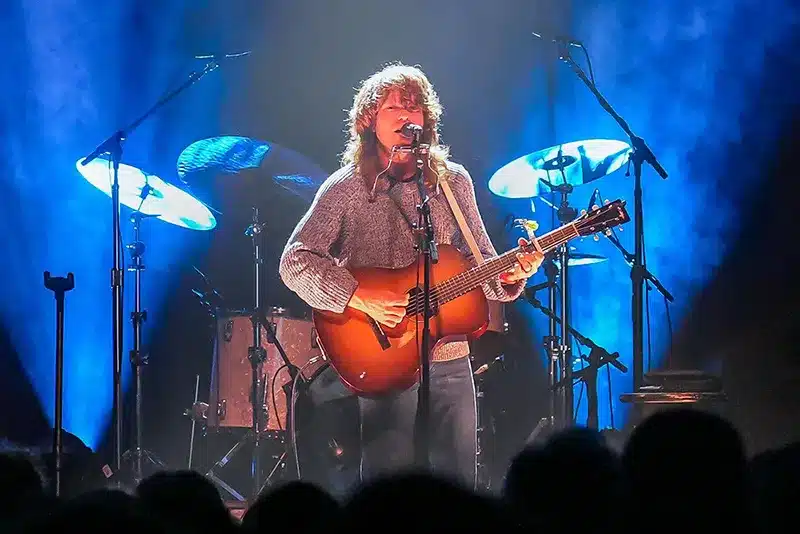
Jesse Welles is being hailed as the new voice of a generation and his milestone tour stop at San Francisco’s legendary Fillmore Auditorium shows why.
Jesse Welles is having a dream year for a musician in 2025, rocketing to stardom in a way that makes him seem sort of like an overnight sensation. Yet digging into his backstory reveals a long and winding road. He toured for years, leading multiple rock bands, while making little career progress and getting burnt out to the point of almost throwing in the towel. He left Nashville and returned to his hometown in Arkansas, where a simple twist of fate altered his direction when his dad suffered a life-threatening heart attack.
“At that point, I decided life was too short and I was just going to write music constantly and put it out with no gatekeepers. I was far enough away from any kind of music-industry thing to make me feel like there were no rules,” Welles told Rolling Stone earlier this year, regarding his decision to keep writing songs and post them to social media. It wasn’t long after that that he became inspired to focus his lyrics on topical songs about current events and to tell it like it is.
Nathaniel Rateliff, who curated this year’s Newport Folk Festival and asked Jesse Welles to join the lineup, took notice. “It’s nice to hear somebody talk about anything that’s going on and calling things out as he sees it,” Rateliff explained in the Rolling Stone story. “I don’t hear anybody in the media on TV talk about what’s happening in Washington. So, it’s nice for somebody to be literal about what’s happening and do it in the form of a song. He’s got a real Bernie Sanders approach to a song.”
[Middle]
The Sanders-style approach helps explain why Welles has become so popular with progressive-minded fans who are still hungry for a political revolution. Welles is also a talented musician and prolific songwriter, cranking out new material at a pace that rivals artists like King Gizzard & the Lizard Wizard or Ryan Adams. Welles released a handful of albums across 2024-25, alternating between solo acoustic and full band formats. His Middle album, released in January, features Welles dialing back on overtly political topics while still delivering insightful lyrics backed by his rock ‘n’ roll band.
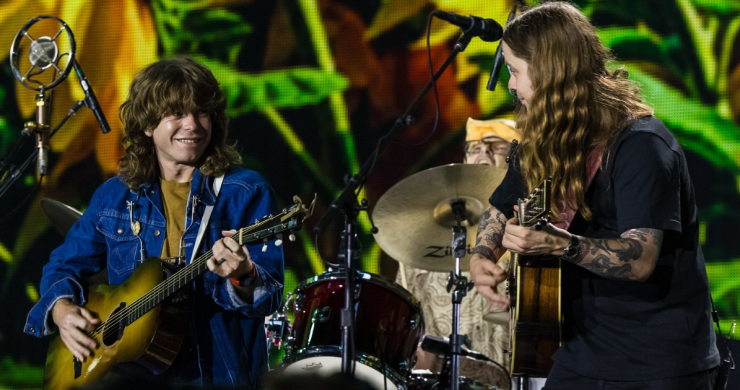
Yet it’s the zeitgeisty songwriting that’s made Jesse Welles into a burgeoning new voice of a generation, generating surging demand for his current tour, which has been selling out multiple nights at mid-size venues across the nation. There was also a high-profile return appearance to the Farm Aid benefit concert in Minneapolis, where Welles and Billy Strings sat in with Margo Price for a rousing rendition of Bob Dylan‘s classic workers’ lament, “Maggie’s Farm”.
Welles is riding a big wave of momentum as his “Middle Earth Tour” touches down for two nights at the Fillmore in San Francisco on 4-5 November. Those who fail to make it to the show on the first night are kicking themselves here on Wednesday, 5 November, when reports come down that Welles was joined by the great Joan Baez on night one for a symbolic coronation that included Dylan’s “Don’t Think Twice It’s Alright” and Welles’ “No Kings”. It’s a milestone moment, but one with vibes that carry over to the next night, too, since it’s a two-night stand.
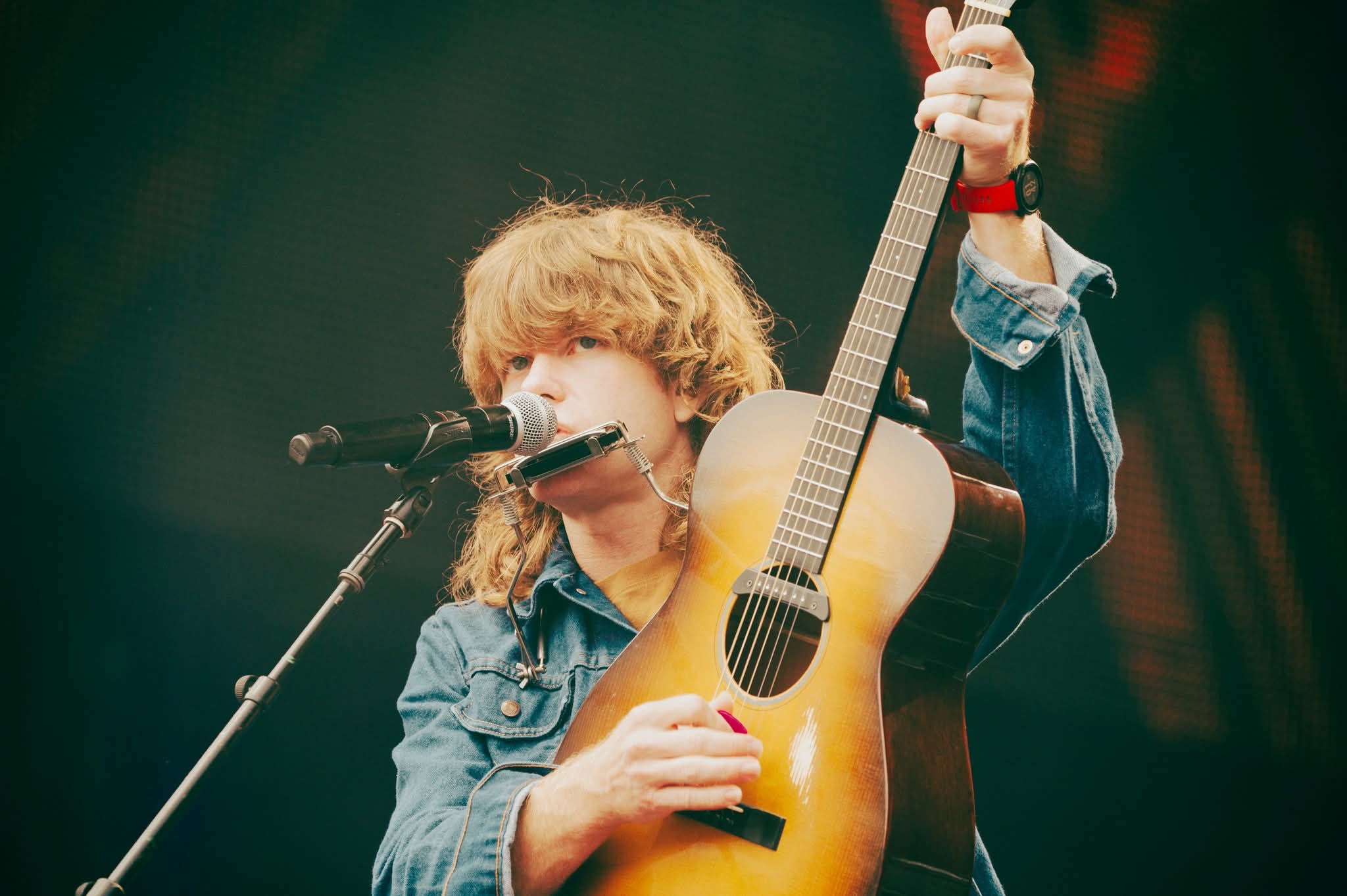
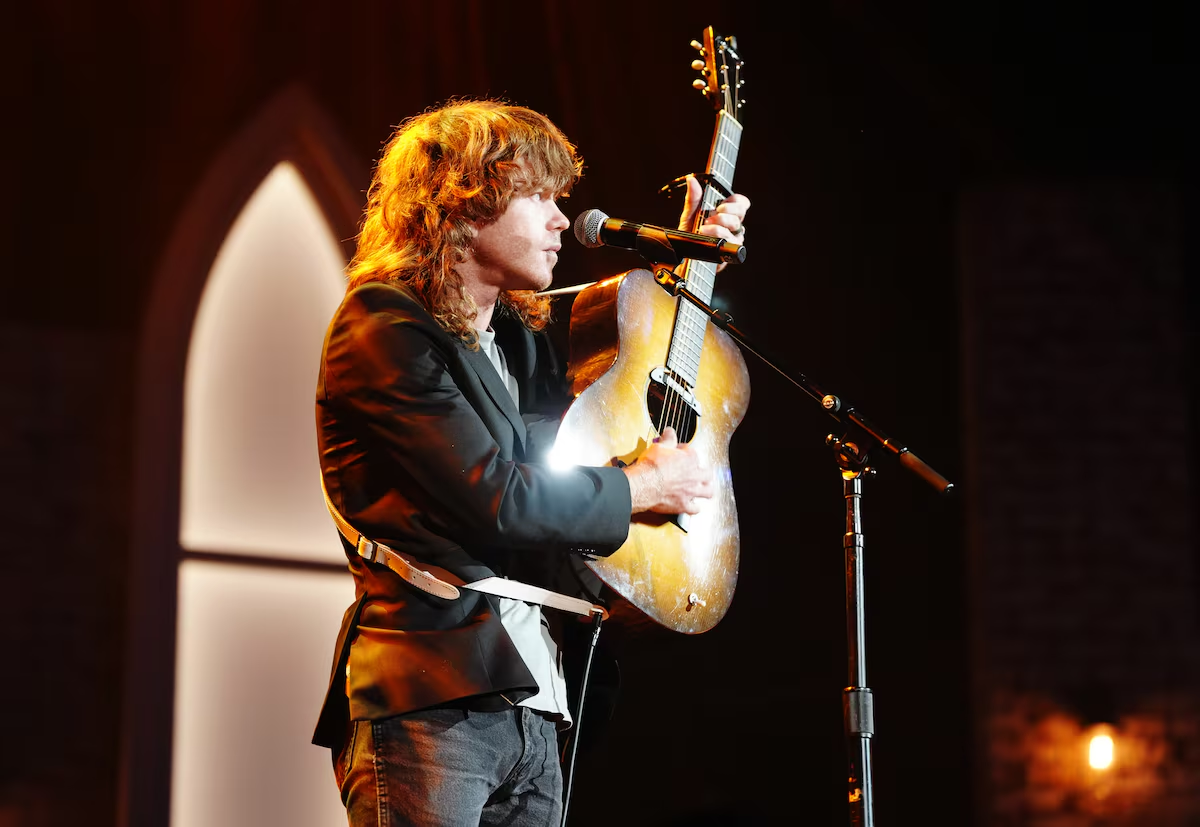
The nine-song solo acoustic segment that opens the show is a master class in troubadour style, demonstrating how Jesse Welles has won the hearts of the people, because there’s no one else in the music world speaking out so candidly about late-stage capitalism and militarism. He opens with “The List”, a tune that namechecks the infamous Epstein list and how “Anybody on the big list knows just how far the folks in charge will go to keep the status quo.”
The anti-establishment theme continues in “Join ICE”, as Welles sings satirically about recruitment for the modern-day Gestapo that hunts down alleged illegal immigrants in America: “Take my advice / If you’re lacking control and authority / Come with me and hunt down minorities / Join ICE.” The song wins hoots and hollers from the audience, as Welles testifies in the appealingly subversive way that’s been a theme of his meteoric rise.
“Walmart” critiques capitalism and the atmosphere at the infamous retail chain, as Jesse Welles cites how he “saw a toddler eat a cigarette on a cart of Keystone beer”. Meanwhile, “Fentanyl” slams the culture that enables “the atom bomb of drugs” with great lines like “Send dough to the enforcement, they build another jail, Give money to a hammer, they’re gonna buy a nail.”
Another zeitgeisty crowd pleaser is “United Health”, as Welles rips the ignominious healthcare giant that came into the spotlight when disgruntled rebel Luigi Mangione went to the extreme measure of assassinating the company’s CEO. “Commoditized health, monopolized fraud, There’s doctors that we own and research that we’ve bought, They own the loans and physicians, pharmacies and meds, They should start selling graves just to fuck you when you’re dead,” Welles sings of the corrupt American healthcare industry.
The song resonates widely because so many people have had problems with denial of care or even just meds, including this reporter, when Blue Shield recently rejected a doctor’s prescription for a particular inhaler in a maddening fashion, with CVS saying the doctor had to call Blue Shield to explain why the particular scrip was needed?!
“Cancer” continues lamenting the medical industry, as Welles concludes, “Cancer is as lucrative a business as a war / So if you ain’t expecting peace / Then why expect a cure?” One of the hardest-hitting songs of the night is “The Poor”, as Jesse Welles digs into the inequality that plagues America and the crass attitude with which narcissistic elitists lecture the less fortunate.
“If you worked a little harder / Then you’d have a lot more / So, the blame and the shame’s on you / For being so damn poor,” Welles sings, with an urgency conveying that he’s lived it. That includes lamenting the inadequate American educational experience: “I was memorizing capitals, I was in the spelling bee / I must’ve missed the part / Where they taught the art of private equity.”
The song feels particularly timely, with Zohran Mamdani, a member of the Democratic Socialists of America, having just been elected Mayor of New York City, as Welles wins a rousing ovation for his stirring performance. Between the resonance of his insightful lyrics and the heartfelt delivery of the songs, Welles has tapped into something special with his soul-soothing voice.
The rest of the band then come onstage as the show moves to the next level, starting with the honky tonk swing of “Domestic Error”. Jesse Welles continues to throw darts at the powers that be, singing “I didn’t know the world was ending / I didn’t know God’s wrath was next / I never seen that many trolls down a rabbit hole / Until I went and logged into X.” The chorus goes further as he sings “Hotels, casinos and spaceships / Teslas and tunnels are fine / Folks get too close to the big White House / And they lose their goddamn minds,” followed by a hot harmonica break.
“Red” features a similar bluesy Americana swagger as the group heat up, while Welles sings of “All the Marxists and the Fascists” holding hands upon meeting the devil. “The Great Caucasian God,” from 2025’s latest releases, Devil’s Den (solo) and With the Devil (the same songs with a full band), is another satirical winner, a wry, upbeat number with slide guitar and piano for a 1970s vibe. The song even features a spoken word bridge where Welles sounds kind of like Mick Jagger on the bridge of “Far Away Eyes” from 1978’s Some Girls.
The set soars higher still on “God, Abraham, and Xanax”, a topical tune that takes a poke at Elon Musk and also features Jesse Welles ripping a smoking solo on electric guitar to ignite a fiery jam. The band really rock out here, revealing that Welles can still be a genuine rock ‘n’ roll hero in addition to his growing role as a town square troubadour. “War is a God” keeps things rocking, an anti-war tune in which Welles compares war to religion, singing “Maybe war is a god and we’re just super superstitious.” The bluesy “Change Is in the Air” shifts the tone in a moodier direction, while still featuring more of Welles’ heartfelt emotional vocals.
A tease of the riff from Heart’s “Barracuda” serves as an intro to “GTFOH”, a song that takes on a proggy power-pop vibe from the early 1980s. A surprise cover of Tom Petty’s “Refugee” continues to display a well-rounded diversity, invoking one of rock’s most widely loved songwriters (whose ghost seems to endearingly live on as a DJ on SiriusXM Radio with more than a decade of episodes of “Tom Petty’s Buried Treasure” show). The honky tonk ballad “Wild Onions” concludes the band segment, making a smooth segue back to another solo sequence.
In “Saint Steve Irwin”, Jesse Welles plays electric guitar and sings of how he’s gotta keep moving on and fight through the pain because he can see the light at the end of the tunnel. “There’s hope on the horizon / Or maybe the Earth’s just flat, he sings. “Turtles” is a simple yet endearing tune about those cute independent reptiles. “Let It Be Me” includes a charming reference to looking for his spaceship in the Dagobah system from the Star Wars saga.
The seven-song solo segment leads to the band returning again, starting with another great tune about an endangered animal as Welles wonders, “What will become of all the Whales?” The Fillmore is then treated to a taste of Welles’ alt-rock era with an incendiary performance of Nirvana‘s “Heart Shaped Box”, providing a glorious flashback to the golden age of grunge in the early 1990s. Welles is on acoustic guitar here, but he makes it sound heavy, and his gritty vocals are a worthy tribute to Kurt Cobain.
“Malaise” features a bluesy yet heartwarming vintage Americana sound, with slide guitar, harmonica, and piano, as Jesse Welles wonders “who in space is left to blame” for his malaise. “It Don’t Come Easy” takes a more upbeat approach with infectious melodies and hot solo breaks from piano and slide guitar.
[Horses]
A peak moment occurs with “Horses”, an electrifying tune that was getting heavy play on indie radio in the spring as the lead single for Middle, with a sound that recalls Bob Dylan‘s “Hurricane”. The lyrics hit deep too as Welles sings, “I’m singing this song about loving, All the people that you’ve come to hate, It’s true what they say, I’m gonna die someday, Why am I holding on to all this weight? You know, I really thought that there’d be power, In thinking half of y’all was just born fools, Thought I was gathering oats for my horses, I was getting by whipping my mules.”
The bold sentiment about loving all the people that you’ve come to hate mirrors that expressed by King Gizzard & the Lizard Wizard on “Daily Blues” from 2024’s Flight b741, when Stu Mackenzie sings, “Lay down your weapons / What you gotta do is / Find that person you hate / And Grab ’em by the hand / Look ’em in the eye / And say, ‘I love you’.” It’s not hard to imagine Jesse Welles and King Gizzard on the same festival bill in 2026, as they’ve both demonstrated an evident penchant for being artists of the people.
Welles takes a moment to thank San Francisco, noting that he went to the [Golden Gate] Bridge earlier in the day and enjoyed seeing the seals and sea lions. This leads to a local cover of Creedence Clearwater Revival’s “Have You Ever Seen the Rain”, a song that seems to be right in Welles’ wheelhouse. “Wheel” feels like it could come from that same era, with Welles singing “Wheel keep turning / I’ll keep learning / I keep on spinning on.”
“Fear Is the Mind Killer”, from Middle, closes the nearly two-and-a-half-hour set, another heartfelt number in which Jesse Welles warns that fear “Plants the seed of hate within you.” He wraps the huge show with a solo acoustic encore on one of his most political (and most popular) songs, “War Isn’t Murder”, from 2024’s Helles Welles record. The lyrics cut deep as Welles sings, “War isn’t murder / There’s money at stake / Girl, even Kushner agrees it’s good real estate / War isn’t murder, ask Netanyahu / He’s got a song for that and a bomb for you / War isn’t murder it’s an old desert faith / It’s a nation-state sanctioned, righteous hate.”
It’s always special when a rising star makes their debut appearance at the Fillmore, and Jesse Welles’ visit to this sacred sonic temple has been another such occasion. Later in the week, Welles’ prolific output is honored with four Grammy nominations: Best Americana Performance for “Horses”, Best American Roots Song for “Middle”, Best Americana Album for Middle, and Best Folk Album for Under the Powerlines (April 24-September 24). Jesse Welles has most definitely arrived, and it should be interesting to see where he goes next now that he has America’s attention.
Greg M. Schwartz
https://www.popmatters.com/jesse-welles-concert-2025
Category: News

Singing for Truth and Justice

Jesse Welles – Live at Farm Aid 40
Jesse Welles performs at Farm Aid 40 in Minneapolis at Huntington Bank Stadium, on September 20, 2025. Learn more about Farm Aid’s 40th anniversary festival at https://farmaid.org/2025Farm Aid’s mission is to build a vibrant, family farm-centered system of agriculture in America. Farm Aid artists and board members Willie Nelson, Neil Young, John Mellencamp, Dave Matthews and Margo Price host an annual festival to raise funds to support Farm Aid’s work with family farmers and to inspire people to choose family farm food. Since 1985, Farm Aid, with the support of the artists who contribute their performances each year, has raised more than $85 million to support programs that help farmers thrive, expand the reach of the Good Food Movement, take action to change the dominant system of industrial agriculture and promote food from family farms.For more information about Farm Aid, visit: https://farmaid.orgBuy Farm Aid merch at https://shop.farmaid.orgFarm Aid’s performances are donated by the artists in order to raise funds and raise awareness for family farmers. They’ve raised their voices to help — can we count on you to stand with us and pledge your support? https://farmaid.org/donate
Setlist:

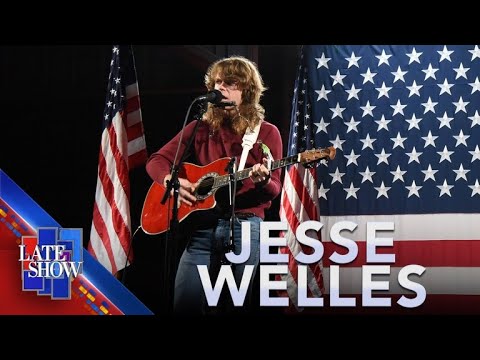
Jesse Welles plays Stephen Colbert
Viral musical sensation Jesse Welles brings his GRAMMY-nominated political folk to the Ed Sullivan Theater for a solo performance of “Join ICE,” a tune from his latest EP, ‘No Kings.’ Keep watching for a bonus song from Jesse Welles and visit his website for tour date information.

New Generation of Folk Protest Singers – NPR
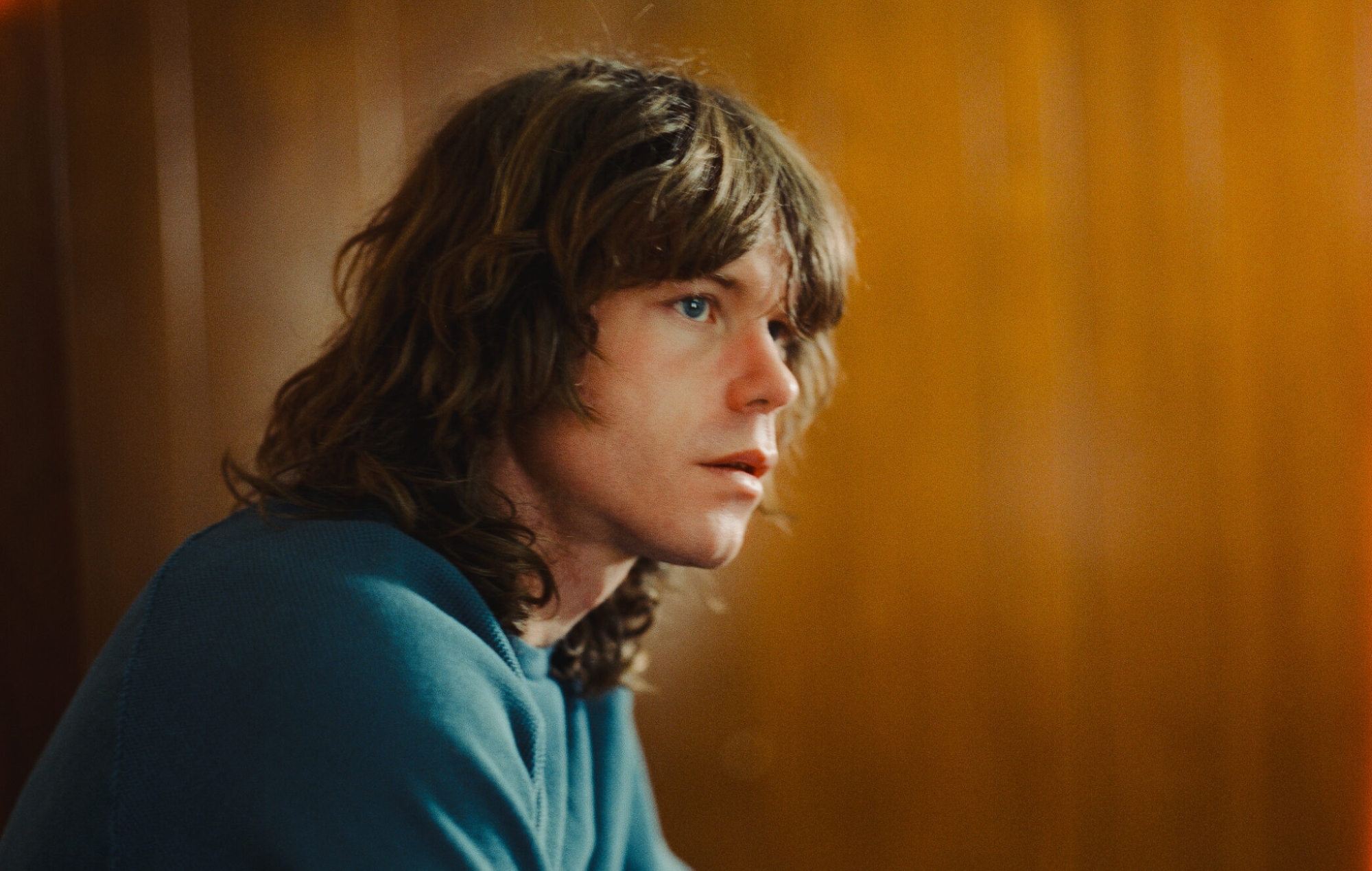
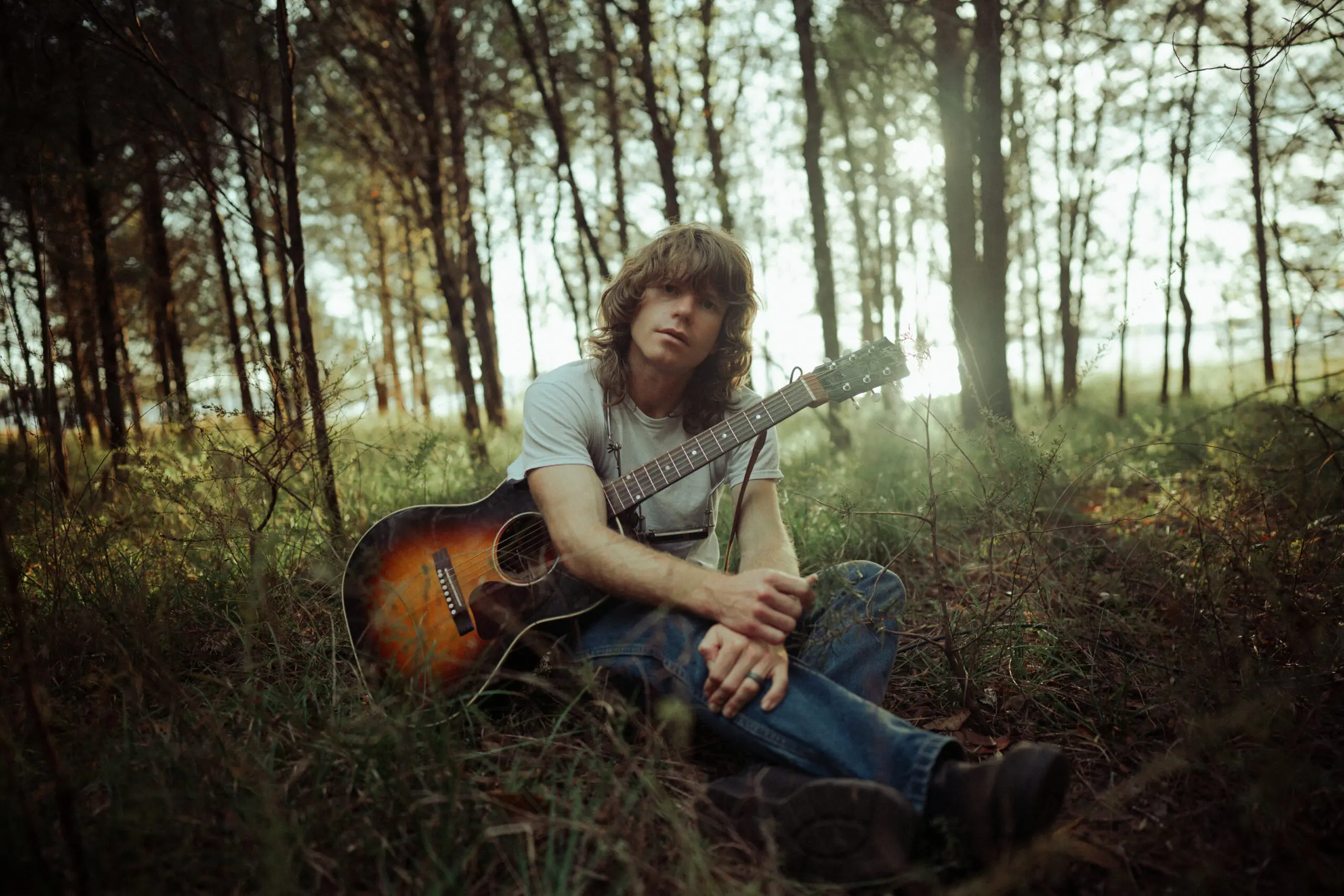
The set-up for a typical Jesse Welles video is simple: the 32-year-old stands in an open field under a string of powerlines, clutching an acoustic guitar. From behind a tousled, curly mop of hair, he stares straight into the camera and starts singing.
“If you’re in need of a gig that’ll help you feel big, come with me and put some folks in detention,” he deadpans in one song, a scathing critique of Immigrations and Customs Enforcement. “We can sneak around town, hunting working folks down, I hear they get a great benefit plan.”
“Join ICE” is just one of the dozens of songs Welles routinely shares on social media. They’re often short and satirical tunes, riding on his coarse voice and fingerpicked guitar strings, that respond to the major headlines of the week. They challenge the narratives presented to Americans by governments and corporations; they draw historical parallels and unearth underlying tensions that lead people to blame one another for institutional injustices.
On the Internet, Jesse Welles’ songs are major hits. Thousands of people flock to the comments, calling him a modern day Bob Dylan or Woody Guthrie. Since he started regularly posting clips last year, Welles has amassed more than 3 million followers on TikTok and Instagram combined, not to mention his over 600,000 YouTube subscribers. The Recording Academy has also taken notice; last week, Welles received four Grammy nominations in the folk and Americana categories. He’s become one of the most visible examples of a new generation of digital-savvy artists bringing folk traditions to a modern medium.
“We’ve never been this informed,” Welles tells NPR about Americans today. “Pair being informed with being disempowered — being that aware and having so little hard influence on the aspects of your life that you’re so awake to. I think that explains a lot of people’s frustration.”
Welles wasn’t always a country-leaning singer-songwriter. He spent years playing in different iterations of rock bands, experimenting with folk and grunge. Nearly a decade ago, he signed to a label in Nashville, burnt out and went back home to Arkansas. In 2024, after his father suffered a heart attack, the now-independent artist says he had a spiritual awakening that put him on his current path. The songs began to pour out, some political and some not. So far, his music has addressed the war in Gaza, the Epstein list and the Trump administration’s claims that Tylenol is linked to autism.
[Tylenol]
Although Welles’ lyrics skew pro-working class and anti-violence, fans trying to neatly categorize his political affiliations might run into trouble. In August, he raised some eyebrows when he appeared on The Joe Rogan Experience. A month later, he released a song condemning the assassination of Charlie Kirk. It sparked both praise and backlash. On TikTok and Instagram, some people questioned how Welles could mourn a man who often made bigoted statements about minorities and helped elect the same politicians the singer criticizes in his lyrics. Welles says that for him, there’s no use in trying to control how people perceive him or how they attempt to project partisan lines onto his music. His bottom line, he says, is radical nonviolence.
“I visit a lot of different echo chambers. I pop in, pop out — see what’s going on in different corners,” Welles says. “You start to wonder, where’s the throughline? Because there’s obviously an issue, but neither corners’ justifications for their actions or reactions is really satisfying. So I think I just started looking for some sense.”
Audiences on and offline are right there with him. Welles released multiple studio albums this year, which include collaborations with rising Americana stars Sierra Ferrell and Billy Strings. He was awarded the 2025 John Prine Songwriting Fellowship and performed at both Newport Folk Festival and Farm Aid. He’s also been selling out shows across the country, where he’s been joined onstage by Joan Baez and John Fogerty. Welles’ success shows that his music is resonating widely, as a new generation of artists revive bold, plainspoken protest music for today’s digital age.
There’s a new generation of folk protest singers on TikTok
https://www.npr.org/2025/11/11/nx-s1-5600024/folk-protest-singers-jesse-welles-mon-rovia
Jesse Receives Four Grammy Nominations
- Best Americana Performance (cat 45) for Horses
- Best American Roots Song (cat 46) for Middle
- Best Americana Album (cat 47) for the album Middle
- Best Folk Album (cat 51) for Under The Powerlines April 24 – September 24
Category 45
Best Americana Performance
For new vocal or instrumental Americana performance. Award to the artist(s).
Boom
Sierra HullPoison In My Well
Maggie Rose & Grace PotterGodspeed
Mavis StaplesThat’s Gonna Leave A Mark
Molly TuttleHorses
2026 Grammys – Full Nominees List
Jesse Welles
https://www.grammy.com/news/2026-grammys-nominations-full-winners-nominees-listCategory 46
Best American Roots Song
A Songwriter(s) Award. Includes Americana, bluegrass, traditional blues, contemporary blues, folk or regional roots songs. A song is eligible if it was first released or if it first achieved prominence during the Eligibility Year. (Artist names appear in parentheses.) Singles or Tracks only.
Ancient Light
Sarah Jarosz, Aoife O’Donovan & Sara Watkins, songwriters (I’m With Her)BIG MONEY
Jon Batiste, Mike Elizondo & Steve McEwan, songwriters (Jon Batiste)Foxes In The Snow
Jason Isbell, songwriter (Jason Isbell)Middle
Jesse Welles, songwriter (Jesse Welles)Spitfire
2026 Grammys – Full Nominees List
Sierra Hull, songwriter (Sierra Hull)
https://www.grammy.com/news/2026-grammys-nominations-full-winners-nominees-listCategory 47
Best Americana Album
For albums containing greater than 75% playing time of new vocal or instrumental Americana recordings.
BIG MONEY
Jon BatisteBloom
Larkin PoeLast Leaf On The Tree
Willie NelsonSo Long Little Miss Sunshine
Molly TuttleMiddle
2026 Grammys – Full Nominees List
Jesse Welles
https://www.grammy.com/news/2026-grammys-nominations-full-winners-nominees-listCategory 51
Best Folk Album
For albums containing greater than 75% playing time of new vocal or instrumental folk recordings.
What Did The Blackbird Say To The Crow
Rhiannon Giddens & Justin RobinsonCrown Of Roses
Patty GriffinWild And Clear And Blue
I’m With HerFoxes In The Snow
Jason IsbellUnder The Powerlines April 24 – September 24
2026 Grammys – Full Nominees List
Jesse Welles
https://www.grammy.com/news/2026-grammys-nominations-full-winners-nominees-list
Live at Thalia Hall
Jesse Welles – Live at Thalia Hall – Chicago, IL – October 24, 2024
Band Members:
- Jesse Welles – Guitar, Harmonica and Vocals (@wellesmusic)
- Adam Meisterhans – Guitar (@meisterhansworld)
- Joel Parks – Bass and Vocals (@joelparks)
- Connor Streeter – Drums (@connor_streeter)
- Bobby Steinfeld – Keyboards (@bobbysteinfeld_)
JESSE SOLO SET 1
1. The List
2. Join ICE
3. Walmart
4. Whistle Boeing
5. Fentanyl
6. United Health
7. Cancer
8. The PoorFULL BAND SET 1
9. Domestic Error
10. Red
11. The Great Caucasian God
12. Philanthropist
13. War is a God
14. Certain
15. Change Is in the Air
16. Rocket ManJESSE SOLO SET 2
17. Wild Onions
18. Let It Be Me
19. Turtles
20. Gilgamesh
21. Knockin’ on Heaven’s Door (Bob Dylan cover)
22. Middle
23. Bugs
24. That Can’t Be RightFULL BAND SET 2
25. The Whales
26. Heart-Shaped Box (Nirvana cover)
27. Malaise
28. It Don’t Come Easy
29. Horses
30. Have You Ever Seen the Rain? (Creedence Clearwater Revival cover)
31. Wheel
32. Fear is the Mind KillerENCORE
33. War Isn’t Murder

Power of Jesse Welles
The Divisive Power of Jesse Welles
The folk singer will be at the Ogden for a two-night run.
Some music critics, like Steven Hyden, really don’t like Americana singer-songwriter Jesse Welles. “It’s all just a pile-up of performatively plain-spoken words over a fourth-rate Woody Guthrie guitar strum, over and over,” Hyden wrote in an anti-Welles manifesto last month.
Some hard-liners really don’t like Welles because of “Charlie,” his gentle folk song released the day after right-wing personality Charlie Kirk was murdered. “No one should get killed / no blood should be spilled” seems like a sentiment we can all agree on, but these are polarizing times. And after about a decade as an underground rocker, Welles has become famous as a folk artist in the last couple of years by taking musical cannonballs into polarizing issues.
Welles — a babyfaced, shaggy-haired, 32-year-old Arkansas native whose life was changed as a Southern teenager by discovering Aldous Huxley and Allen Ginsberg — has released three albums this year and drops news-savvy songs (“Tylenol,” “Join ICE,” etc.) on YouTube constantly, often in videos showing him looking directly into a smartphone from a wooded area near some powerlines. It’s not unexpected that some journalists, musicians and proponents of cancel culture hate Welles for going viral by finding a niche, but it is surprising as well as uplifting that young people have discovered what used to be called protest music through the singer, whose palette includes the sweetness and humor of John Prine and the attitude of someone who grew up on grunge.
“It’s good to hear that some pacifist groups have picked up on ‘War Isn’t Murder,’” Welles says. “That’s good. The things that we can meet on the Venn diagram, I think, are some of the most enjoyable. I see a lot of sons and mothers and fathers at my shows, and I think that is so important to start to heal the generational wound, you know? The last thing they could really divide us up by was by generation, and they’ve managed to with flying colors. It’s going to be very important moving forward, as just humanity moving forward, to be able to have the generations become friends again.”
Welles will headline sold-out shows at the Ogden Theatre on October 29 and 30. He says he’s developed a good relationship with Colorado over the years, initially as Jeh Sea Wells, fronting numerous garage-style bands, and now as an overnight sensation and torchbearer for antifascist protest music that goes back to Woody Guthrie.
“Colorado is ‘The West’ to me,” Welles says. “It’s all good until I try to play my harmonica, and then I can’t really breathe, being from a river valley. When I was nineteen, me and my buddy went and camped in Rocky Mountain National Park for about a week and just hiked and camped and wrote tunes and stuff. I had the Ginsberg collected poems, the big red book. I was just out there pretending to be some kind of Beatnik, I suppose. It was those Beats that had romanticized Denver to me.”
Welles says that Howl, the Tao Te Ching, J.D. Salinger and Walt Whitman knocked his doors off as a teenager, benefiting from “isolation, maybe a lack of technology, just going to the library and exploring, just being weird. I was just a weird kid, you know? I wasn’t concerned with the things that other kids my age were concerned with.”
Today, Welles — who played Farm Aid 40 last month in Minneapolis with Willie Nelson, Neil Young and others on his political wavelength — isn’t concerned if kids, or even adult fans, don’t get the overarching messages of such songs as “War Isn’t Murder” or “Amazon Santa Claus” and just enjoy the music.
“As far as people digging it for the guitar or whatever, it’s like if someone was using the Tao Te Ching as a doorstop, and in that respect, they’re getting a practical use out of it,” he says. “So where’s the harm in that? It’s there. If someone were to come to the house and remove the doorstop to read it someday, then it would have served two purposes. There are songs that I’ve listened to my entire life that I probably didn’t really understand until last year, you know? You come back to it and have a whole new understanding of it. If you’re listening at all, that’s just a wonderful thing.”
On the other hand, being from the deep South, Welles — with songs like “The Great Caucasian God” and “Starve Away” — sometimes has a problem similar to that of Randy Newman’s plight with his satirical anthem “Rednecks,” which some racists ran with as a genuinely bigoted song they could grab hold of and get down with.
“I come home and people — some folks — don’t get the joke,” Welles explains. “Some folks think that if you worked a little harder, then you’d have a lot more, or that it’s your own damn fault you’re so damn fat. They listen to those tunes and they take them at face value and they go, ‘Hey man, I love you.’ But it surprises me in Arkansas, how many folks will come up and genuinely like it, appreciate the message, and in that you become aware of this big silent middle. More of us want peace than the news would have you believe.”
Welles brought out a full band for part of his Farm Aid set, lending a Bob-Dylan-at-Newport explosiveness to his otherwise stripped-down folk songs, and he’s released some recordings with the band and brought them along on his current tour. On top of his busy life churning out new music constantly, along with performing, he’s an avid runner who completed a marathon recently and says he gets a lot of the news that informs his songs by listening to “news programs from all over.”
“I’ll pay attention to what is going on, on things like Threads and X, but sometimes I have trouble finding a kind of middle ground or less intense view, looking at either of those platforms,” he says. “That’s where it can get overwhelming, if you’re taking everything in off social media. It doesn’t drag me down, or I’m so dragged down I don’t even realize how down I am. I think I’m okay.”
The Divisive Power of Jesse Welles, Adam Perry, October 24, 2025
https://www.westword.com/music/the-divisive-power-of-jesse-welles-40796092/
Welles Determined Not To Be Yesterday’s News
Protest singer Jesse Welles is determined not to be yesterday’s news
In the 2020 drama News of the World, Tom Hanks plays an itinerant soul eking out a living travelling the post-Civil War West, reading newspapers aloud to crowds. The monologues not only provided information but also amusement, even if the news concerned calamities.
“See all those words printed in a line one after the other? Put ’em all together and you have a story,” Hanks’s grizzled news aggregator explains.
The protest singer Jesse Welles offers much the same proposition in 2025, but with songs. With his raspy voice, impressive mane of hair and tuneful sloganeering inspired by the front pages, the 32-year-old Arkansan has struck a populist chord in the internet age.
What he calls “field recordings” are just that – simple smartphone videos for social media consumption, of him and an acoustic guitar in a woodsy setting railing against soulless corporate retailing (Walmart) or music industry greed (Payola). Welles responded to the murder of insurance executive Brian Thompson in 2024 with United Health, a satirical 86-second ditty with a melodic lope: “Commoditized health, monopolized fraud / There’s doctors that we own, and research that we’ve bought…”
Welles’s transformation from an unknown indie rocker to Gen Y’s Woody Guthrie was more or less overnight. He says he came to an epiphany after his father suffered a heart attack.
“It really stuck with me just how short life is,” Welles told The Globe and Mail earlier this month on a video call from his home in Siloam Springs, Ark. “We all go, and I didn’t want to be lying there and be preoccupied with the feeling that I’ve lived an unfulfilled life.”
One morning early last year, Welles got out of bed and wrote War Isn’t Murder, a reaction to the Israel-Hamas war that rhymed “Netanyahu” with “a bomb for you.”
Since April 18, 2024, the song’s video has racked up more than two million YouTube views. The tune represents a flash philosophical awakening and songwriting turnabout.
“I had woken up to everything that was going around me,” Welles recalled. “What you’re hearing in War Isn’t Murder is my own shock.”
The son of a mechanic father and a schoolteacher mother was born Jesse Allen Breckenridge Wells. He previously released music under the name Jeh-sea Wells and later, with his band Welles, whose grungy, psychedelic debut album Red Trees and White Trashes from 2018arrived with a young man’s unsophisticated sentiments: “So give me all the drugs / Cover me in blood / It’s all I need / Rock and roll.”
Turns out, rock ‘n’ roll did not need him. Welles added the “e” to his name, shaved his beard and eventually reinvented himself as a hot-button-topic troubadour. He plays a sold-out Danforth Music Hall in Toronto on Saturday, with future full houses at the city’s Massey Hall and Vancouver’s Commodore Ballroom already on the itinerary for next March.
An article in Rolling Stone magazine asked, “Can Jesse Welles revive the protest song?” Despite Welles’s success in the medium so far, there are signs the revival might not take.
Country star and U.S. Navy veteran Zach Bryan recently posted a snippet of his forthcoming topical song Bad News, which included lyrics critical of U.S. Immigration and Customs Enforcement. When the song received a polarized response, Bryan backed away from the controversy faster than a pickup truck after a honky-tonk’s last call.
“I served this country, I love this country and the song itself is about all of us coming out of this divided space,” Bryan wrote on Instagram, saying he was “just as confused as everyone else.”
The Dust Bowl balladeer Guthrie once painted the words “This machine kills fascists” on his guitar. Bryan’s “Just as confused as everyone else” doesn’t have the same ring to it.
For his part, Welles realizes his quick-hit singles The Olympics (about the Trump-Biden debate) and the doleful ballad Charlie (about slain right-wing commentator Charlie Kirk) won’t stand the test of time.
“Why would anyone read last month’s newspaper?” he said.
(Of course, classic protest songs such as Bob Dylan’s Hurricane or Neil Young’s Ohio transcended the news cycle.)
On a flurry of albums released this year, Welles continues to include songs that react to the current era, even if they don’t have a viral-hit impact: Will the Computer Love the Sunset (from Pilgrim), Horses (“All my flannels made in Bangladesh / All my T-shirts in Vietnam,” off Middle), and America, Girl (from Devil’s Den).
Asked last month by Rolling Stone about how he voted in the last election, Welles declined to comment. Speaking to The Globe, he stayed clear of left and right.
“So many of us are politically orphaned and have not been politically and ideologically represented in 30 or 40 years,” he explained. “My generation has voted and voted, and only seen the American dream get further and further away from them, no matter who was in office.”
Protest singer Jesse Welles is determined not to be yesterday’s news, Brad Wheeler, October 15, 2025
https://www.theglobeandmail.com/culture/music/article-jesse-welles-protest-singer/
Live for Live Music Highlights Jesse Welles at Farm Aid 40
Farm Aid 40 Unites Generations Of Artists: Willie Nelson, Bob Dylan, Billy Strings, Jesse Welles, More
For four decades, Farm Aid has stood as both a concert and a cause. Founded in 1985 at the height of the farm crisis, the benefit has helped support America’s family farmers through recessions, droughts, and floods, reminding us year after year that music is not just entertainment but a catalyst for solidarity and social change. On Saturday, that legacy was renewed as 37,000 fans filled Huntington Bank Stadium in Minneapolis for Farm Aid’s 40th anniversary.
The milestone arrived at a critical moment, as U.S. farmers once again face mounting economic challenges. With crop prices falling and bankruptcies on the rise, the sense of crisis is eerily similar to the conditions that first inspired Willie Nelson, Neil Young, and John Mellencamp to launch Farm Aid.
The all-star lineup reflected Farm Aid’s balance of tradition and progress, featuring co-founders Nelson, Young, and Mellencamp alongside fellow board members Dave Matthews and Margo Price, the youngest addition to the organization’s leadership. They were joined by a diverse roster including Bob Dylan, Billy Strings, Kenny Chesney, Steve Earle, Lukas Nelson, Wynonna Judd, Nathaniel Rateliff & The Night Sweats, Trampled by Turtles, Waxahatchee, Eric Burton of Black Pumas, Jesse Welles, and Madeline Edwards.
Throughout the day, collaborations amplified the event’s spirit of solidarity. Lukas Nelson teamed up with Dave Matthews on Daniel Lanois’ “The Maker” and welcomed Sierra Ferrell for a string of duets including Neil Young’s “Unknown Legend”. Dave Matthews & Tim Reynolds enlisted fiddler Jake Simpson from Lukas Nelson’s band, while Billy Strings and Jesse Welles joined Price for a fiery take on Dylan’s “Maggie’s Farm”.
Welles and fellow newcomer Madeline Edwards, at 32 and 29 respectively, underscored Farm Aid’s generational reach. Edwards impressed early in the afternoon with a soulful set that positioned her as one of the day’s breakout stars. Welles’ set, meanwhile, cut sharp with commentary-laced originals like “The Poor” and “Red”. He cheekily dedicated his song “Philanthropist” to Bill Gates “and the millions of acres of farm land that he’s stolen from the good people of America,” before closing on a lighter note with “Bugs”.
Price, who received her introduction from Sen. Amy Klobuchar, opened with the defiant anthem “Don’t Let the Bastards Get You Down”, the last song performed on Jimmy Kimmel Live! before the host’s controversial suspension. Steve Earle, newly inducted into the Grand Ole Opry, bookended Nathaniel Rateliff & The Night Sweats with two appearances, cementing his role as elder statesman, while Wynonna Judd, Eric Burton, Trampled by Turtles, and Waxahatchee each brought distinct flavors to the nearly 12-hour program.
As always, the concert’s final moments carried the greatest weight. Nelson, Young, Mellencamp, Matthews, Price, and the entire Farm Aid family (save for Dylan) gathered for a heartfelt finale of “Will the Circle Be Unbroken?”, “It’s Hard to Be Humble”, and “I Saw the Light”. Gov. Tim Walz introduced Nelson by praising him as “a man who truly embodies the American spirit—fiercely independent, generous, kind, irreverent, decent, and a bit of a hell-raiser.”
Forty years on, that spirit remains intact, and so does Farm Aid’s mission. “Don’t believe it when they tell you we ain’t in it together,” Dave Matthews told the crowd, reminding them that the challenges facing farmers are shared struggles. As Neil Young indicated during a press conference where he argued Minnesota-based Cargill and other corporations “need to pay a conscience tax to the farmers of America,” the fight is far from over. Yet for one night in Minneapolis, thousands proved that through music, community, and conviction, the circle indeed remains unbroken.
Watch the entire Farm Aid 40 webcast below and click here to donate to the cause.
Farm Aid 40 Unites Generations Of Artists: Willie Nelson, Bob Dylan, Billy Strings, Jesse Welles, More, By James Sissler, September 21st, 2025
https://liveforlivemusic.com/news/farm-aid-40-unites-generations/
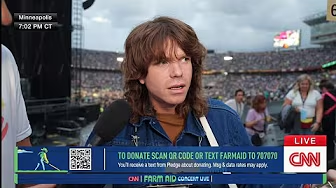
Jesse Welles Interview on CNN at FarmAid 2025
John Berman: Bill, I know you have a special guest, someone who performed earlier in the day.
Bill Weir: That’s right, John. It’s rare to be scrolling through your feeds and find what you think may be the next Bob Dylan. Uh, that is definitely the case. I’m not singular in that observation. Many other people have had that, which is why Jesse Wells just played his first stadium. Uh, this talent out of Ozark, Arkansas. Good to meet you, Jesse.
Jesse Welles: Hey, good to meet you. Yeah.
Bill: You like the Dylan comparisons? What do you think of that
Jesse: Sure. All right. You know, that’s flattering. The shoes are too big to fill. But, you know, I think people just grab the closest thing they’ve ever seen to it and and uh that’s the comparison they draw.
Bill: Well, in addition to your music, which I love, and your voice I love, you are continuing this tradition of voices of conscience. You write songs about the war in Gaza and about United Healthcare. You wrote a song after the Charlie Cook assassination. It was very poignant. What is it that makes you lean in, while plenty of artists would rather avoid politics altotogether?
Jesse: Uh years things have gone down. I haven’t seen anyone really talk about it. Not to say that they’re not out there or whatever, but I just I myself hadn’t really seen it. It seemed like a vacuum there. And uh I woke up one day and reckoned, well I’d talk about it. Yeah. I got nothing to lose.
Bill: So that’s what is the what is generally the response? I imagine some people, like fans of folk music and protest bands through the years appreciate it. Do you get any push back? Do you get in these politically charged times?
Jesse: They might push back, I suppose. I don’t much look but the main point is to make a place for people to have a conversation about just what is the crux of the problem. That’s you’re kind of you’re fostering or facilitating a place for people to have a discussion with a tune.
Bill: You know, I could see faces lightening up as your lyrics landed in the daytime set earlier today. What is your writing process? Is it that you you absorb the news and it just comes out or can you talk about that?
Jesse: Oh, I just I’m just always writing. I’m just always writing. So, if I get a good rhyme, then that one will be a tune, you know. Yeah, sometimes the rhymes ain’t even that great, they still become tunes, you know.
Bill: Well, Bugs is a favorite with my 5-year-old son.
Jesse: Yeah, I like Bugs.
Bill: And I’m coming to Webster Hall to see you. So, congrats on your first stadium set. And this is the beginning of a long important career, I hope, for you.
Jesse: I appreciate that. I can’t wait to see you. Webster Hall will be a lot of fun. So, yeah.
Bill: I’ll see you there. Jesse Wells, everybody out of Ozark, Arkansas. Just one of an amazing— Look at this. There’s some real appreciation, across the demographics.