So while the question that’s often popped up on my social platforms recently — Where are all the protest songs? — does have an answer, beyond the occasional sing-along on Neil Young’s “Rockin’ in the Free World,” it’s actually rare for the outcries of the people to be channeled through a pop song, or in a pop setting.
Resistance and dissent through music historically take place much closer to the ground, emanating from the very spaces where people are putting their bodies on the line. It’s hard to reconcile the nebulous cost a Grammy winner or performer might suffer for speaking up — dropping streaming numbers, dipping ticket sales, maybe a social media backlash — with what we’ve seen people endure in real time in this still-young year. Bad Bunny stands out in 2026 not only for his historic success as the first artist win album of the year for a Spanish-language album, but because DtMF does explicitly enact resistance in songs like “LO QUE LE PASÓ A HAWAii,” calling out American imperialism, gentrification and the displacement of his fellow Puerto Ricans.
What makes Bad Bunny’s music so crucial is that he conveys these messages within a brilliant fusion of Latin musical styles, alongside expressions of romantic longing, seduction and the joy of partying. He’s able to do this because there is a robust tradition of political party music within global Latin pop, from Spanish flamenco to Nuyorican salsa to Mexican corridos. The same isn’t true for the time-honored American Top 40. Virtually none of the stars who performed Sunday could have pulled such a direct challenge from their own nominated albums. The only one available was Black Sabbath’s “War Pigs,” an anti-war tirade staged by a supergroup commemorating the late Ozzy Osbourne. That song is from 1970.
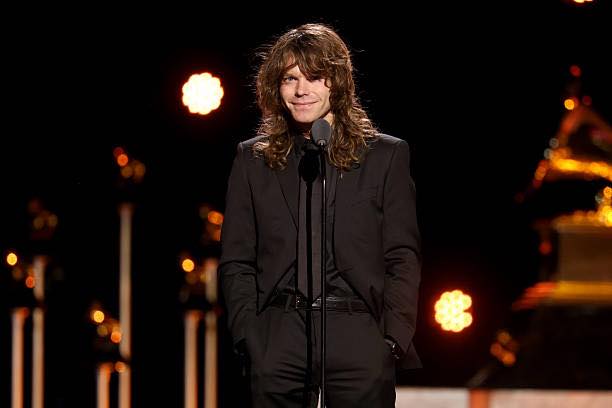
A lineage of protest songs does exist within rock and soul music, and it was represented at the Grammys by winners and nominees in categories excluded from the televised ceremony. Mavis Staples, whose message songs as part of The Staple Singers helped soundtrack the activist 1960s, won two awards in the Americana and American roots categories; We Insist 2025, drummer and bandleader Terri Lyne Carrington and vocalist Christie Dashiell’s update of Max Roach’s iconic civil rights album of the same name, was nominated in vocal jazz. More eyes were on Jesse Welles, the Arkansas indie roots-rocker who turned his talents toward “singing the news” in 2023, writing brief, highly topical songs almost daily and posting them across his socials. Nominated for four Grammys, Welles walked away with none.
Welles got famous in the obvious place to look for all kinds of topical songs in 2026: on social media, where the ability to create and distribute performances with a keystroke has fostered an ever-expanding agora. His rise came fast enough that some have doubted his motives — had he transformed himself from scruffy Southern bohemian to bandana-wearing dispatch rider only for his own benefit? Either way, his success represents what the mainstream music industry wants from protest music: an appealing and relatable conduit for ideas that many people long to hear expressed. I think Welles would be happy to admit that when it comes to getting his messages across, he’s a fortunate son — of John Fogerty, whose working-class anthems Welles greatly admires, and of Joe Strummer, whose sleeveless t-shirt look he sometimes adopts, and of Springsteen, an inevitable touchstone. Via that lineage, his presence connected the Grammys to the other big story in protest music last week, which featured a 20-time winner stepping out in the classic mode that has been designated for such gestures — the raucous, folk-inflected rock song.
Bruce Springsteen’s barn-burning broadside “Streets of Minneapolis,” had some chatterers wishing for a surprise Grammy appearance from the Boss. That was likely never a possibility, but to imagine it is exciting, not only because Springsteen’s song is uncompromisingly specific in addressing the violence that’s occurred in that city, but because it fits the narrow definition of protest songs most often welcomed into the mainstream. It’s an arena-ready polemic by a beloved rock star whose self-expression as a leftist fits the countercultural image set down by icons like Bob Dylan and his folk forefather Woody Guthrie. Its predecessors are obvious, starting with Dylan’s folk-based early songs and including festival favorites like Crosby, Stills, Nash and Young’s elegy for Kent State, “Ohio,” punk and hip-hop perennials like “Clampdown” by The Clash and Public Enemy’s “Fight the Power” and more recent grenades like Rage Against the Machine’s “Killing in the Name” and Kendrick Lamar’s “Alright.” This list, and now Springsteen’s intervention, has defined the protest song in the rock- and hip-hop-era mainstream as a nearly-all-male endeavor drenched in swagger, indignation and unwavering belief in the right to speak out. For many music fans, songs like “Streets of Minneapolis” fulfill the mandate of protest music not only because of what they say, but because of who says it: the official rock and roll version of a rabble-rouser.
What I think is important to note, however, is neither Bruce Springsteen nor Bad Bunny nor Jesse Welles stand alone in creating songs that speak directly to our political moment. In fact, they are simply part of a wave that’s been building over the past decade, across genres, from Latin and indigenous hip hop to ambient music addressing the climate crisis to historically aware jazz to renewed old-school folk. Putting too much weight on a rock star’s gesture, no matter how stirring, creates a false hierarchy and threatens to narrow the definition of effective protest. I was reminded of this when I attended another awards ceremony last month in New Orleans. Folk Alliance International (full disclosure: until recently, I was on the FAI board, a volunteer position) focuses mostly on grassroots and independent artists, many of whom consider activism to be as crucial a part of their work as music-making. Its awards are bestowed in a hotel ballroom, not a basketball arena; honorees gather during a week of panels with titles like “Touring Activism in Today’s Climate” and “Motherhood in Music: Birds on a Wire.” At the ceremony, I watched as an array of highly engaged and committed protest singers took the podium, one after another, to accept their awards. They looked very different from what I would see on my television screen Sunday night.
FAI song of the year recipient Crys Matthews is a traditional folk singer expressing a queer point of view. Rising Tide winner Yasmin Williams, an amazing fingerpicking guitarist, gained national recognition when she turned a recent appearance at the Kennedy Center into a form of protest. Kyshona, who accepted the People’s Voice prize, is a singer-songwriter and country-soul diva who also is a music therapist working in prisons and in Nashville’s urban core. Carsie Blanton (who shared the artist of the year award with the trio I’m With Her, who weren’t in attendance, but did appear to accept two Grammys) is, according to many of her fans, “doing what people want Jesse Welles to do” — she’s a topical songwriter with a sound that blends jazz, folk and old-timey music and a life of activism that put her on a flotilla to Gaza last year and led to her imprisonment in Israel. These women received their awards from other artists including Leyla McCalla, whose music casts a wide net encompassing global rhythms and diasporic histories, and Ani DiFranco, who revitalized political folk for a new generation in the 1990s and has continually found new ways to expand its definition…
https://www.npr.org/2026/02/05/nx-s1-5701460/where-are-the-protest-songs
Where are all the protest songs? | NPR

“Let's get the fuck out of here!” — GTFOH by Jesse Welles
© Woah!
Powered with WordPress