Category: News

  • Welles on NPR’s World Cafe

    Welles on NPR’s World Cafe

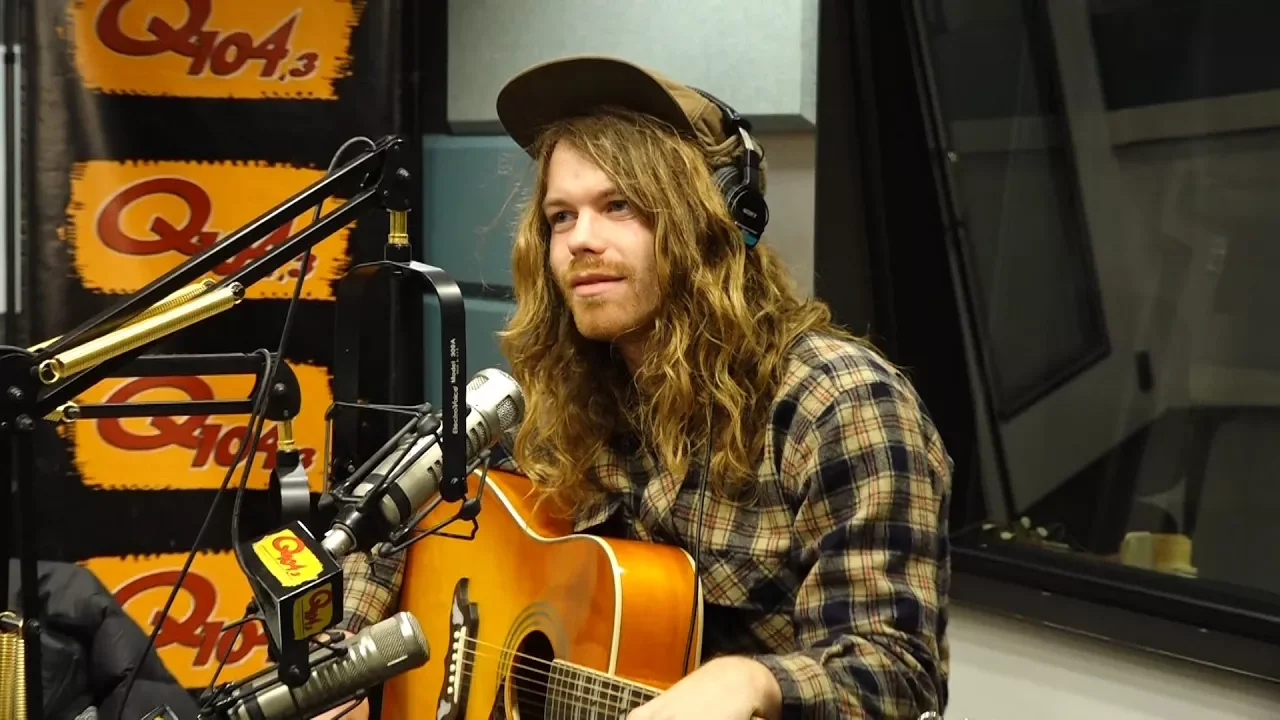
    Kallao: You’re listening to the World Cafe. Hi, I’m Kallao. Wells has the look, The Voice, the licks, the hooks, and the attitude of a real rock star. His classic rock meets grunge debut, red trees and white trashes. His alternatively big, chunky, bombastic and driving yet intimate, sensitive, quiet and reserved. There’s no shortage of ballads and barn burners. Jesse Wells grew up in rural Arkansas. Started filling up journals of lyrics at an early age and played music in barns, turkey houses, to be specific. Yes, that’s where turkeys hang out. He also played football for his high schools team, the Ozark Hillbillies.

    After graduating from college, Wells moved to Nashville and connected with producer extraordinaire Dave Cobb. If that name sounds familiar, it’s because Dave’s worked with everyone in Nashville, like Jason Isbell and Chris Stapleton, and if he hasn’t worked with you, give him a week. Wells talks about what it’s like to make the journey to Nashville and recording the single Seventeen.

    He’s not afraid to call it like he sees it, even if that means appreciating and experiencing the trials and tribulations of drug use. All so that you might have a better workout, he’ll explain. But first, let’s get started with, Hold me like, I’m leaving.

    ~ Hold me like I’m Leaving ~

    Kallao: Our guest in studio live performance of Hold me like I’m leaving. The debut album is called Red Trees and White Trashes. My name is Kallao. Thanks for joining us today, and thank you Jesse for joining us.

    Jesse: Thanks for having me.

    Kallao: So Jesse, you grew up in, um. Ozark, Arkansas, yeah, what is the coolest thing to do there?

    Jesse: Oh, probably all the fishing. There’s plenty of fishing to do.

    Kallao: Were you a fisher growing up?

    Jesse: Yeah, yeah, so like boat or stand off the side. Yeah, I was just on on the side until when I was a junior in high school. I bought a canoe and that. Um, kind of that way. I could go and explore on my own, you know, and then I started fishing from the canoe

    Kallao: Because it’s better when there’s nobody around. You said, growing up in Arkansas that, you’re playing sports, playing football, track, and that you could, you could end up becoming a meathead just by running with that crowd. I don’t see you as a meathead. Were you a meathead in high school?

    Jesse: Maybe a bit. Yeah, I weighed a bit more, you know, just because they had us on school lunches, which are garbage. And then a very strict football regiment, you know, keep you strong.

    Kallao: Man, did you play football?

    Jesse: Yeah,

    Kallao: Oh, goodness, gracious! So what? What changed? Not that there’s anything wrong with playing football

    Jesse: Ozark Hillbilly Football! That was our mascot

    Kallao: You were the Hillbillies?

    Jesse: HPRD Hillbilly Pride runs deep.

    Kallao: Um, what changed and and you put down? You put down the shin pass, and you picked up a guitar.

    Jesse: Yeah, nothing ever changed. I’ve been playing guitar that whole time and stuff. I just really enjoyed Sports the camaraderie, the the.. you were kind of on a stage on Friday nights. Yeah, it’s just cool. It’s a cool thing to do

    Kallao: So while you were on the stage on Friday, Friday nights in the Friday Night Lights. Yeah, I also read that you were playing turkey houses.

    Jesse: Yeah, well.

    Kallao: So, so you had a different kind of stage? What is a turkey house for those who have never?

    Jesse: Yeah, it’s just, it’s a. It’s a big, long building, um. That is open air. Kind of like a like a barn or something in an edge. It’s where you would house turkeys and feed them, develop them, grow them. That sort of thing, but they were emptied out on on my buddy’s land. There’s dirt floor, you know, and you go out. And we plug all our stuff into the wall and jam out there, you know.

    Kallao: And I imagine, on a Friday night in Ozark or Saturday night. A lot of people would come to the turkey houses to watch some music.

    Jesse: I know that we played some parties and we played like some gazebos, and that sort of thing around in the small, where people would actually combat in the instance of the turkey houses. It was mostly just us. A close group of folks, you know, just playing music?

    Kallao: That’s really cool. We’re here with Wells at the new album is called red trees and white trash. As you’re listening to the World Cafe. My name is Kaleo, um, the next song that we’re going to listen to. Is is the debut single from your debut album, 17? Do you remember what bit of lyrics was the spark for this song.

    Jesse: Oh. Probably, I think I wrote it chronologically. White skin underwater, you know? She’s somebody’s daughter. I’m pretty sure that’s how it went about. I was on the front porch. I had just gotten back from the pool where I have witnessed some white skin beneath the water.

    Kallao: So it started there. Yeah, that’s incredible. I mean, I, and I have, I have the lyric sheet in front of me. It’s, it’s an absolutely gorgeous written song, but the thing that I enjoy the thing that I enjoyed the most about it is, I listened to it first and then caught some of the lyrics and thought I had an idea of what the song was about, and then I went back to the lyric sheet and read the lyrics several times over, and I thought I had a different idea of what the song was about. Um, can you? Can you pull back some of the layers so, uh, to help him help someone who might want to interpret it, because in particular, the line, “When I was young, I was far out. We can hold hands, we can make out, sit silent, or cry out. You’re pretty when you cop out transgendered and washed out, and I can see Pastor’s short hair telling me that you don’t care.” And it goes on from. Yeah, and it’s a very beautiful sentiment, but I, I’m not sure. Are you? The narrator is, is someone else the narrator? What’s what’s going on here in 17?

    Jesse: Yeah. I am that narrator of this tune. Um, I just encountered for the first time. Um, my first transgender person, so, and it just blew it, blew my mind, and I was, uh, I was. It was a, you know, formative age. And um, I was just very impressed with it, with the notion of being born wrong. But there’s this bold move

    Kallao: But there’s also no judgment, which I like about this.

    Jesse: No, no, and of course not.

    Kallao: I think there’s something very innocent and cool about it. Would you be willing to play it for us?

    Jesse: Of course, of course.

    Kallao: Wells is our guest on World Cafe. Let’s listen to a live performance right now of 17 on the World Cafe.

    ~ Seventeen ~

    Kallao: Seventeen, live in studio live performance from Wells on the World Cafe, uh, the album is Red Trees and White Trashes here with Jessie Wells, so you, you leave Ozark, Arkansas, which is pretty small place, um? I mean, what is the population?

    Jesse: It’s, I think it’s right around 3, 600, at the moment.

    Kallao: Wow, going to Fayetteville, yeah, which is college town, and uh Walmart, Bentonville?

    Jesse: Yeah, it’s all this. What is it? NWA Northwest, Arkansas.

    Kallao: So, what were you going to school for?

    Jesse: Uh, I was going to school for music

    Kallao: You, oh, so you were planning. At that point, you knew you wanted to do music when you were getting into college?

    Jesse: Yeah, yeah, there’s no, I, I was, just like if I was going to have to study something. Um, I might as well, you know, do the thing. I, like, you know.

    Kallao: Did you end up graduating from?

    Jesse: Yeah, I went to, I graduated from John Brown University. It’s a little private, Christian institution in Siloam Springs, Arkansas. So, they gave me a tremendous scholarship, and so, you know, you go.

    Kallao: Was it based on your music stuff?

    Jesse: Yeah, yeah, they need guitar players, I think, or something.

    Kallao: Wells is joining us today on the World Cafe. Off to Nashville, from from Fayetteville? It’s been a recent relocation hotbed for several years. Were you ever concerned about, well, this is a great place for access to music and recording, but it’s also incredibly competitive. So sometimes it’s like I’d rather be the big fish in a small pond, as opposed to being one of a million fishes in a big pond.

    Jesse: Sure, I didn’t really think of it like that.

    Kallao: You just saw it as an opportunity.

    Jesse: It’s yeah, and that’s all. That’s all it is, cuz I just knew that, no matter what. Whenever I got there, I’m gonna be the only one doing what I’m doing, and so. You know, because only you do you? And so I’ll just get there and keep my thought process, I think, was out. So I’ll move to Nashville. I keep doing me, do what I’m doing, you know, and we’ll see what happens.

    Kallao: What’d your parents think when you said I’m going to go to Nashville and I’m going to go do a music career?

    Jesse: They, they kind of looked at me like they had figured I was going to leave at some point. And so they just didn’t know when it was going to be. And they let let me go. You know,

    Kallao: We’re here with Wells, Jesse Wells, on World Cafe, and uh, hanging out with him. It’s just been a really enjoyable conversation. There’s there is one thing that I wanted to ask. There’s something I read in an interview that kind of messed with me. And in an interview, you described the themes of your songwriting as poverty, substance abuse, and the party that ensues. The guy asked the question he goes, “Most people view Substance abuse as an altogether bad thing. Do you?” and your response was most people view substance ab? An altogether bad thing, and they ought to if it weren’t. For those of us making the art getting out there on the edges, those folks wouldn’t have a decent soundtrack for the gym.

    Jesse: I bet you I didn’t have to work that day. I bet you, that’s what it was I did. I didn’t go into work, so I was feeling like an artist sitting at home doing some writing, drinking some coffee, whatever. And I thought, well, if it weren’t for us artists you guys at the gym wouldn’t have anything to listen to? Which is just ridiculous.

    Kallao: Actually, this brings it back to a better question, which is to say how much your music do you, it doesn’t. How much your music needs that inspiration.

    Jesse: I don’t ever write anything down, inebriated. I don’t get a whole lot done in that case, so most of my stuff is done in the morning time, uh, with some coffee after the evening. You know, we we all on imbibe and have good old times, and that sort of thing, but um. You gotta take care of yourself.

    Kallao: That’s a good point.

    Jesse: It’s a long road.

    Kallao: Long road, and you were only 23. So please take care of yourself.

    Jesse: I shall.

    Kallao: Excellent, uh, you want to take us out with little rock and roll?

    Jesse: Of course!

    Kallao: It’s Wells on the World Cafe.

    ~ Rock N Roll ~

    Kallao: Wells, live in studio here on the World Cafe rock and roll from the debut album, Red Trees, and White Trashes. Jesse, who’s been rocking with you today? Give a shout out to you guys

    Jesse: Dude, uh, we got Davey over here on the bass that is Davey of Vid Nelson. We have Jordan roach for playing the kit like a madman, and Marshall, Willard ride, or die on the ax.

    Kallao: Love it, Jesse! Thank you so much for coming in and playing some great songs. Sharing some stories with us, we’re really stoked about your debut album. Congratulations on it!

    Jesse: Thank you, thank you!

    Kallao: And come back to the come back and see us.

    Jesse: Oh please, yeah, have me back. I’d love to see you again.

    Kallao: Wells, our guest in studio, I’m Kallao, We’ll be back in a moment on the World Cafe.

    Welles On World Cafe, NPR, June 15, 2018, Stephen Kallao
    https://www.npr.org/sections/world-cafe/2018/06/15/619242146/welles-on-world-cafe
  • Welles’ First Listen Review on 2018 NPR

    Welles’ First Listen Review on 2018 NPR

    On His Debut Album, Welles Pretties Up Dirty Rock And Roll

    First rule of rock and roll: Make sure the music knows how much you love it. The music is something people make, of course, but it can feel like its own life form when you put your fingers on a guitar or some drums and play it, or feel it run through you as you’re pushed up against the stage by a sweaty crowd, or sink deep into it huddled in your room with your giant headphones affixed to your noggin. So, since the beginning, rockers have praised, named, and given thanks to rock and roll in song. Chuck Berry did it. So did Lou Reed and Joan Jett and Led Zeppelin and David Bowie. Laying his claim, Jesse Wells does it too, in one of the fuzz-fed brush fires he and his band – simply called Welles – light on this debut album.

    “Rock and roll is a gas,” Wells sings in a chewy tenor that’s part Beatle, part burnout. “Rock and roll slithers past. Rock and roll knows your heart, it will tear you apart. Rock and roll is a blast.” Those sample lines show how this young devotee has absorbed the basic language of his beloved tradition and is now devoted to refreshing it. The sound of Red Trees and White Trashes is confrontational and fun, marked by psychedelia and grunge (in 2015, Wells released a cover of Nirvana’s “Heart Shaped Box”) but with a little bit of Southern pastoralism in the mix. Wells grew up in Arkansas and, until recently, lived in an art commune in the gorgeous mountain lands around Fayetteville. In his gently drifting power ballad “Seventeen” – which may be a bit of a tribute to Big Star’s great song about the same kind of angst, “Thirteen” – Wells tells his messed-up love he’d like to bring them to “Ar-Kansas, where there’s beer and molasses” and a certain immunity to time and those titular “red trees and white trashes” dot the psychedelic landscape. The feel of this album recalls other 21st-century Southern rock survivalists like Cage the Elephant and All Them Witches – artists who’ve found inspiration in the region’s woodsy cover and nighttime heat, and are keeping feedback-fed rock alive by not worrying about anybody else’s idea of what’s cool.

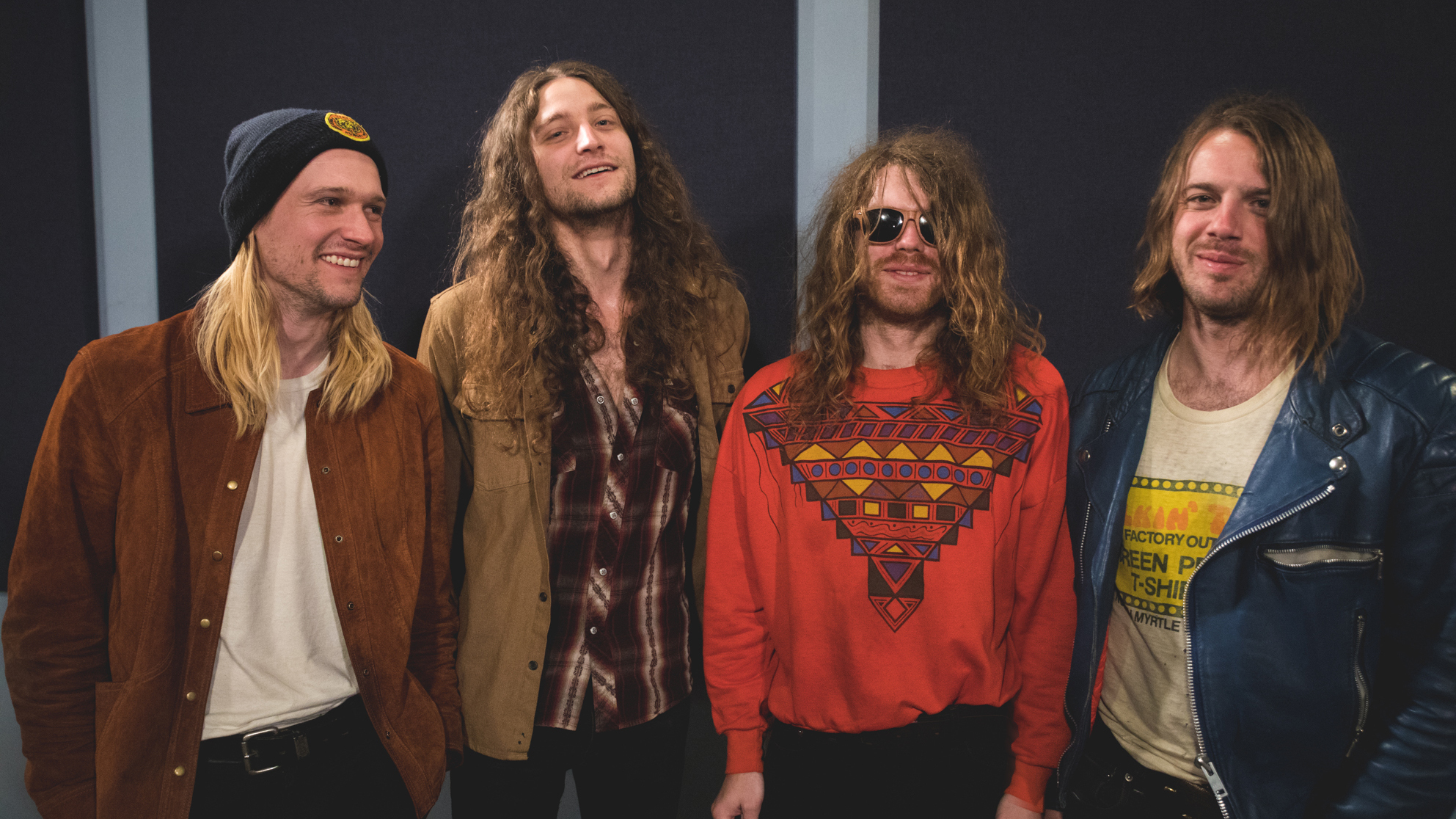
    At only 23, Wells is already writing hooks that any of his heroes would envy. In Nashville he’s found bandmates who can take his vision past what he could do in Fayetteville’s coffee houses and backyards. The sound on this album is huge, putting Welles in the same league as the smart bands reviving rock’s mainstream right now, like Royal Blood and Greta Van Fleet. Produced by Beau Boggs (who’s known for his work with Nashville mavericks from Jamey Johnson to Natalie Prass) and Bobby Emmett, with three tracks helmed by Dave Cobb (reminding the world here that he started his ascent as a producer in a rock band of his own), Red Trees and White Trashes has the heft and complexity to likely earn a few Grammy nominations; but it’s also obvious that Wells will always be comfortable in some dirty rock and roll kitchen where, as he says in one song, “everyone’s kinda ugly in that way that looks pretty,” girls in blue bobs are smoking something illegal, and somebody’s turned the amp up to 10 on the other side of the screen door. “It’s just summer again,” Wells cries as the bass line creeps like a snake in the grass. “Giving it away to the night life trend all again.” Giving it away to the thing that gives it all to you: rock and roll.

    On His Debut Album, Welles Pretties Up Dirty Rock And Roll, By Ann Powers, June 7, 2018
    https://www.npr.org/2018/06/07/615551402/first-listen-welles-red-trees-and-white-trashes
  • Welles Article in Nylon

    Welles Article in Nylon

    Meet Welles, The Band That Tells It Like It Is

    Why wouldn’t they?

    The Welles era is only just beginning. Welles’ just-dropped, five-song EP sounds like the kind of stuff a kid raised solely on psychedelic rock would make after dipping their feet in experimental college radio. Codeine is rife with dreams, trips, and sober reflections all told through music you just don’t hear anymore. There’s an authenticity to frontman Jeh-sea singing, “Lost myself, found myself, killed myself / And brought myself to life” on the EP’s title track. It’s neither emo nor theatrical—just very matter-of-fact rock that fits nicely alongside the early works of Bob Dylan and The Flaming Lips. We’ve got a modern classic on our hands, friends. Just you wait.

    Learn more about Welles in our interview with Jeh-sea, below.

    What are you most proud of so far in terms of your career?

    The album itself and making music that resembles all the music that we love, which is The Beatles, Sabbath, Zeppelin, T. Rex; good pop-rock music [is] an art that’s not quite as prevalent as it used to be. It’s still there, and it’s still very good, but I don’t think it’s really in the mainstream at the moment.

    What famous person dead or living do most wish you could have as a roommate?

    I’m sure we would just fight like dogs, anyone that I would want to, but I reckon John Lennon during the White Album era would be a good roommate, pretty dysfunctional and strung out.

    What is your favorite driving music?

    Depends on the mood. I like Jackson Browne’s “Doctor My Eyes.” That’s a really good one. King Gizzard & the Lizard Wizard will take you on a trip, whether you’re going on one or not.

    Whose career would you most like to emulate?

    Beck’s. It’s just great. It’s great music, and it keeps getting put out in a new way. There are some different things I’d like to do, definitely. Maybe I don’t need to reinvent myself as drastically as he has. I think that guy’s had an incredible career, and he’s remained so independent through all of it. Or, at least, it appears that way.

    What’s your favorite place to write music?

    My bedroom. It’s where I write all of it. I don’t have the luxury of having a secret place.

    Describe your aesthetic in three words.

    Winter, liquor, dream.

    If you had to wear one thing for the rest of your life, what would it be, and why?

    A good pair of dungarees. Those’ll probably last you a lifetime if you don’t scoot around on your ass to walk.

    Do you have any pre-show superstitions?

    No, no, nothing. I don’t really participate in any kind of spiritual realm. I’m very material, you know? A kind of Hobbesian, Randian existence where the only real thing is that which is in front of me. No black cat is gonna put me on edge, you know? There’s other shit going on.

    If you had to live in a past time, what do you think would be the most fun era and why?

    I’d want to live in the freest era. So where’s the most freedom? Probably in the New World and in the Americas and the mid-19th century where you had the Wild West and stuff like that. If you could get way out West, maybe out in Albuquerque or somewhere out in New Mexico and build your own house and have all your own food and that sort of thing. Actually, you can’t really find that while in New Mexico; so maybe Arkansas. I’d like to be able to subside off myself.

    What activities do you most enjoy doing alone?

    I love to listen to a good album.

    What’s the last good album you listened to alone?

    Well, I was just listening to the new King Giz stuff and their new video that just came out. I think it’s great. I like going through Flightless Records’ roster and listening to the Murlocs, and ORB, and King Giz, and Babe Rainbow, and Pipe-eye. All the good stuff that’s coming out their way. It may just be that it’s the only source I found. I’m sure there are other sources of wonderful music, but they really… they compartmentalize and do a very good job of distributing it to me via YouTube. That’s how I consume it.

    Are you on Spotify or any of those?

    No, I don’t do Spotify or any other players. YouTube is how I’ve always done it. Whatever algorithm they have in there, I don’t think is really swayed by a number of plays. I think it really has to do with the subject matter, so it takes me to places that are very tiny and that no one else has listened to. Like, 470 people have liked this video or have even viewed it, and I’m sitting there enjoying the shit out of it. It bugs me anytime I’m on social media or listening to music when I get suggested something. I think a lot of people feel the same way. How could you possibly know my taste, you know? I like to find things on my own; at least YouTube lets me fake-find shit on my own.

    When are you most relaxed?

    Recording in the studio. That’s when it’s best.

    What kind of person were you in high school?

    Confused. You’re over in Arkansas, and you’re playing sports, playing football, baseball, track, the whole run of it. Lifting weights and running around with these meatheads, and you’re one of them. You really are. But at the same time, you’re thinking about being wintery and yellow and liquor-y, and you’ve got this kind of Lennon spook on your ass, and you want to be the horror and the terror, but at the same time, you are a high school boy. I had to get away from it in order to kind of find what I wanted to be.

    Can you tell me a quality about yourself that you are genuinely proud of?

    I’m proud of being creative. What I really love and what really gets me off is being handed just a shit show, a basket case, and then making something out of it. If it’s a shitty guitar off Craigslist and making it your own, or if these are the only chords I know, and I’m going to make a song with them—that’s where it’s at. If all I have is this small number of gear, we’re going to figure out a way to record. That’s where I thrive. That’s what I enjoy. It’s not always good. It’s not always easy to listen to or anything like that, but that’s really what gets me off.

    What’s your next project?

    I don’t know. I can’t quite tell if I’ve already got the next album written or if I need to write it. There are so many songs. We could just choose from those older ones and go with those and make the next album, or I could write all new shit, and we could do that. Or a combination? The EP’s a combination. It takes so long to release music because there’s a marketing aspect of building your fans and that sort of thing. If it were me, I’d be like, “Oh, I wrote this song today,” and then the next day, it’s, “Oh, I wrote another song.” You don’t enjoy albums, you enjoy eras of people and their creativity. I can think of Beatles albums versus Beatles eras, and it’s like, I love Lennon, and RevolverMagical Mystery Tour, and Sgt. Pepper. Well, what do you love? Do you love those three albums, or do you love that era of that person’s music? Had they been releasing it day after day, you would’ve heard some of the best music they made, to you.

    If there was one phrase that best sums up your approach to life, what might it be?

    Finish it. See it to its end. It’s very important to finish, even if you only ever start one thing.

    Meet Welles, The Band That Tells It Like It Is, By Hayden Manders June 7, 2017
  • Dead Indian Name

    Dead Indian Name

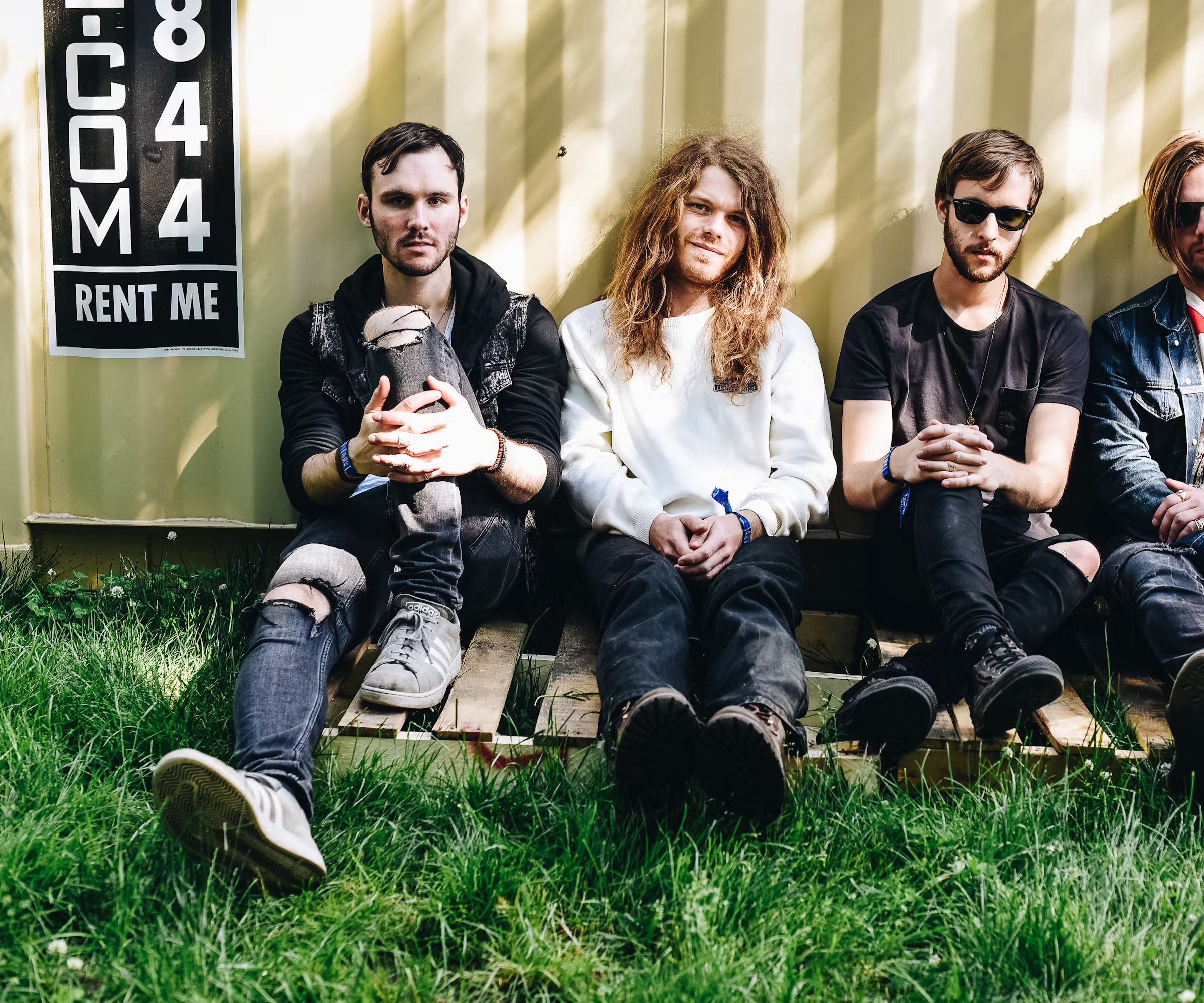
    Jesse Welles was previously in a band called Dead Indian.

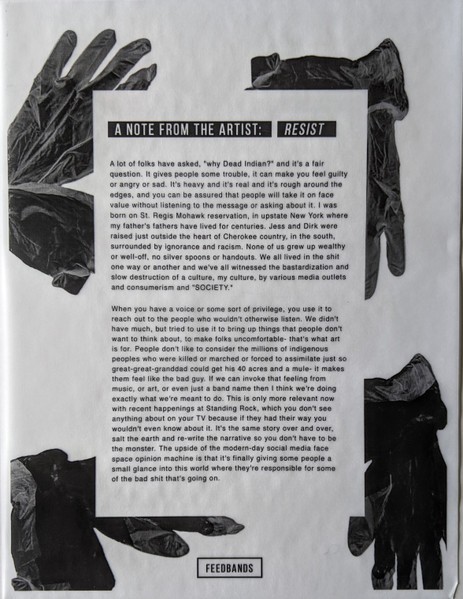
    There had been some concern, confusion and even controversy around the band name. The Resist release, included an insert with information on why they chose their name. Dead Indian was named not by Jesse, but by the drummer Simon Martin, who is the author of this note:

    They used the name “Dead Indian” to provoke a reaction and make people think about the history of indigenous peoples. The name is intended as a form of art to address cultural bastardization and historical injustices. They used their platform to highlight issues people “don’t want to think about,” like the events at Standing Rock. The note further argues that art should make people uncomfortable to prompt reflection on societal responsibility for past and present issues.

    A NOTE FROM THE ARTIST: RESIST

    A lot of folks have asked, “why Dead Indian?” and it’s a fair question. It gives people some trouble, it can make you feel guilty or angry or sad. It’s heavy and it’s real and it’s rough around the edges, and you can be assured that people will take it on face value without listening to the message or asking about it. I was born on St. Regis Mohawk reservation, in upstate New York where my father’s fathers have lived for centuries. Jess and Dirk were raised just outside the heart of Cherokee country, in the south, surrounded by ignorance and racism. None of us grew up wealthy or well-off, no silver spoons or handouts. We all lived in the shit one way or another and we’ve all witnessed the bastardization and slow destruction of a culture, my culture, by various media outlets and consumerism and “SOCIETY.”

    When you have a voice or some sort of privilege, you use it to reach out to the people who wouldn’t otherwise listen. We didn’t have much, but tried to use it to bring up things that people don’t want to think about, to make folks uncomfortable- that’s what art is for. People don’t like to consider the millions of indigenous peoples who were killed or marched or forced to assimilate just so great-great-granddad could get his 40 acres and a mule- it makes them feel like the bad guy. If we can invoke that feeling from music, or art, or even just a band name then I think we’re doing exactly what we’re meant to do. This is only more relevant now with recent happenings at Standing Rock, which you don’t see anything about on your TV because if they had their way you wouldn’t even know about it. It’s the same story over and over, salt the earth and re-write the narrative so you don’t have to be the monster. The upside of the modern-day social media face space opinion machine is that it’s finally giving some people a small glance into this world where they’re responsible for some of the bad shit that’s going on.