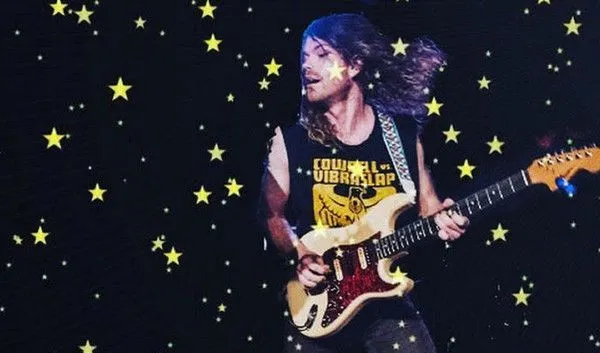
Jesse Welles: A Musical Vessel Like No Other
“I feel like a vessel for the marijuana,” he said.
We’d just roasted a few dabs of hash oil and were hanging out on our second-floor balcony at the Hill Place apartments in Fayetteville, Arkansas. For those unfamiliar, hash oil is a highly concentrated form of THC, likened in many ways to the “everclear” of weed. Put lightly, it’s potent.
Such an astute and apt description of this substance was one of the very first things I ever heard from Jesse Wells’ mouth. For a guy who’d hardly smoked much pot before, it was a moment of brilliance – or at least to us it was.
Meeting Jesse
At the time, circa 2015, I was a student at the University of Arkansas, playing on the school’s rugby team. Born and raised in Austin, TX to a pair of UT grads, I naturally grew up a Longhorns fan; these of course are few and far between in the state of Arkansas. Fortunately, I made quick friends with one of my rugby teammates, Dan, who like me was a Horns fanatic. If you’re wondering why I didn’t go to UT… well, it’s not a particularly easy school to get into. I leave it at that!
Dan, meanwhile, found himself in Northwest Arkansas by virtue of parental punishment stemming from his senior year of high school.
After being “busted” by his parents for smoking pot, he was forced to enroll at John Brown University in Siloam Springs, a small town nestled in the upper left-hand corner of Arkansas just along the Oklahoma border. John Brown is a private Christian school with strict policies in place; it’s a school for the religiously inclined in northern Arkansas to attend higher education.
At John Brown, Dan joined the rugby club in an effort to find a community that liked sports and wasn’t overly bound and chained by “the rules”. It was on this team where he met Jesse Wells.
Jesse went to a private Christian school? Yes, he did. Unlike Dan, however, Jesse was there on a scholarship to study and play music within the institution.
Fast forward a year to 2014, and Dan had transferred out of John Brown to the University of Arkansas, where he and I became good pals and subsequently roommates.
One night in 2015, Dan mentioned his buddy from John Brown was playing a show at one of the bars on Dickson Street with his band, Cosmic American. Dan confided that although the band wasn’t entirely his style of music, his friend Jesse was a badass performer so it would be fun.
Under 21, with class in the morning, and probably some Thursday night football on the TV, I declined to join them for the show. What a dumb mistake that turned out to be. I still kick myself for it.
Candidly, a part of me also didn’t want to go because I carried a ridiculous notion that the Northwest Arkansas music scene would pale in comparison with Austin, TX, where I used to frequent shows with my music-obsessed mother and my dad. What a close minded way to go through life; frankly, this is an example of the unwarranted snobbery you occasionally get from Austin folks. In this instance, I’m guilty as charged.
I’ll never forget how, shortly after Dan left for the show, I found some Cosmic American tunes on Facebook and gave them a listen, just to affirm I made a good call staying home. Pretty quickly, though, I realized the show was probably going to rock hard.
Dan got home later, buzzing about how awesome it was. Of course.
I hadn’t met Jesse yet, but from there on I made a commitment to myself I wouldn’t miss his next show.
A month or two later, Dan said Jesse was coming over to chill, and I said to myself “I want to meet this dude”.
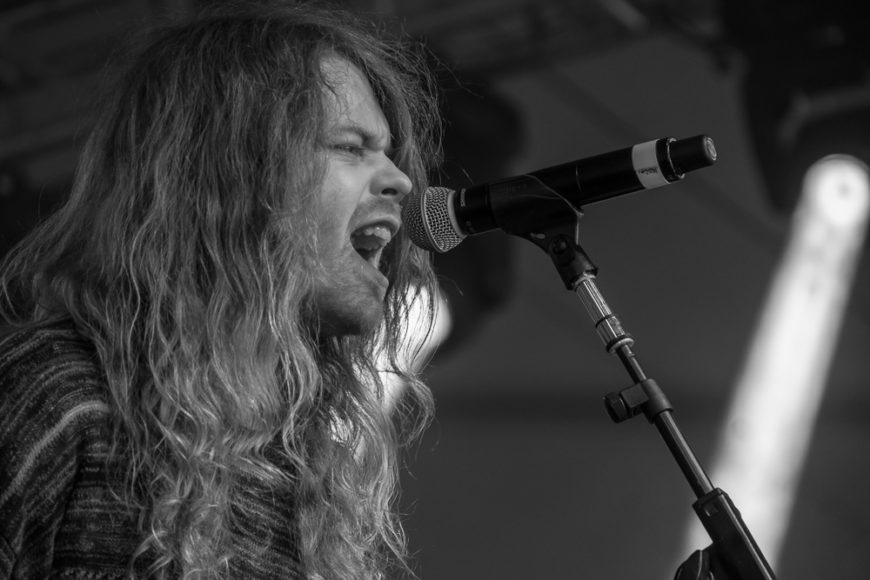
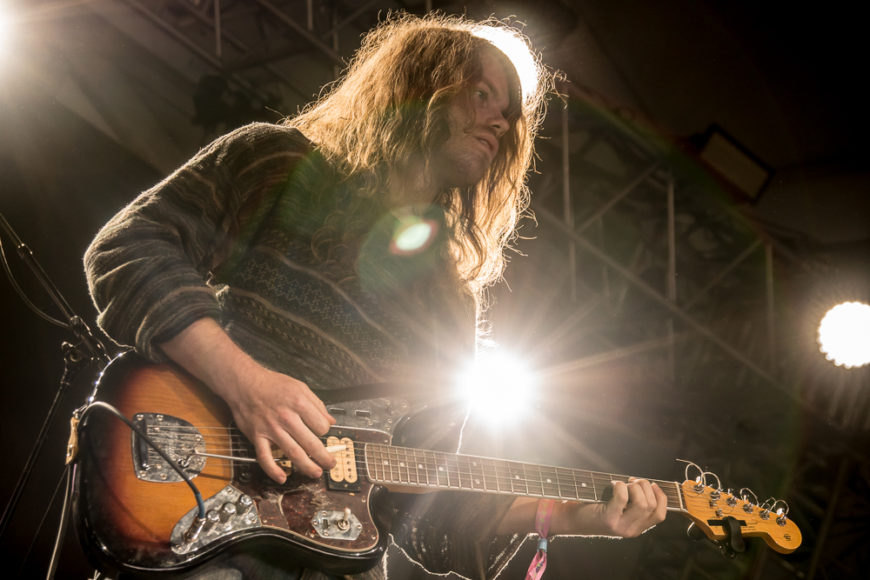
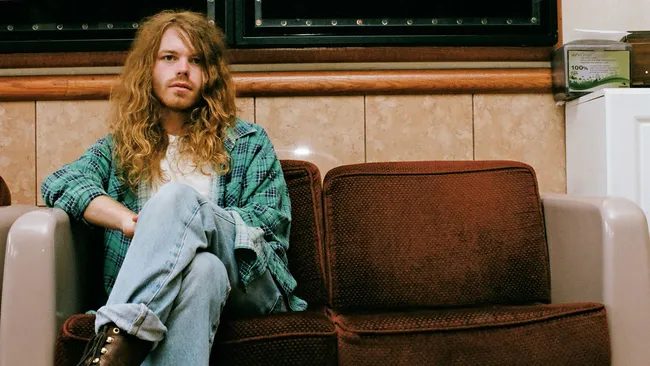
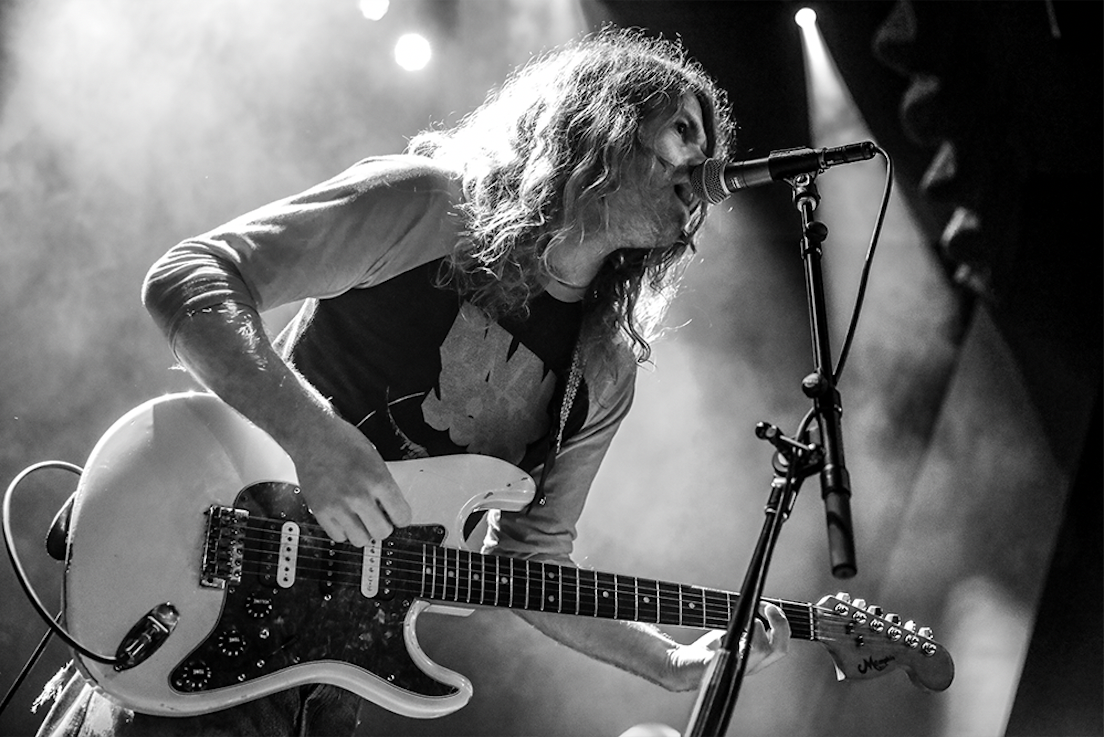
He showed up in black high-top combat boots, with black jeans and a pretty worn t shirt. His scraggly, dirty-blonde hair fell below the shoulders, emulating Kurt Cobain’s flow but with a fair bit more volume and a frizzy, Arkansas’d-out look to it, if that makes any sense. If you didn’t know any better, you’d figure he was a musician, but not one trying to look like a musician.
My other pal, Jack, was over as well that evening. Jack in his own right is an impressive person – he was one of the best rugby players I’ve shared a field with, as well as a 4.0, award-winning student at the Walton College of Business, and soon after a high-level consultant with Accenture.
I put this in context to say that even impressive-guy Jack and I felt a similar aura around Jesse; one that said this guy was different. We also found it refreshing how he didn’t seem to think he was all-that-and-a-bag-of-chips; on the contrary, he simply carried himself as a regular guy doing regular things in Fayetteville.
Where Jesse Came From
We learned more about Jesse that night – I am a curious person and love to learn about people’s stories, so I tend to ask a lot of questions. I believe that if you’re alive and breathing, you have a story as to how you got there! Digging into Jesse’s story was outright fascinating, in a way you may read about in a fictional telling.
He was born and raised in Ozark, Arkansas, which is a teeny, little town right in the middle of the state, not particularly close to Little Rock and not particularly close to Northwest Arkansas, the only “hubs” in the state.
To help illustrate in small part the backdrop of Arkansas, allow me to share a quick aside:
Much of Arkansas is gorgeous, and as such I used to go on hours-long drives with no destination in mind to explore the hilly back roads while I listened to music. On these drives I gathered new perspective into what life is like for most Americans outside the urban areas – I believe they call this portion of the population “the silent majority”.
Nestled within the hills, far removed from grocery stores and restaurants and libraries and shopping malls, are trailer parks at the beds of rivers, and small two-room houses buried in the woods. You also run into the occasional large farm with rolling pastures of land, headed by a big, pretty house. I always found this juxtaposition to the surrounding “poverty” fascinating.
As for most of these inhabitants, we don’t hear much about them because their voices aren’t there to be heard; they don’t scroll on social media and broadcast their opinions; they don’t tweet out what they did over the weekend, or post Instagram pictures of what and where they’re eating for breakfast. They are more-or-less off the grid. They aren’t as “connected” to the rest of the world, and that comes with its own sets of positives and negatives.
While I’ve never been to Ozark, Arkansas specifically, what I’ve gathered through Jesse and through my own findings is this aforementioned environment is essentially the same as where he grew up. I remember we once went to a Wendy’s, and Jesse had said it was the first time he’d ever had fast food. Facetious or not, I felt that said a good bit about life in his hometown.
Arkansas may not carry a glowing reputation around the country, but it’s not for lack of beauty or natural resources. In fact, the state of Arkansas is home to the highest concentration of minable diamonds in North America, and one of the highest in the world. If we think about “finding diamonds in the rough”, Jesse Wells is no exception. He is a true gem from an unlikely source, which breeds a raw authenticity in his music, his voice, and his lyrics.
Showing Us New Tunes
So as we smoked that hash oil and Jesse got to talking about feeling like a vessel for the marijuana, we could do little more than chuckle and agree.
We came inside shortly afterwards, and Jesse asked if we’d mind if he showed us a new song he made that day, clearly proud of his work but curious for some feedback. With no hesitation, I said yes and he hooked his phone up to my sound system and hit play.
The song he played was a tune called “should i be in pain”, and it instantly captured my attention.
Where Cosmic American was a purer rock and roll sound, Jesse’s solo work on this track infused a Beatles-esque songwriting quality with appropriately heavy-hitting rock elements. The song had a wonderfully psychedelic nature to it, though without any “laser-like” sounds or other synth components you normally associate with psych-rock. He also surprises the listener with a killer guitar solo which comes across like a Southern Americana love-child of Rod Stewart and T.Rex. It’s wonderful.
When Jesse played that for us, my perception of him began morphing from “I want to hear this guy’s tunes” to “I need to hear this guy’s tunes.”
I asked him if he had any others he could show and he chose to play one more; understandably, he didn’t want to make the night all about himself so he said this was the last one he was gonna show us. I most certainly wouldn’t have minded listening to his music all night, but I understood.
Before he played his next song, named “it’s alright”, he said, “This song’s about smoking weed.”
This was a far more bluesy track, yet it still commanded a level of psychedelia that belied the blues genre. Again, it was another killer jam with catchy, witty lyrics, and exceptional guitar work. Worth noting as well was the outstanding work on the bass and the drums, prompting me to ask, “Who’s the drummer and who’s the bass player?”
“Both me bud.” Of course it was. I was beginning to think this guy might have a prodigious nature to him.
Jesse went home that night, back to “Space Mountain”, which we learned was an abandoned art compound where he used to live, write, and record all his music. Pretty damn cool.
Getting Hooked
I simply had to get Jesse’s music into my starting lineup, one way or another. Fortunately, he soon thereafter released an album called “pall mall church” on Bandcamp, which was free to stream and available to download if you paid any price. You could literally pay $1 and download it to your phone.
“pall mall church” is a 14-track LP that contained each of the two songs Jesse had shown us at our apartment weeks before. I was chuffed to have access to his record and started listening to it non-stop on repeat. It was sensational, start to finish. I had to text my mom and tell her she needs to listen to it.
My mom is a hard-core music head, and a particularly hard rocker at that; she knows good music, and she knows it well. Her flavor of the season at that time was Brian Jonestown Massacre (who are incredible btw), and we’d been listening to the hell out of BJM in those days. I told her I didn’t mean to overhype this new artist I’d met, but I felt like Jesse’s album “pall mall church” was like a blend of Brian Jonestown, T.Rex, and a handful of other great artists.
My mother quickly became hooked on Jesse too. Like me, she dove in headfirst. But unlike my frugal college ass, my mom was responsible and actually paid $30 or something for the album on Bandcamp in an effort to support Jesse. I never paid for it – again, stupid. I’ll get to that in a minute.
Moving to Nashville
Jesse came back over to our apartment again at some point, told us he was getting signed to a record label, and would be moving out to Nashville. I won’t disclose what he said the offer from the label was, but at the time it seemed like a huge amount of money, especially to a young guy from Ozark, Arkansas. This was exciting, but it meant Jesse wouldn’t be around to play in Fayetteville anymore. It appeared I had missed my chance to see one of his shows. That sucked.
What came with the move to the record label was also a painful reality: all of Jesse’s music from Bandcamp was scrubbed, and since I hadn’t paid for and downloaded the album, I officially lost access to the masterpiece of work that was “pall mall church”. What a punch in the gut. I’d surely listened to it no less than 75 times at that point.
Thankfully, however, my responsible mother had paid for it, and I was able to log into her Bandcamp account and retain access to the tunes. Phew.
Another reality then set in as well: big label bullshit. Big wig record producers began insisting they knew better than Jesse how to publish his music and make it “better”.
When Jesse moved to Nashville, he linked up with a famous(ish) producer named Dave Cobb, and the label also paired him up with two other musicians to form the band “Welles”. For marketing purposes, they changed his last name from Wells to Welles, which I’ll admit does look a little better. Look is one thing, sound is another.
Instead of permitting Jesse to produce all his own music as he’d done in the past, the record company took greater ownership over production and composition. They had a narrow vision of who they wanted Jesse to be, which was a stadium-rocking, Axel Rose, Brett Michaels kind of performer. Alright, Brett Michaels is a stretch because Poison was crap, but they wanted him to be the sort of musician that “embodies the rock and roll image”, as if he was a front man for Def Leppard in the 80s.
Don’t get me wrong, Jesse was still writing the songs, and the album he recorded, “Red Trees and White Trashes”, is really good. But where “pall mall church” had such a unique sound and style to it, “Red Trees and White Trashes” was closer to the garden variety “big rock” sound you hear from groups like a Greta Van Fleet or a Highly Suspect. The sound is fun, but it lacks that level of intimate authenticity you may hear from a Tyler Childers, or a Courtney Barnett.
Going on Tour
In the Nashville days, Jesse might’ve been handcuffed to the label, but with that came some pretty sweet touring opportunities. He opened for Greta Van Fleet and Highly Suspect, as well as Royal Blood and the Regrettes, the latter two of which I’ve become extremely fond of myself.
Jesse also came back and did some shows in Fayetteville, so I got to see him perform after all. As you could’ve guessed, these shows were exceptional.
I remember one time in 2018 just before Christmas, I went to his show at Antone’s in Austin and brought along two of my buddies. The show was killer, then afterwards Jesse brought us upstairs while the Regrettes played (who at 17 years old were already great in their own right).
During the show before his, Jesse had decided to write and record a song in one of the venue’s little studio rooms upstairs. It only took him an hour! He offered to show us what he was working on, so we took turns putting on the big over-ear headphones and were all blown away. How on earth did he just slap together something so good in a matter of 60 min? Again, I thought this guy must be prodigious.
Diving Deeper Into the Catalog
Around this same time, Jesse gave me a private Soundcloud link to another album he’d written and recorded by himself, called “space camp summer 18”. I suppose it was some kind of thanks for supporting him and for being an early super-fan – I certainly wasn’t the first big fan, but at the time there weren’t many of us.
“space camp” was outstanding, just like “pall mall church” before that.
Where “pall mall church” had more of a gritty psychedelic flavor to it, “space camp” was a rock and roll record in nature, full of splendid songwriting and the typically cutting wit that characterizes Jesse’s lyrics.
By now, I’d started getting more people hooked on Jesse. Not as many as I’d have liked, but the people who “got it”, got it, like my buddy Kyle. I must have played Jesse’s tunes for 75 different people at least, and while most agreed he was very good, they weren’t hooked in the way I was. Whatever, I didn’t mind.
I badly wanted Jesse to make it big, but as long as he was still making music and doing what he loved, I was happy enough to be alive and able to catch his tunes while he was still making them.
Breaking Free, but Nearly Broke
In his time at the record label and in Nashville, Jesse never did “make it” commercially. From my point of view, they tried turning him into something he wasn’t, they crippled his ability to record the way he wanted to record, and they robbed the public of a genuine diamond in the rough.
At some point, right around the start of covid, Jesse freed himself from the shackles of the record industry and returned to doing it all himself. As liberating as that must’ve been, it did mean he was forced into the grind. It was challenging and would’ve been easy for a lot of people to throw in the towel and give up on music.
Thankfully, Jesse isn’t a lot of people.
During this period, Jesse got a job packing meat and started a Patreon account on the side as a medium to continue releasing music to dedicated fans. You could imagine this wasn’t a wildly lucrative time, but folks with a real passion for something never seem to abandon what they love over a few extra bucks.
The Patreon & Bandcamp (Part II) Era
So Patreon it was.
Here he shared recorded tracks, live performances, and even podcasting content. My word, there was some brilliant stuff on there. Vowing to never repeat the mistake of not paying for the rights to hear his music, I committed to paying $30 a month for full access to his Patreon. That was an excellent decision.
Jesse also started releasing EPs every 6 months or so to Bandcamp, and once again I paid for and downloaded those in earnest. I can only say that if you’re a music fan, you simply have to listen to these EPs and gain a real appreciation for Jesse’s musical ability, his versatility, and his astoundingly prolific songwriting prowess.
The first EP during covid was an Americana record named “Q2”. This bad boy has excellent guitar work, really poignant lyrics, and a “soul” which was so needed during the sad and confusing early days of Covid.
The next EP was a jazz record by the name of “non essential business”, and while it’s super well done, jazz is just not my style so I never really listened to it.
After that was a magnificent heavy rock EP that even Black Sabbath would be proud of, dubbed “Joe Dirt Cobain”. This was my personal favorite of the three.
He also released a sweet cover of the Beatles’ “Don’t Let Me Down” for good measure, and recorded a smattering of singles in collaboration with other artists.
After three strong EPs, Jesse then graced the Apple Music / Spotify airways with a surprise second LP called “Arkancide”. I could draft a full album review, and maybe I will eventually, but take my word for it when I say it’s excellent and should be listened to over and over again. Oddly enough, this LP was taken down from Apple Music, but you can find it on Bandcamp, along with those other three EPs. Don’t forget to pay!
After Arkancide, Jesse dropped Arkancide 2 and Arkancide 3, each of which are top drawer as well.
Small Town Return, Big Time Success
To this point in the story, Jesse’s musical talents remained mysteriously unheralded, but as a great friend of mine likes to say, “Consistent, quality work can’t be denied.” Jesse continued to publish consistent, quality work, and it was only a matter of time before people would one day discover and marvel at his catalog of music.
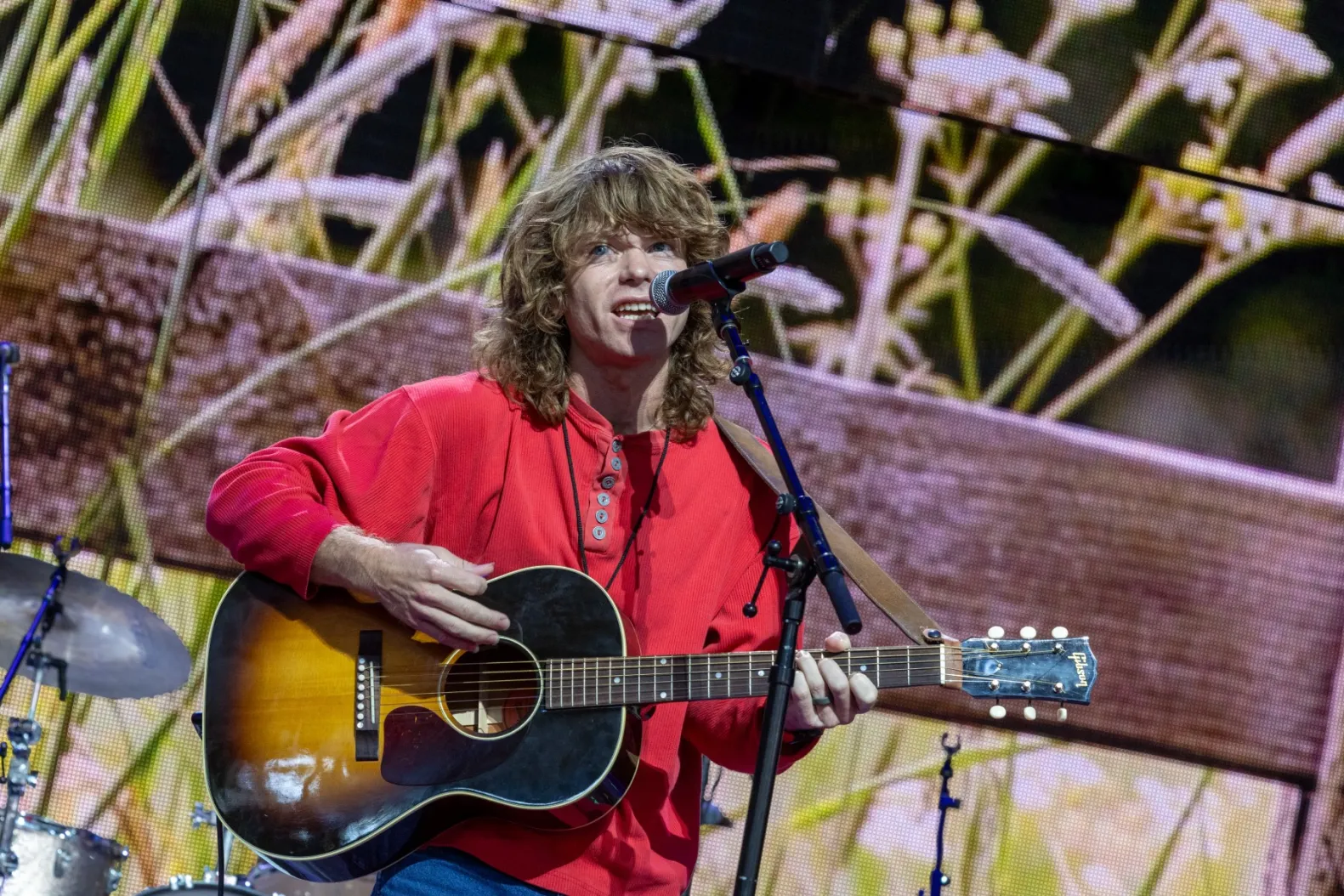
Then, all of a sudden, it happened. For hundreds of thousands of new fans out there, the rest is well-documented history. At long last, Jesse has broken through to the masses and is in many circles being dubbed as 2024’s breakout artist; even Dave Matthews introduced him at the Farm Aid music festival as “one of the greatest songwriters I’ve heard in my life.”
Ironically, after all that travel, all the touring, the record labeling, the self-recording and producing, the radio play, the music videos, and the corporate promotion, Jesse’s breakthrough came in the simplest form: solo-performing dozens of songs from his catalog in the backwoods of his hometown, equipped with nothing more than an acoustic guitar, a harp, and a camera.
Through extraordinary talent, wit, creativity, and authenticity, Jesse Wells is beginning to inspire an entire generation of people to remember there is still hope for greatness, hope for change, and hope for something “real” in a society which grows increasingly artificial by the year.
He may be a vessel for the marijuana, but he’s also a vessel for God’s gift of music.
Jesse Welles: A Musical Vessel Like No Other, By Alex Rees, December 13, 2024
https://www.thepitchmedia.net/jesse-wells-a-musical-vessel-like-no-other
Category: News

Jesse Welles – Musical Vessel – The Pitch Media

In Rolling Stone Regarding Healthcare
Jesse Welles Eviscerates UnitedHealthcare in New Protest Song
The buzzy songwriter tells the story of corporate healthcare in a John Prine-like ballad
Songwriter Jesse Welles has been turning heads with his solo acoustic protest songs about the war in Gaza (“War Isn’t Murder”) and capitalism (“Amazon Santa Claus”), earning a devoted following online and at his sold-out concerts, including the upcoming leg of his Fear Is the Mind Killer Tour. This week, Welles recounted the history of America’s healthcare industry in a new acoustic video and song, “United Health.”
With a melody reminiscent of John Prine’s “Fish and Whistle,” Welles cuts down UnitedHealthcare specifically — just a week after the shooting death of the company’s CEO in New York. (A suspect, Luigi Mangione, was charged with murder on Monday in connection with the assassination.) “Way back in 70 and 7, Mister Richard T. Burke started buying HMOs putting federal grants to work/made 50 billion buckaroos last year/the Warren Buffett of health the Jeff Bezod of fear,” Welles sings, detailing the origins of the healthcare giant and its founder, before dropping a wickedly sharp line about last week’s murder: “Now CEOs come and go and one just went/the ingredients you got bake the cake that you get.”
Welles, an Arkansas native, offers a cynical view of not just the U.S.’s healthcare system but the siloed state of the country in general. “There ain’t no ‘you’ in United Health, there ain’t no ‘me’ in the company/there ain’t no ‘us in the private trust/there’s hardly humans in ‘humanity,’” he sings.
The singer-songwriter, who previously fronted the Fayetteville, Arkansas, rock band Dead Indian — a group that recalls the sonics and social message of Nineties alt-metal greats Warrior Soul — will kick off his new tour in February, which hits venues like Bowery Ballroom in New York, Terminal West in Atlanta, and the Basement East in Nashville. All shows through April are sold out.
Jesse Welles Eviscerates UnitedHealthcare in New Protest Song By Joseph Hudak
https://www.rollingstone.com/music/music-news/unitedhealthcare-song-jesse-welles-protest-song-1235202103/
Pancakes and Whiskey on Welles’ Joe Dirt Cobain
Welle’s ‘Joe Dirt Cobain’ EP is a Heavy, Guitar-Powered Trip
The catchy EPs that Welles has been building solo at home and quietly releasing for free (three now since April) have been major bright spots this year. Carefully constructed yet raw, each one explores a different genre, dishing out surprises that seem designed to put a smile under your mask. Following the “surreal jazz funk” of Non-Essential Business and the “country folk americana whatever” of Q2, the creative mind of Jesse Wells has most recently delivered “some heavy for u” with the release of Joe Dirt Cobain. These “songs from the bedroom” are everything we’d hoped for when he originally started teasing a ‘70s heavy metal-inspired release.
“These are May and June’s rejects while I toil for the next set of Welles tunes,” Jesse Wells told P&W, evidently unaware that his rejects rock so hard. When he put out the EP, he posted, “I am very thankful and thoughtful.” That was not long after his own fake review from Rolling Stoned: “a complete and utter disappointment” he raved – one of those self-deprecating Jesse jokes that sharply contrasts his technical chops and songwriting ability. Joe Dirt Cobain’s comedy/grunge mashup of a title has the same vibe, echoing that seriously-rocking but not-taking-itself-too-seriously quality of his music.
The gnarly riffs of first track “Class War” foreshadow the vicious badassery to come. Welles holds your attention with raging guitar and COVID-era observations that hit on maddening injustices. “Don’t you ever wonder ‘bout cash flow? / Don’t you wonder where it all goes? / People gotta slave while the plague comes and rapes all the people who can’t work from their homes,” Welles sings in his classic and pleasing voice. “All Aboard The Bus To Pineville” starts up faster and features three twists (at 00:58, 1:39, and 2:18). In this addictive song, he seems to make further commentary on class divide. One could interpret a jab at the privileged who are able to relax luxuriously during the pandemic because of their economic status: “Tell me more about the ties that bind / Only death allows you to unwind.”
Next track “Bachelor’s Degree (Ashleigh, Hayleigh, Brittany, Brooke)” has an equally unpredictable pace, topped off with the punk energy of a subversive pep rally – as in lines like “School is shit / I learned one thing / Teach your own self how to sing.” And we can’t help but notice how much the “Cobain” part of the EP’s title shines through on the following song, “Dead Man’s Legs.” With a guitar hook that sounds like an admiring nod to Nirvana’s “Heart-Shaped Box,” the compelling song includes a treacherously-cool guitar solo and some tough lyrical truths – including “Nothing’s gonna fix the world for me” and “No one’s gonna fix the world for free.”
The longest song on Joe Dirt Cobain is a psychedelic-sounding treat called “The Sun is Like a Holy Apple Pie,” clocking in at 4:10 thanks to its mellow and syrupy melody. Creating the precise mood of laying in the grass and staring up at the clouds, Welles ponders life from the sun’s perspective: “It would be so pleasant to be so grossly incandescent.” EP closer “Step Inside My Nuclear Mind” gives us a final dose of his beastly guitar work and Welles seemingly shifts his focus to the flaws of the music industry. “Step inside my nuclear mind / Dig until you’ve found what you find,” he urges, as well as, “Oh and tell me which direction is north / I swear to god I’ll show you my worth.”
The fact that we already have another gripping batch of Welles tracks to enjoy makes his independent process all the more impressive – “No mac, no protools, nothing over 150 bucks. I am completely alone when I record,” he told us back when he unveiled Q2. It’s such a blast to headbang and groove to Joe Dirt Cobain that we hope he’ll write more in the ‘70s metal realm, but we also can’t expect him to stick with any one style. This is a D.I.Y. hero whose work could land in multiple aisles in a record store and do each genre justice. Here’s hoping Welles’ homemade EPs come out in some special vinyl release in the future, so that physical versions can be displayed side by side like the gems of rock history they are. Until that day, check out his Bandcamp page to hear the sixteen fresh songs that are greatly improving 2020 for us.
Welle’s ‘Joe Dirt Cobain’ EP is a Heavy, Guitar-Powered Trip, By Olivia Isenhart, August 3, 2020
https://www.pancakesandwhiskey.com/2020/08/03/welles-joe-dirt-cobain/Pancakes and Whiskey on Welles Q2 EP
Welles’ Quarantine EP Series Brings Another Twist with ‘Q2’
Just eighteen days after he cured our isolation blues with a surprise jazz funk EP called Non-Essential Business, Jesse Wells casually unveiled his “second quarantine EP.” His self-described “country folk americana whatever” release, entitled Q2, includes five feel-good songs that have repeatedly made us grin – whether over the personality in his lyrics, or his WTF level of technical expertise. It’s awesome to see a classic rocker like Welles show off his genre-surfing abilities as much as he has been lately, and he’s not stopping here. According to a recent social video that showed him at home busting out some Black Sabbath on guitar (one of many fleeting clips that his followers enjoy on a regular basis), his third quarantine EP is coming soon. It will bring us yet another shift in style: 70s heavy metal.
His second quarantine EP showcases a country side that we haven’t yet gotten to know, yet still maintains that special sixties-rock element that has kept us so hooked on the music of Welles. It’s a tie-dyed, grassy, barbecue-ready sound that comes through on Q2; a dazed and jaded kind of country that he delivers like an old pro. Hailing from Ozark, Arkansas – “where there’s beer and molasses,” as he sang on debut album Red Trees and White Trashes – Welles seems to weave nostalgia from his upbringing into the fabric of Q2. Upon its release, Welles shared an interesting tidbit with P&W that further explains his impressive knowledge of country guitar licks. “In high school, I worked at KDYN Real Country Radio (Ozark, AR) as a host and DJ for Dial-A-Deal. I heard a lot of country and love most of it. Daniel Donato made me wanna actually play that way when I moved to Nashville. So I’ve been practicing.”
While the low-res cowboy hat that comes with it is delightfully crude, don’t let the Microsoft Paint album art fool you. Q2 sounds so polished, we had to ask Jesse how he’s pulling it off. Is he really putting all this together at home? Is anyone else contributing? Replying to our inquiries with two disappearing videos, he walked around a modest room stuffed with guitars, drums, and cords snaking around the floor, finishing the fast tour at the laptop on his desk. Next to it, he zoomed in on the price tag stuck to his M-Audio Fast Track Pro interface: $37.95. It was purchased at McKay’s, a regional chain of used music/book/movie stores with a location in Nashville. “No mac, no protools, nothing over 150 bucks. I am completely alone when I record,” Jesse told us. Knowing his production chops, it was unsurprising to learn he’s doing it all himself, but exciting nonetheless to see him confirm it. In a short homemade video that accompanied Q2’s release, you can catch Welles making breakfast, strumming on his porch, greeting his cat, and drumming in that music room he briefly showed us.
Q2’s opener, “Calamity,” seems like it was designed to stick in your head. Brimming with his honeyed self-harmonization, not only is it catchy – it’s witty as hell. Hearing him peacefully sing, “I want death / I want calamity… I want blood / I want a thousand-year flood / Don’t ask me why I want it / I just want it just because,” we obviously had some questions. Was he portraying a certain character? Or does it come from a real screw-everything kind of mood that hits him? Jesse responded in his signature chill way. “Calamity is just hungover me. I get better as the day goes on.” Second song “Goodbye Sheetrock” builds up to a nimble guitar solo that makes us want to stomp on dusty floorboards in somebody’s barn. Lyrically, he plays on the ol’ country song tradition of listing what you’ve lost in a breakup, with a few clever twists. “Goodbye, good sex / hello, hand!” he sings unashamedly. “You know it’d all feel that much better if I were only in a band / if I owned an acre of land / if I could eat corn out of a can.”
“Runnin’” feels like a golden oldie you forgot about, but it’s not; it’s all fresh stuff from Jesse. Delivered in his husky timbre, it’s like a wild west bad guy theme topped off with an equestrian trot of a beat. “I am a runner / I take my pills / I run ahead of all the people speeding, all the trucks and cars” he sings, later adding, “The Lord did not intend for there to be a man like me.” It’s just the right time for such a socially-distanced jam, and the getaway vibe continues with “Talkin’ People.” Welles describes a desirable escape – via canoe – from a certain type of aggravator we’ve all surely encountered. “And I’ll never have to talk again / to people who pick sides like they’re picking apples / wrapped in identity and ready for battle / They spread awareness like Nutella / and no they don’t all fall underneath that umbrella / but I’ll never have to talk again,” he sings dreamily. If you’re into Welles for that magical 1968ish groove he always seems to be achieving, prepare your soul for Q2’s closing track, “Treat ‘Em Well.” Packed with classic guitar riffs from the beginning, the melody matches the song’s loving message. “Treat ‘em well, treat ‘em well / whoever they are / even if they’re not your friends / go ahead and treat ‘em well.”
Welles’ Quarantine EP Series Brings Another Twist with ‘Q2’ By Olivia Isenhart, April 27, 20202
https://www.pancakesandwhiskey.com/2020/04/27/welles-q2/Pancakes and Whiskey on Welles’ Non-Essential Business
Welles Unveils Groovy Surprise EP ‘Non-Essential Business’
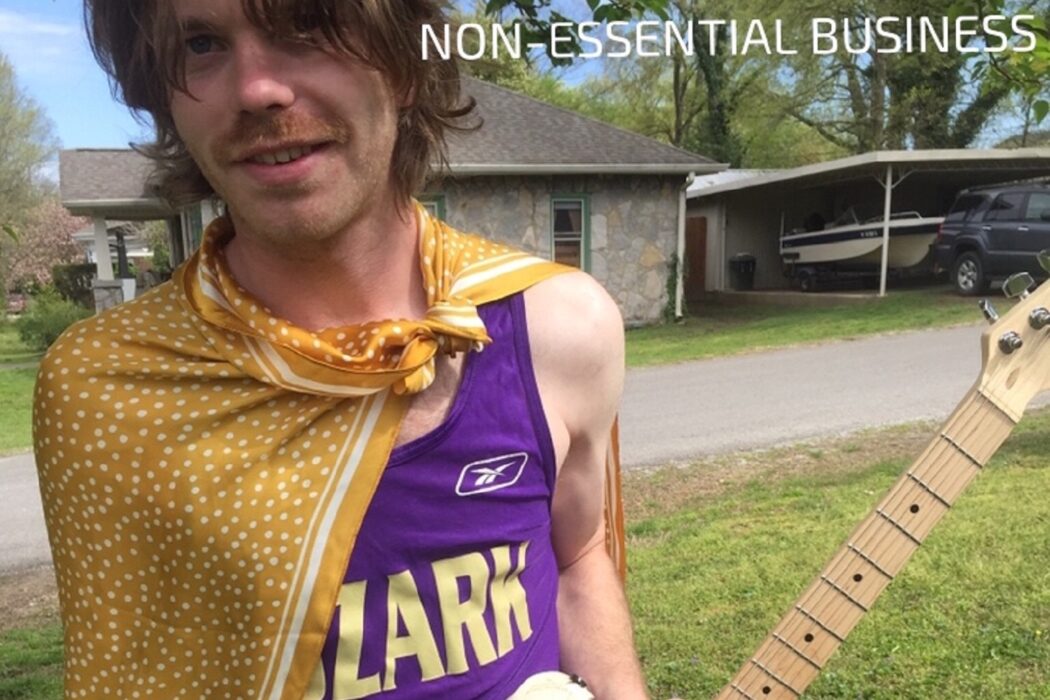
Knowing Jesse Wells, he probably didn’t realize how much he was making our week. Maybe our whole month, whatever month it is. Right when the world really needed a pick-me-up, Welles unveiled a funky new EP on Bandcamp entitled Non-Essential Business. There was seemingly no advance notice aside from a photo on the eve of its release: Jesse in his high school (Ozark, Arkansas) jersey and a polka-dot scarf tied like a cape, grinning with his guitar at the ready. “I’m puttin out an EP tomorrow,” he announced in the caption. “5 surreal jazz funk tracks are called NON-ESSENTIAL BUSINESS. I never do this shit cus well whatevs, but if we keep locked in like this, I’ll keep releasing the b.s. I normally make for me and my close ones. Get excited it BLOWS.” No surprise here: it does not blow. On the contrary, it’s that special kind of underground music that is so damn catchy, you want to make sure your friends hear it.
Being big fans, we had to ask Jesse for some more background on the five snazzy tracks that make up Non-Essential Business. “I am, like everyone else, bored,” he told P&W. “So I picked up harmonica and started listenin’ to Sly Stone and Bitches Brew [Miles Davis] and watched where it went.” When asked how long he’s been playing jazz/funk, he replied, “Got the Mothership Connection [Parliament] at a garage sale in the 9th grade. Grew up playing in jazz bands in high school through college. Quasi jazz. White boy jazz. Still don’t know how to improvise from that perspective. I’m feeling around in a dark room, but I found a wall to lean against.”
Getting surprise new music mid-pandemic is a unique treat, but this jazzy chill pill of an EP would be exciting anytime. We should have seen it coming – during our last interview backstage at Mercury Lounge last year, Jesse teased, “I want to put out more music – a tune a day is what I want to try for – while I’m at home.” Right after that, he happened to add, “I didn’t get to hear King Gizzard & the Lizard Wizard until they had several albums out, and I finally caught ‘em with I’m In Your Mind Fuzz and I was just sucked in. I’d love to get on the road with ol’ Stu.” This made us wonder if we’d hear any Gizzard vibes sneaking into future Welles music, and Non-Essential Business has now answered that question (check out KGATLW’s Paper Mâché Dream Balloon and Sketches of Brunswick East). We wouldn’t change a thing about the pure classic rock sound Welles achieved on his 2018 debut album, Red Trees and White Trashes. Even so, it’s a thrill to hear him branch out wildly with such finesse, especially as he layers over himself in this D.I.Y. format.
Opening song “No Time to Pout” is a syncopated trip that stalls in all the sweet spots. The way he delivers the chorus, “So what are you crying about? Ain’t got no time to pout,” is motivating even in a time when tears are justifiable. The tough love turns into tender love with next track “Treat Your Self Well.” The well-timed reminder surfaces within a groove that goes with the getaway car in a foxy cult crime movie. Amid all the jazz funk attitude, he simultaneously finds that feel-good sixties-rock coolness that defines past Welles hits (listen to “Are You Feeling Like Me” and “Life Like Mine”). This is really noticeable in the extra-sticky “Don’t Go Changing,” a mood-altering hit that keeps building and resolving in satisfying ways. His self-harmonizing in the chorus sounds like the best part of another era, and the song also features a spoken-word taste of his easygoing personality. In a tone of voice reminiscent of Mitch Hedberg, Welles takes on the “bad people” who “love to just screw your head into the ground, man” with a timeless “fuck ‘em.”
The positive energy carries on through “Everybody’s Got a Little Bit (Even If They Don’t Wanna Admit),” an unhurried jam with some serious lyrical flow. “From the bird in the sky / to the worm in the ground / Tell ‘em all what you heard at the fountain of sound / And tell ‘em all real loud / so they’ll hear it in the back / They can steal your sound / you just make another track” he sings. Beneath that smooth poetry, his titular line, “Everybody’s got a little bit / even if they don’t wanna admit” continues softly. Final song “Thankful” – which begins and ends with some old-school “ah, ah, ah, oww!”s right out of his soul – leaves a valuable message looping in your head. “Let’s be thankful for the things we’ve got / even if we ain’t got a lot” Welles urges over a glimmering bass line. And with tunes as fresh as these, thankful is exactly how we feel.
Welles Unveils Groovy Surprise EP ‘Non-Essential Business’, By Olivia Isenhart, April 13, 2020
https://www.pancakesandwhiskey.com/2020/04/13/welles-non-essential-business/
Chicago Tribune on Jesse Wells of Welles
Wells has rock ’n’ roll history behind him
For a ride-or-die rocker like Jesse Wells, the prospect of his beloved genre no longer being the dominant one is hardly reason to worry. “I’ve got all of rock and roll history behind me,” the Arkansas-born singer-guitarist said of forces working on his behalf. “All of it. Us rock and rollers getting to live right now, we get to strive to be the culmination of everything that’s already happened and literally just be a walking jukebox of all these splendid tunes from yesteryear. I want every single gesture of mine to be pure rock and roll to the point where it’s as natural as breathing.”
The musician who performs as Welles, and headlines Schubas on Wednesday, is well on his way: from his equal-parts moody and melodic songs resembling a master class on the evolution of rock music in the 20th century — think poetic Bob Dylan-style lyrics, buzzing Zeppelin grooves, and gnarly Kurt Cobain vocal angst — to even the mellowed-out manner in which he speaks. It’s as if the 24-year old was born in a run-down rock club green room.
“I’m in it for the long haul,” he said without hesitation when calling from his adopted hometown of Nashville as he gazed out the window on a rainy day, sipped on a cup of coffee and observed “all the fat squirrels” scampering through his backyard. “Despite admitting the unstable nature of the profession, and more specifically the financial pressures of being an up-and-coming rock musician in 2019, has Wells “existing in a permanent state of vague uneasiness,” “what I definitely know is this is going to be my career. Because it compels me more than I compel it. I feel like this is what I must do.”
Wells says he made the decision to be a musician early on as a child growing up in his native, small-town Ozark, Ark. He remembers recording music off the radio straight to cassette tape, digging into Beatles albums like the copy of “Sgt. Pepper’s Lonely Hearts Club Band” his grandfather gifted him at age 10 and, as he got older and began writing his own songs, dreaming of playing gigs at roadside bars in nearby Fayetteville. In 2015, after being discovered by his now-manager, he made his first trip to Nashville and was quickly shuttled into recording sessions with acclaimed producer Dave Cobb (Chris Stapleton, Sturgill Simpson) at his Low Country Sound studio, formerly RCA’s famed Studio A, some of which tracks ended up comprising Welles’ breakout debut LP, last year’s “Red Trees and White Trashes.”
Back then, having yet to gain his confidence in the studio and fearing his musical dream might suddenly end, Wells admits he was hesitant to speak up on matters of creativity. “There was a lot of humility than went into it,” he said now. “Knowing it’s either this or Arkansas you do what they tell ya.” But having since recorded and released wise-beyond-his-years songs like “Seventeen,” a translation of a poem he wrote years before about gender fluidity, he’s gained a new found confidence. “Now when I write a tune and I send it to my manager or the record label it’s done,” Wells explained. “If anything my output may be a bit less but when there is a song and I do write a song it’s much more well-done than it used to be.”
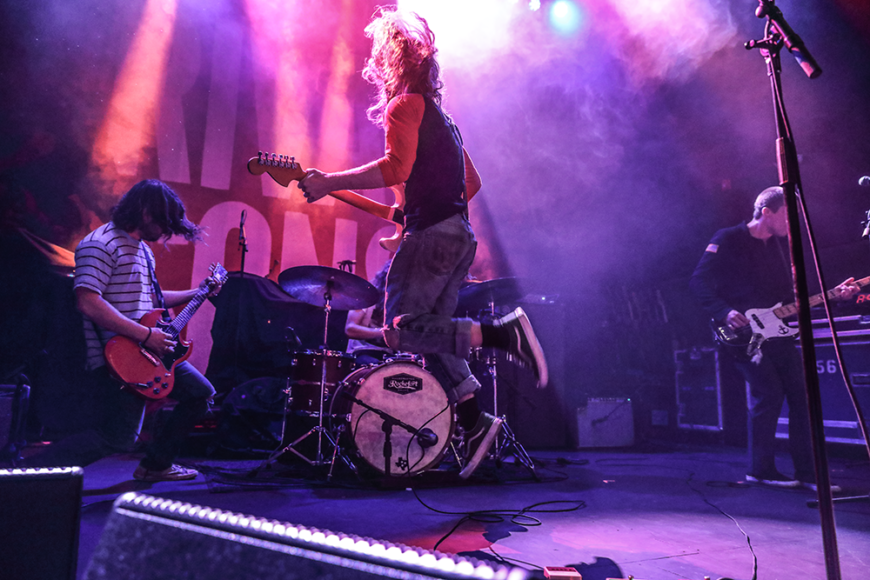
Despite his lifelong affection for rock music, Wells doesn’t pretend to be naive about the genre’s current state of affairs. “Rock and roll is not on the radio. Very simple,” he said. “It’s just not. It’s like going to the dump and saying, “Where are the flowers?” You showed up to the wrong place.” It’s all the more reason, he added, for he and his band to be pounding the pavement and gigging as often as possible. “It’s a tale as old as time: you go from town to town and you make sure you put on the best rock and roll show you possibly can and maybe they’ll come back” he offered by way of explanation for why he’s begging his booking agents to get him on the road more often. “I’m just crying out loud for tours. ‘Cause I reckon the best way to break a rock and roll band would be 200 shows a year and then you stop and assess. I don’t think my fans are stuck in their phones. The real rock and roll fans go out to shows.”
Having opened for a wide array of bands in recent years, from Royal Blood to Greta Van Fleet and even those like the Regrettes who cater to a decidedly younger audience (“We show up and I’m in Dickeys and have a mustache and boots and we’ve got these 11-18 year’s old just sitting there staring at us like “Oh my god!””) Wells said he’s ecstatic to finally be headed out on a headlining tour.
“I feel like I can be myself a bit more,” he said.
Still, what Wells said makes him happiest is that intense creative satisfaction he receives whenever he straps on his guitar, summons the energy of his rock heroes and, with every new song he writes, charts his own musical course. “When you listen to my stuff I want you to go, “This is Lennon, this is Dylan, this is Bowie, this is Cobain,”” Welles said. “Rock and roll is very much alive.”
Wells has rock ’n’ roll history behind him, By Dan Hyman
https://digitaledition.chicagotribune.com/tribune/article_popover.aspx?guid=dbf1c9c9-22df-452c-bd98-17168aeb2f30
Pancakes and Whiskey, Welles and Rock & Roll
Backstage With Welles: ‘Any Kid Can Make Rock & Roll”
Jesse Wells is the coolest paradox. The music of Welles is an intense storm of sound and emotion that steals all your attention, and the guy behind it is almost exactly the opposite – quiet, supremely relaxed, always a few words away from a joke, but just as happy to blend into the crowd and disappear if he can. When we caught up at Mercury Lounge before his latest NYC tour stop, Jesse was all smiles, wearing a mechanic-type suit (that would later be swapped out for jeans and a plain shirt for the show), his hair like a fortress around his shoulders as he led me downstairs. It was still hours before their set, and the whole underground space was empty, but he spoke at such a whisper that the subtle hum of the city above was suddenly competing.
I asked him something I’d wondered the times I’d seen him tear up some stages: what exactly is going through his head when he’s on stage creating such powerful music? If you’ve ever witnessed the scorching, shred-heavy magic of Welles’ live presence, his answer is probably not what you’d expect. “Trying to keep it light,” Jesse said without hesitation. “Honestly. A lot of times we’ll get done with ‘Seventeen’ and I’ll just say, ‘Wow, that was dramatic. Thanks for hanging on!’” he laughed, “and we’ll do the next thing. The tunes are so heavy that there’s absolutely no sense in brooding around. We’ve had twenty, thirty years of brooding, angry white males with long hair looking all hungover onstage, and it’s boring. I used to do stand-up and stuff back in Arkansas and I prefer to keep it light and tell a few jokes, and see if they can’t laugh. Nice and dry and fun; lighthearted, yeah. That’s what’s running through my head is like, ‘How can I even this out?” That’s exactly what happened later on, his straight-faced one-liners – like “When I was a kid, I had a dirt bike until my dad washed it” – stirring up laughter between Welles’ satisfying doses of adrenalizing rock.
Jesse elaborated on his point-of-view from the stage. “Sometimes, the words flow without thinking, and you nail it; and then other times, honestly, depending on the energy of the crowd, it’s a grind to get through. I’m not very excitable, but I am nervous,” he said openly. “I just avoid showing it. I’m vulnerable enough with all these tunes and these lyrics – I don’t want to give up any more than that. So I’ll play it cool; tell a few jokes and stuff.” Given the impact of his hard-rocking debut album, Red Trees and White Trashes, on the music world last year, I was curious if he had been back to his hometown of Ozark, Arkansas – which inspired the record – since it had been released. He had, and the reaction he received was right up his alley. “I think the people that knew me from the scene down there – like the guys who run the old radio station over there, and the venue and production guys and stuff like that – they remember me. And I see a post every once in a while on Facebook or something that they’re proud or whatever. But I don’t come back to mass adulation or anything, and honestly, I’m thankful for that, because that would be incredibly awkward to come back to my hometown and be treated differently than I was in high school. I’m still just the weird kid in town,” Jesse said contentedly.
“Any kid can make rock and roll, and it’s just so important that everybody knows that. It’s very important. It’s just…I don’t think that the way we live at the moment, the way the majority of us live, is very conducive to it. We don’t live very analog. And so if I could champion anything, it’s a more analog existence; one that does not care what is going on on the phone, or online, or anything like that. I’m somebody who can live in the moment and show people that it’s perfectly fine, and in fact, you’ll find yourself a lot more satisfied if you do. And I think that rock and roll is something that’s very much in the moment. And it requires your friends,” he grinned. “To start a band.” In fact, when asked if he could pass along anything at all to his listeners, Jesse said simply, “Go start a band. Get on it. You’ve already waited too long.”
On that topic, it was interesting to hear how he and his bandmates like to burn time on the road. “Last tour, I picked up a little 8-track recorder in Houston, Texas, and recorded the rest of the tour just in the backseat,” recalled Jesse. “It ran on batteries, so I got to learn how to use an 8-track, and then also record a bunch of tunes on it. Those were just kind of sound experiments, sound projects and stuff like that. I don’t think that we would ever hear any of that on a record. I don’t write a lot of music on the road, just poems and little stanzas and things like that, here and there. Sometimes a joke or two, because it’s just the four of us guys always hanging out and stuff, and we just laugh every day. We laugh all damn day. But what we have been doing is supplementing the set with songs that I’ve written since the album. Songs that may not have been necessarily approved for the next album, but I really believe in them and I’ll play them until I’m asked not to.” As promised, we were later treated to four killer new songs that did not appear on his latest record.
“There for a little while on the last tour, we were actually recording songs in the van,” Jesse added, describing how they pieced things together with a laptop and his phone. “We were tracking. I was sitting in the backseat with a bass guitar, or you know, with an electric guitar and I would record that. Then I’d stick the headphones on and record voice memos with the tune, and then send him the voice memos, and then he would mix them into the track, and that’s all we would do. And we didn’t have a microphone on us, so we just used the iPhone one. So we get to be creative in that way… The way I try to look at it is, by the time it’s time to record the next record, hopefully I have ten new songs. But if I was able to record a new record tomorrow, I would. And if we could do one the next day, we’d do another the next day. And if there was a third day to do it, then we’d record a third album. I mean, that’s all I want to do is put out music. I’m sitting on a lot of stuff that’s not necessarily earth-shattering, but it’s music all the same. And I think that our attention spans have been vastly diminished by scrolling through our phones constantly. And folks are in luck; I can cater to that. There’s a lot of tunes. You can hit it and quit it and go to the next one for all I care, just so long as I’m proliferating music – just getting it out there.”
This took me back to a memorable moment from our last interview, when Jesse described all the suitcases full of notebooks and hard drives full of ideas he had lying dormant, having written songs constantly since he was 12. He’s still “just piling it on,” as he put it. “I was actually fortunate enough to pull the old computer out of the attic and save 11 gigabytes worth of MP3 files from the years before onto an external hard drive. It took about 11 hours to do it, the computer was so slow. And as soon as I did that, it blue-screened and crashed. So that’s gone, but I saved it – I got it all. It was like 339 tunes, I think,” he said, confirming that they’re all unreleased. “There’s a ton of trash in there, but it’s my trash. And I still have all my old notebooks too.” We dove into the mechanics of his songwriting process. “The melodies will compel me to record, but there are always poems written and lyrics ready and set aside, so that whenever I do catch a melody in it – and you literally catch it – it’s out of the blue and then you have it. Then you can go and apply some of your lyrics to it, or write brand new ones.
“The songs get written in all different ways; there are songs that I’ll sit down and write on an acoustic guitar, like ‘Summer.’ I sit down with an acoustic guitar, and just as naturally as breathing, there’s your tune. And then you write the first few stanzas, and then figure out the tune for it, and then write a couple more, and then boom: there’s the song. The idea for that one [came first]. It was all about a big house party that I had gone to that just went haywire, but it was beautiful, you know? Just trashy.” he reminisced. “Other tunes start with a riff or a chord progression; ‘Codeine,’ for instance. I had just come off of that crap, and woke up just hot to trot and had quite a bit of coffee, and recorded that progression and then stepped out on the porch and had a cigarette or two, and then” – he made a fast noise akin to bullets firing – “wrote the lyrics, and then went in and laid down the vocal track, out of necessity.”
Given how clearly and completely the songs tend to hit him, I wondered if the final versions pressed into wax ever differ from his original recordings. “The production definitely does. My personal production is very different than what goes on in the studio,” Jesse said. “But other than that, the structure of the tunes more or less stays the same; maybe a little change here or there, but more or less is the same. There are tunes like ‘Rock N Roll’ where I went out and had coffee with my mom, and [wrote it] on the way back home. It took about five minutes to get home; I bolted up the stairs, and it was already done in my head. I ran down the lyrics, and what had I been listening to lately? I’d gotten ahold of The Slider by T. Rex (1972), and it was the first time I’d heard it, so I was incredibly blown away by it. So I said, ‘I’m incredibly inspired by this tune. I’ll do my best Slider, and then I’ll toss these lyrics on top of it.”
That honesty had impressed me on several occasions; Jesse’s never afraid to disclose the origins of his ideas, even if they’re rooted in someone else’s material – unlike so many artists who conceal such details. “I think it’s so exciting…” he took a deep breath mid-sentence, real exhilaration seeping through, “…and just gets me out of bed. I live at the peak of the culmination of all rock and roll. We have 50-60 years of rock and roll behind us, and I get to draw from all of it. And why not say, ‘I got this from that, and this from that, and this from that’? Because I did. Whether I want to admit or not or whether anyone else wants to admit it or not. You did. So we live with all of it. We’re blessed. The thing is, Cobain only had like…Lennon, and Bowie, and Dylan, and then some ‘80s artists that I’m not as familiar with. I get Cobain and Lennon, you know?” he said excitedly. “Why not use everything?”
Jesse was equally forthright about other aspects of the production process. “‘Rock N Roll,’ you know, the entire original chorus for it got ripped out, and I put something a bit simpler and grungier in, because I was advised and steered in that direction. I was challenged to write a more digestible chorus. So I spitballed a couple out there and one stuck.” I couldn’t help but ask if that kind of guidance bothered him, and he responded pleasantly in his still-hushed voice. “I don’t really work with anybody else in the demoing process whenever I’m doing it. I really do prefer to be alone – very alone – to do those sorts of things. I prefer not to have anybody around. But I think it’s probably more difficult for the people who ask me to change it. It’s more difficult for them than it is for me, because it’s like pulling teeth, and I have a lot of retorts, and a lot of smartass remarks as to why it’s perfect the way I did it – but it’s not fuckin’ perfect, and it doesn’t matter. You can’t eat a song. I’m trying to make a penny if at all possible,” he said, dipping into a funny tone on the topic of surviving. “And what’s better than being highly adaptable? I think that makes for a lot better artist.”
“I want to put out more music – a tune a day is what I want to try for – while I’m at home,” he said, listing the other artists who inspire him without being prompted. “I didn’t get to hear Mac DeMarco until his album had already been out a year, and then I was his biggest fan. I didn’t get to hear King Gizzard & the Lizard Wizard until they had several albums out, and I finally caught ‘em with I’m In Your Mind Fuzz and I was just sucked in. I’d love to get on the road with ol’ Stu,” Jesse said (the altered beast within me screaming), affirming that he enjoys the full spectrum of rock in his free time. “I listen to a lot of Ty Segall for production tricks and stuff like that. I think he’s a studio wizard, and I love his DIY approach. I love King Gizzard’s DIY approach and that definitely goes into my personal demos. As far as songwriting goes, it’s still candy pop from the ‘60s; it’s The Association, The Cowsills, The Beach Boys, The Beatles, and all that stuff. ‘Cause I just feel like, the art of the song; that’s really where it’s at. I think those are the peak forms of songs.”
Thinking of the way the music hits him, I asked where he felt most at peace to be able to write a song. “All around,” he said with a very relaxed expression. “A mix of both indoor and outdoor. I need to be able to step inside, of course, to record. But I’ll tell you what I need: I need the morning. I need the morning, because that’s when I work the best, between nine and eleven a.m. I’m just a cat that sits upright at like six am and is like ‘Christ! I’m still alive – now what?’ And I prefer my evenings to listen over whatever I’ve recorded and hang out with friends and stuff like that. But I need the morning. And a cup of coffee… The hardest part of touring is probably the anxiety; you’re just sitting in a van six to seven to eight to fourteen hours a day and you’re kind of stuck with your own thoughts, and you’re just bouncing between you and the screen and you know, you teach your mind to scroll, and then all of a sudden, you’re scrolling through your own thoughts – that’s no way to think.” Even with modern issues like these, Jesse greatly values how easy it is to put out music in this era. “I know there were a lot of brilliant bands in the ‘60s and ‘70s that simply didn’t have the means to record. I think of the people that I grew up around who taught me things on guitar and stuff back in Ozark, they were all in bands, and I can’t buy a single album of theirs, and they don’t even have a recording of their band, you know? And they played all through the ‘60s and ‘70s together in the bar scenes around there. Now – is it so inundated and saturated that your shit will inevitably probably not get listened to? Yuuup,” he said without a care in the world.
“We’re gonna jump in the studio here before too long, so ideally, there will be music released ASAP.” When I asked if that meant this year, Jesse said, “Hopefully, man! Hopefully. I had this idea for this Hell’s Welles, part one and part two – the first part is the softer and more Beatles-y tunes that I do, and then the second part is just a complete tear-down rip-out, just straight from the depths of hell; whatever I can summon up. And yeah, a freakin’ double LP is what I was shooting for. Now, is that gonna come to fruition? I don’t have high hopes for that. But that doesn’t mean I won’t try to die on that hill, because rock & roll belongs in albums. I know that singles make people more money and things like that, but rock & roll belongs in albums. I can’t think of my favorite rock & roll band’s EP.” Surprising me once more, he revealed another new concept that I never would have guessed.
“I’m also writing an album of ads for all the favorite things that I use. So I’ve written one for Sk8-Hi Pros Vans shoes; the label hooked me up with a couple pairs of those, and I hadn’t worn a tennis shoe in like seven years, and I put ‘em on and I was just like ‘Whoa…I’m quick. I’m agile,” he laughed. “And I’ve got one for this Casio Alarm Chrono watch,” he showed me the one on his wrist. “I like this watch. I’ve got one for Pall Mall cigarettes too.” When asked if he would ever pitch these songs as real ads and what he had planned, he replied matter-of-factly, “It’s a Lennon fetish. He garnered a lot of ideas and notions from the ads around him, and why would you not? They’re literally created to be earworms and to psychologically impact the public. So I’ll throw mine in – I’ll have a go at that. I enjoy it,” Jesse said, flashing another smile. “I enjoy making music and it takes the pressure off of it, because it’s not about me. It’s about the product, and it’s about making pop tunes; artfully-constructed pop tunes. I think, sometimes, people only like me when I’m bleeding, and I’m not always bleeding. Sometimes, I feel absolutely fantastic, and I want to tell people about my goddamned shoes.”
Backstage With Welles: ‘Any Kid Can Make Rock & Roll”, By Olivia Isenhart, February 25, 2019
https://www.pancakesandwhiskey.com/2019/02/25/backstage-with-welles-any-kid-can-make-rock-roll/


Guitar World and Jesse Wells in 2018
Jesse Wells Talks New Welles Album, ‘Red Trees and White Trashes’
“People pretty up the guitar too much.” Jesse Wells opens up about Welles’ superlative debut album.
“People pretty up the guitar too much,” says singer-songwriter-guitarist Jesse Wells. “I kind of fight when I play, and I want people to hear that struggle of my fingers getting gnawed up on the fretboard. I like to use amp overdrive to get a warm guitar buzz, and sometimes I’ll go straight into the board and crank it. When the guitar sounds big and fuzzy, I know it’s right.”
“Big and fuzzy” is an accurate description of the sound Wells and his band — simply called Welles — make on their superlative debut album, Red Trees and White Trashes. The guitarist, having been raised on a steady diet of early Led Zeppelin and stoner rock, played in a succession of outfits in his hometown of Fayetteville, Arkansas, but it wasn’t until he moved to Nashville that he found a group of players (guitarist Marshall Willard, bassist Davey Nelson and drummer Jordan Rochefort) who shared his gritty sonic vision. Even so, it took some effort. “Nashville is full of great musicians,” he says. “I had to look hard to find guys who wanted to play music that’s a little rough around the edges.”
In Nashville, Wells and his band recorded the bulk of Red Trees and White Trashes with producers Beau Boggs and Bobby Emmett, but he also worked with multiple Grammy award winner Dave Cobb on three tracks. One highlight of their creative collaboration is the heartbreaking grunge-rock anthem, “Seventeen.”
“Dave and I hit it off immediately,” Wells says. “He got the Nirvana and Melvins vibe I was going for, but we also bonded over the White Album and [John Lennon’s] Plastic Ono Band record. We were totally in sync the whole time.”
Wells admits he gets a little out-there and psychedelic when playing leads, and he credits Cobb with never putting the brakes on him. “Dave just let me roam free, which was cool,” he says. “I would love to be a better improviser, so that’s a goal of mine. Every time I pick up the guitar is another chance to play something awesome. Whether or not it makes sense is another matter altogether.”
Pancakes and Whiskey to Welles Fans
What Fans of Welles Should Know: ‘You Don’t Have To Worry’
It wasn’t a rap at first,” he joked. “When I wrote it, it was about twenty clicks slower, so all those words were just real smooth and easygoing, you know?” Then something special happened; Jesse Wells started singing. It’s rare that a phone interview turns into a private concert, but there they were, the opening words to “Life Like Mine” – “I caught a sermon on the mount of Fairy Hill, in a Mercury or a Lincoln, I can’t see it” – warmly, at half the tempo, resonating even on our fuzzy connection between Nashville and NYC. The demonstration came unexpectedly while Wells was explaining the story behind the lyrics; the very first thing we discussed, since the verses and stories that make up Welles’ pure-rock debut album, Red Trees and White Trashes, are so compelling and primed for dissection.
Given the intensity of Welles’ music, it’s no surprise that their eponymous (minus an e) frontman is a thoughtful and no-nonsense storyteller. Wells’ description of the song’s meaning went from funny retelling to deep self-analysis at an amazing pace. “There is actually a location in Fayetteville, Arkansas called Fairy Hill. I got into a fight with a very good friend of mine on Fairy Hill. It was about 2am and he came to pick me up from my band’s house. We had just played a show that evening, so adrenaline was still high, and we were out having fun, but I just kept thinking, ‘Man, he piled me into a Mercury, or a Lincoln, I can’t see it!’ I remember just sitting in a big bench seat and then, ‘I caught a sermon’: That’s me trying to remember everything I heard from my buddy that evening. ‘I was heaving on a handful of bitter pills’: that’s just the truth, and that’s just kind of where I was when I was 19 or 20. I was just incredibly angry, and heaving on it. I would not accept truth, and that life isn’t fair, and things like that. I still don’t. Like, I threw a huge fit at Walmart earlier today,” Wells recalled with a laugh, “‘cause it was taking too long. When things aren’t fair and when justice isn’t happening, it’s always torn me down, since I was a little kid. Sometimes, just the little lessons, I learned the hard way – the really hard way. Just wait in line, and stuff like that. Wait your turn. Bitter pills; life isn’t fair. So, I’ve been heaving on those my whole life.” Somehow, we’d skipped all the basics and gone straight into his soul, as was often the experience when speaking with Jesse Wells.
Just like when we first interviewed Welles at Governors Ball last summer – back when the band was only four weeks old – his answers were incisive and extremely down-to-earth. And while some songwriters are more reticent about the origins of their lyrics, Wells was more than comfortable quantifying how much of his music is based upon his real life. “I would say…most of it,” he said after a thoughtful pause. “Most of it is just, straight up, my experiences. If we really think about it,” he said, listing off examples. “‘Codeine’ – definitely autobiographical. ‘Life Like Mine’ – definitely autobiographical. ‘Are You Feeling Like Me’ – oh for sure. ‘Hold Me Like I’m Leaving’ too.” Even as the lyrics of Red Trees and White Trashes shed so much light on his background, there are still small misconceptions about him perpetuated by the media – some that he’s found somewhat mystifying, including the backstory of him writing music in an art commune. “Commune’s a bit of a strong word, but people have adopted that and are using it quite a lot,” Wells said bemusedly. “Honestly, it was a derelict apartment complex. If we just look at it objectively, it was just a real run-down, torn-up apartment complex that we all lived in. And that’s what I always thought of it as. I never thought of it as a freaking art compound. That’s what people assume; they love it! But me and my friends are just laughing about it. It wasn’t like some fucking warehouse or anything. We had an entire apartment building to ourselves. And there were only two rooms that had been renovated and were considered actually livable. Those were the two rooms we paid for, but we had access to the entire building. So yeah, we had some squatters. We set up art galleries and had some rock and roll shows and stuff like that. But ‘compound’ makes it sound like there’s some literature that goes with that…you know?” Wells laughed. “Like, I was a shaman who was only sexually active on Wednesdays, and I could write rock and roll tunes; that was my job,” he joked. “Yeah seriously, we all had fucking jobs, we were all broke as hell, and we were just trying to make stuff work. We were just living amongst one another and together, which is just called ‘community.’”
Having fallen in love with people like David Bowie, Marc Bolan, John Lennon, Lou Reed, and Bob Dylan at a young age, Wells acknowledged how growing up isolated from a real music scene made him study the craft more fervently. “You had to dig harder, and you appreciated what you dug up a lot more. So, maybe you only had one Velvet Underground album and it didn’t even have the tunes you knew… but you knew you really liked ‘em, you’d heard ‘em somewhere… so you rent it from the library, you take it home, and you put it on a cassette tape. And that is your Velvet Underground album. Guaranteed, no one else in the fucking school has one, you know?” He had the tone of an archaeologist describing a treasured artifact. “And the internet was kind of fresh in Ozark,” Wells laughed. “Especially for me – I didn’t grow up wealthy at all. To call it middle class might make some middle class people call themselves high class. We got the internet in like 2011.” Conversely, later on – as tactfully as possible – he also noted some music that doesn’t agree with him. “The synthetic stuff; even the production of 80s music has always kind of wound me up and ground me out,” he revealed. “I can’t listen to it. Or, I don’t like to. But there’s a lot of rap and hip-hop that I’ve found later on in my life.”
Wells’ strong affinity for unprocessed rock surely played a role in the raw studio sound he achieved on Red Trees and White Trashes – all the more impressive, given the background he shared about the record. “When we made the album, I had not met any of those fellas yet. So I hadn’t met anybody in the band at that point. All I had was the demos that were recorded up there at the mountain. And they hired studio musicians that I’d never met before. But it was just like, ‘Hey. Jesse. These guys are gonna be the best of the best, so don’t you worry,’” he remembered happily. “I really wasn’t incredibly involved in that part. And listen, when I met [producer] Dave Cobb, I went home and wrote a country album! And then I came back, and they were like ‘No no no no no, you can just do rock and roll, like you were doing,’ and I was like ‘Ohh okay.’” Wells laughed. “I’m about the music. I saw an opportunity and I was gonna seize it. Luckily, I was able to be myself. But I would have found myself, you know? I’m confident that I can find myself in whatever I gotta do,” he said. “But I went in with session musicians – you know, they only need to listen to the demo once. These are incredible players, and they have a very sharp wit. I just went in and played guitar and those guys played on my tracks.” As expected, he would have preferred it if his current lineup had played on the first album, but that’s not how the timeline worked out. “That would be ideal for most people. But I didn’t meet Davey [Nelson] or Marshall [Willard] or Jordan [Rochefort, his live band] until I went ahead and moved up to Nashville a couple months later, and started living here and hanging out,” Jesse explained, mentioning the guys we’d first met and witnessed again earlier this summer in Jersey City. “The Weeks are a band here in Nashville, and I sat on their couch for about a year, until people started talking to me. After we got on Carson Daly… yeah, after we got on the television show, people would be like ‘Hey! What’s up Jess?’” Wells recalled. “They’re the best of the best,” he said of his bandmates. “I mean, if you want the best, you come to Nashville – if you want players, you know. People who actually walk the road.”
Thanks to songs like “Seventeen” (from which the name, Red Trees and White Trashes, was derived), it’s a bit easier to picture the world of “Ar-kansas,” as Wells sings with affection, “Where there’s beer and molasses // We’ll let the times fly on past us // The whole world, kiss our asses // through red trees and white trashes.” He explained why the album’s title had been sourced from this particular line when we spoke. “If you were to walk with me through my life, it would be through the red trees that I just grew up all around, and white trash – which I feel like I belong to,” said the Ozark, Arkansas native. “I lived in a town that many people in the country would drive through and go, ‘Wow, it’s a cute little town. A lot of white trash.’ And then they’d just keep driving. There are entire states that are like that. So I’m self-aware of that perception. And I just felt like this entire album, with all the words I put in, was about all the wild shit I did back in Arkansas. If you’re going to be listening to it, you’re going to be stepping through my life…so why not name it after the place you’re stepping into? It’s a journey; you’re listening through red trees and white trashes. Because that’s me; I’m red trees and white trashes.”
Wells painted other scenes of his hometown – and even his childhood – as he answered the ol’ P&W whiskey question. “When I drink whiskey…” he said in smiling tone, “I drink Kentucky Deluxe. It is just a blended, bottom-shelf bourbon. I drink it hot and by the pint. But I haven’t done that since college; I can’t even touch that anymore. I went through a liquor store drive-thru and asked them if I could have some Kentucky Deluxe, and they told me no. And I think that’s ‘pry the last evening I had any. But that was like…senior year,” he realized, amused. “They should have called the cops on my ass.” A quick digression about the novelty of drive-thru liquor stores suddenly had Jesse laughing more and reminiscing far back. “I have memories sitting in the bucket seat next to my dad with a Pepsi between my knees, and we would go through the liquor store drive-thru, and he would order a twelver of Busch Light, and put it in the passenger seat. And he’d give me a Pepsi, ‘cause it was kind of about the same color as a Busch Light can. And we’d both crack ‘em open and drive around. I had no idea what was going on, you know? ‘Cause you wanna be just like your dad when you’re a kid,” he said nostalgically. “But yeah, it’s insane. There’s drive-thru liquor stores here [in Nashville] too. I could ride my bicycle to one right now.”
“I don’t really have any grand statements,” he said as we wrapped up our long call. “I would just beg people to keep their eyes peeled, because I’m going to be here, and I’m just crazy about this. We’re doing this for folks, you know? The people who are working like 9-5 who’ve got it all boring. We are the people that fucking said, ‘Fuck it, we’re going for it.’ The kids in rock & roll bands, that’s who we are: the kids who said ‘Fuck it.’ And everyone else wants to do that – they really do. But instead, they just buy a ticket, and they come and watch us do it, and that’s fine. That’s who we’re there for. Get your rocks off, goddamnit,” Wells laughed. “This is what the people that are fans of Welles should know,” he added decisively. “The music’s written. Albums are coming. I’m writing constantly. I’ve been writing constantly since I was 12. I’ve got suitcases and suitcases and suitcases full of notebooks and computer hard drives full of stuff I can’t even access anymore because it’s too old, you know? I’ve got tunes on floppy drives and stuff,” he laughed, having dipped into a whisper that sounded more humble than secretive. Still addressing his fans, in a genuinely caring tone, he concluded, “I’ve been doing this forever, and this is what I do, so you don’t have to worry. This is not a phase. I’m going to be around as long as I am alive.”
What Fans of Welles Should Know: ‘You Don’t Have To Worry’, By Olivia Isenhart, July 27, 2018
https://www.pancakesandwhiskey.com/2018/07/27/welles-interview/
Pancakes and Whiskey on Welles Debut Red Trees and White Trashes
Wells’ Debut Album ‘Red Trees and White Trashes’ Is A Rock Lover’s Dream
“Dust me off like a jar of fire, declare me as your friend. It’s been done before, and we’re doing it now, and I’m sure it’s not the end.” It’s a small remark in the song, but out of context, it defines Welles’ entire approach to rock and roll – and searing debut record – to a tee. Due for official release tomorrow (June 15), Red Trees and White Trashes is one of the purest and most promising rock albums we’ve encountered in recent years…and best of all, you can tell it was never trying to be. Jesse Wells, the mind behind the music, doesn’t deem himself a visionary or “the new” anything, and shrugs off such superlatives from recent press with disgusted amusement. Against his wishes, though, the intense musicality packed into his 13-track debut might make it difficult to avoid being placed on a pedestal. What we’ve got here is truly a jar of fire. If you dust it off, as he suggests, and peer into the flames, you’ll be amazed at what you find.
There’s something strikingly raw about Red Trees and White Trashes; no part of it even feels planned or constructed. His ruthless guitar work and pulse-resetting progressions are closer in spirit to a howl at the moon than a series of notes and chords. It’s an album whose brutally-honest lyrics sound familiar the first time you hear them, like feelings ripped from your own subconscious. It’s a research-with-no-results kind of album, with material that’s so strong, you assume he must be covering some classic rock song – only to find again and again that it’s his own. It’s an album that makes you race to pre-order the vinyl, realizing it might be difficult to find if you don’t jump on it before the rest of the rock-loving populous does. It’s a fast injection of medicine you didn’t know you needed. It’s daunting to decide which parts to analyze first. It’s not even accurate to describe certain songs as highlights when all of them are so compelling. It’s that good.
When we first interviewed Welles last year, the band was only four weeks old, and their message was impenetrably simple: “We just make rock and roll music.” Having caught up with Jesse again this week (full in-depth interview coming soon to P&W), it’s unsurprising and refreshing that nothing at all has changed – even as the new songs are being excavated and handled like diamonds by critics and fans. Early-released singles like “Life Like Mine,” “Seventeen,” and “Rock N Roll,” as well as “Codeine,” “Hold Me Like I’m Leaving,” “Into Ashes,” and “Are You Feeling Like Me” from last year’s EP, already feel like staples of a proper rock playlist, each dripping with his husky yet tender vocals and velvety, vintage-rock riffs. Album opener “How Sweet It Is to Love” and other fresh cuts “Do You Know How to Fuck,” “Seasons,” “Crush 19,” “Summer” and “9.8” (plus a vital and shreddy “Interlude”) are overwhelmingly good additions, tying all the rest together like tightly-knotted twine. The album’s title, Red Trees and White Trashes, comes from the end of “Seventeen,” but it runs a bit deeper than that, as Jesse explained when we spoke.
“If you were to walk with me through my life, it would be through the red trees that I just grew up all around, and white trash – which I feel like I belong to,” said the Ozark, Arkansas native. “I lived in a town that many people in the country would drive through and go, ‘Wow, it’s a cute little town. A lot of white trash.’ And then they’d just keep driving. There are entire states that are like that. So I’m self-aware of that perception. And I just felt like this entire album, with all the words I put in, was about all the wild shit I did back in Arkansas. If you’re going to be listening to it, you’re going to be stepping through my life…so why not name it after the place you’re stepping into? It’s a journey; you’re listening through red trees and white trashes. Because that’s me; I’m red trees and white trashes.”
Wells’ Debut Album ‘Red Trees and White Trashes’ Is A Rock Lover’s Dream, By Olivia Isenhart, June 14, 2018
https://www.pancakesandwhiskey.com/2018/06/14/welles-debut-album/